Lectures 1–3|Moving and Being Moved: Dance Dramaturgies of Aging
'No/Yes to moving and being moved': Yvonne Rainer, a US postmodern dancer and filmmaker, once wrote that performers were not themselves; they were neutral doers. "Artifice of performance has been re-evaluated, in that action or what one does, is more interesting and important than the exhibition of character and attitude. That action can best be focused on through the submerging of the personality; so ideally one is not even one’s self, one is a neutral doer."
Rainer is interested in dancers as subjects that exist in the space between subjects and objects. In her transition from dance to film, she has transformed her dancing into cinematic images of objects. The neutral doer is the never-aging moving image, and Rainer also explores the narratives and themes of her aging life in her films. Since returning to dance in 2000, she has adapted her approach to choreography, incorporating her interest in aging bodies in dance.
The aim of these lectures is to re-contextualise Rainer's theoretical interests within the dramaturgies of traditional Japanese theatre and contemporary European dance. With the help of Kouji Takabayashi, a Noh old master, I will explore, as a dance dramaturg, the dramaturgical insights of different dance cultures in my lectures by transferring Rainer's concept of 'moving and being moved'. The dramaturgical questions are: How to move what is not to be moved? How to move what is to be moved?
Although there are many definitions and approaches to dramaturgy, for me, creating a dance performance as a dramaturg involves thinking through practice. It is both a practice and a theory. Doing dramaturgy is not about imposing theory onto practice, but rather it is a specific way of participating in thinking through practice. It is also a process in which the audience participates. Theory often provides us with a way to break through the deadlock of choreographic exploration. On the other hand, our artistic practice can be much faster than current philosophical and social discourse. As a dramaturg, I find it tremendously rewarding to be present during these moments of creative thinking alongside the artists.
Lectures 1 & 2
Date/Time: November 15 (Sun.) 14:30–15:30; November 16 (Mon.) 19:30–20:30
Venue: 11F Studio 1, Taipei Performing Arts Center
Speakers: Nanako Nakajima, Kouji Takabayashi
Lecture 3
Date/Time: November 17 (Tue.) 19:30–21:00
Venue: 11F Studio 1, Taipei Performing Arts Center
Speaker: Nanako Nakajima
Lecture 4|What Composes? A Lecture/Conversation with Christian Rizzo
Date/Time: November 18 (Wed.) 19:30–21:00
Venue: 11F Studio 1, Taipei Performing Arts Center
Panelist: Shih Hsin-Yuan
Speaker: Christian Rizzo
To compose is not simply to arrange forms, bodies, or movements. It is to bring forth a space where presences encounter one another, where materials enter into dialogue, where the gaze is invited to wander, and where time is experienced differently. Through this conversation, Christian Rizzo will offer a window into a practice that is concerned less with producing objects than with creating relationships.
How does a performance find its breath? At what moment does a space become the site of an experience rather than merely a setting? How can light, sound, gesture, silence, or movement give rise to a dramaturgy that does not tell a story, but instead allows states, intensities, and correspondences to emerge? In Christian Rizzo's work, dramaturgy is shaped through intervals, frictions, and fragile balances between the elements that inhabit the stage. It becomes a form of relational writing, attentive both to what appears between bodies and to what connects them to space.
Conceived as an open and generous exchange, this conversation will explore the processes of creation: the gestures of composition, the intuitions, shifts, and uncertainties that accompany the making of a work. It will address listening, circulation, the architecture of perception, the memory of places, music, scenography, and dance—not as separate disciplines, but as forces that call to, transform, and nourish one another.
An invitation to share in a way of thinking in motion, where composing may ultimately mean welcoming the unexpected, allowing forms to breathe, and making space itself a place of attention, relationship, and presence.
This presentation of Christian Rizzo's practice will take the form of a dialogue between the artist and panelist Shih Hsin-Yuan.
Shih Hsin-Yuan is a Taiwanese curator and producer and curator who has collaborated with a wide range of artists and institutions in Taiwan and internationally, including the National Theater and Concert Hall in Taipei. Her long-standing engagement with contemporary performance and cross-cultural artistic exchanges makes her an ideal interlocutor for Christian Rizzo, bringing a thoughtful perspective to their conversation on dramaturgy, composition, and artistic practice.
Lecture 5|Narrative and Form: Perspectives on Dance Dramaturgy
Date/Time: November 19 (Thu.) 19:30–21:00
Venue: 11F Studio 1, Taipei Performing Arts Center
Moderator: Chen Ya-Ping
Speakers: Christian Rizzo, Nanako Nakajima
How can dance create forms of narration without relying on storytelling? Bringing Christian Rizzo and Nanako Nakajima into dialogue, this lecture explores how narrative and form can emerge through the body, movement, and choreographic practice.
For Rizzo, intuition is not spontaneous, but grows out of accumulated experience, knowledge, inheritance, and the place from which we speak. Nakajima approaches dance dramaturgy through Yvonne Rainer’s concept of “moving and being moved,” considering how it might be transposed across different dance cultures. Through these perspectives, the lecture examines the relationship between movement, form, and narrative, and asks how dramaturgy can operate beyond conventional storytelling.
Workshop|Christian Rizzo — Body Composition and Dramaturgy Workshop
Dates: November 17 (Tue.)–November 21 (Sat.)
Time: 10:00–17:30; Presentation: November 21 (Sat.) 19:30-21:00
Venue: 11F Studio 2, Taipei Performing Arts Center
Instructor: Christian Rizzo
This workshop invites dancers, choreographers, and physically engaged visual artists to explore creative processes that require time, attention, and presence, while remaining open to what has not yet been formulated. Rather than beginning with a predetermined theme, narrative, or outcome, participants will work from concrete situations, allowing the body, space, rhythm, relationships, and states to become dramaturgical materials in their own right.
Through improvisation, simple constraints, collective work, observation, and reflection, participants will examine how a creative process takes shape: Why do we begin to work? At what point does it become necessary? How can a form emerge without being fixed in advance? Dramaturgy will be approached not as a framework to be filled, but as an active practice of listening, questioning, and organizing what emerges through the process.
The workshop emphasizes experimentation over production, creating space for uncertainty, doubt, and discovery. It asks participants to slow down habitual creative reflexes and reconsider artistic practice as a space of necessity and responsibility, where form can emerge through sustained attention to what is already present.
【Speakers Introduction】
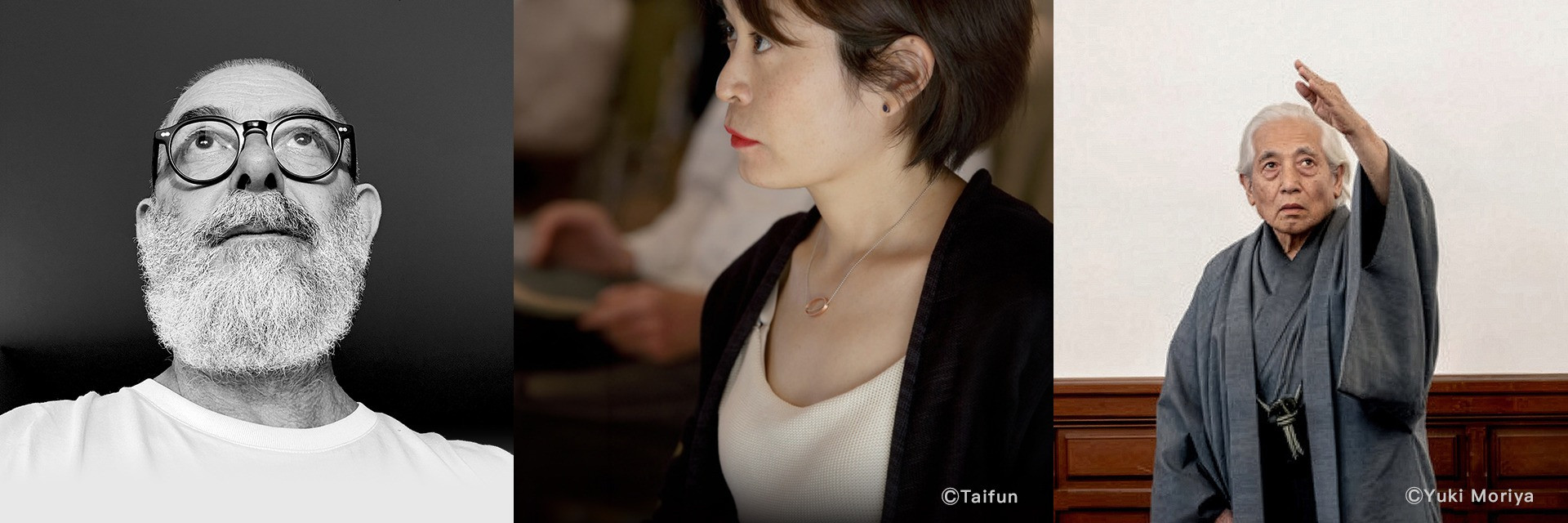
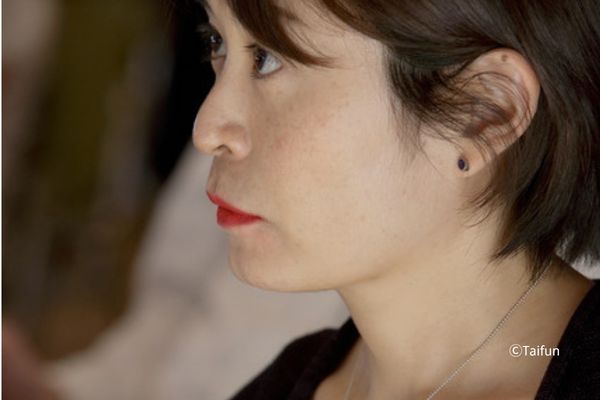
Lecturer|Nanako Nakajima
Dr. Nanako Nakajima is a dance scholar and dramaturg. She is a certified master of traditional Japanese dance (odori), Kannae FUJIMA. Her dramaturgical work with New York artist Luciana Achugar, Exhausting Love at Danspace Project, won the 2006-2007 New York Dance and Performance Award ("The Bessies"). In 2017, she received the Special Commendation of the Elliott Hayes Award for Outstanding Achievement in Dramaturgy from the Literary Managers and Dramaturgs of the Americas. Dr. Nakajima has worked with festivals, theaters, and universities in the U.S., Europe, and Asia, where she integrates her research on aging into dance. Dr. Nakajima was a juror for the 2022 Keir Choreographic Award in Australia; a Valeska Gert Visiting Professor at Freie Universität Berlin in Germany from 2019 to 2020; a faculty dramaturg in dance from 2022 to 2024 at the Banff Centre for Arts and Creativity in Canada; and a mentor in the Certificate Program for Critical Practice in Contemporary Performance [CP³] in Singapore. She is an associate professor of dance studies at Waseda University in Tokyo. She has delivered keynote lectures at the Universidade Católica Portuguesa, the Institute of Dance & Media Korea, and the National Taiwan University of Arts. Her publications include The Aging Body in Dance (Routledge, 2017) and Networked Bodies: The Culture and Ecosystem of Contemporary Performance (Taipei Performing Arts Center, 2022). She is currently preparing her monograph Dance Dramaturgies of Aging: A Journey of Negotiating Identity Across Generations, Dance Cultures, and Embodied Histories in Between Continents (Routledge, 2027). Following the launch of her bilingual dance dramaturgy website (www.dancedramaturgy.org), she organized Japan’s first dramaturgs' meeting in 2024 and is preparing for a second meeting in Tokyo in 2027–2028.
http://www.nanakonakajima.com/
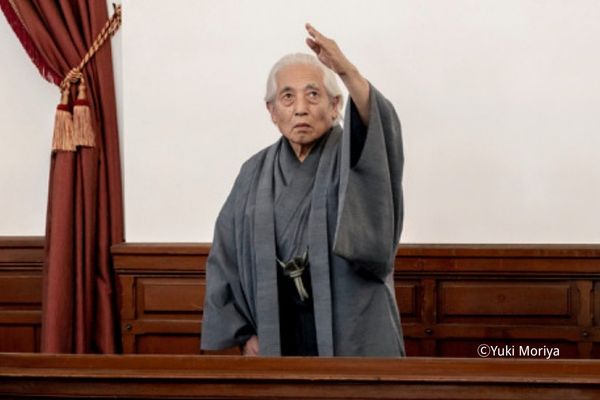
Panelist|Kouji Takabayashi
Born in Kyoto in 1935, he was trained from an early age exclusively by his father, Ginji Takabayashi. In 1971, he became a professional Noh actor of the Kita school. Since April 1982, he has continued the disclosure performance “Kita School, Yousen Noh” with permission of the Kita school Noh Kyoto, which has a tradition of 400 years, and he has been making efforts to popularize Noh, maintain the tradition, and foster successors. His first stage was “Asukagawa” as Ko-kata, a child role (1938). He played three important Noh — “Sotoba Komachi”(1998), “Oumu Komachi”(2009), and “Obasute”(2012) — all three are included in Roujo-mono (an old woman appears as a protagonist). In 2016, he retired from dancing as Shite after performing “Eguchi”. Since 2017, he has participated in research projects including “Yvonne Rainer Performative Exhibition” at the Kyoto Art Theater Shunju-za. The 28th Saika Award, Best dancer of March 2023 by "Dance Times" critics.
Lecturer|Christian Rizzo
Born in Cannes in 1965, Christian Rizzo is a choreographer, stage director, scenographer, and visual artist whose interdisciplinary practice brings together dance, theatre, visual art, music, and scenography. Originally trained in visual arts at Villa Arson in Nice, he began his artistic career through visual art and music before turning to contemporary dance, performance, and theatre in the early 1990s.
In 1997, he founded Association fragile, through which he has created more than twenty-five choreographic works, alongside performances, installations, and exhibitions. His work explores the relationships between bodies, spaces, materials, memory, and disappearance. His major works include toutes sortes de déserts (2007), le bénéfice du doute (2012), le syndrome Ian (2016), une maison (2019), miramar (2022), and je vais t’écrire (2024).
From 2015 to 2024, Rizzo served as Director of the Centre Chorégraphique National de Montpellier Occitanie, which he developed into ICI—CCN (International Choreographic Institute), focusing on artistic research, interdisciplinarity, education, and public engagement. He has also created works for major dance and opera institutions and served as Artistic Director and curator of international festivals.
Since the mid-2000s, Rizzo has maintained a close artistic relationship with Taiwan, regularly presenting his work, leading workshops, and developing long-term collaborations. In 2017, he received the Franco-Taiwanese Cultural Prize, and in 2018 became the first international artist appointed Artistic Director of the Taiwan International Festival of Arts, organised by the National Taichung Theater.
In 2025, he reactivated Association fragile in southwestern France and created à l’ombre d’un vaste détail, hors tempête for the Lyon Dance Biennale. He is Associate Artist at the Centre National de la Danse (CND) for the 2025–2026 seasons. His distinctions include the French Critics' Union Grand Prize for Dance, the SACD Choreography Prize, and the FEDORA–Van Cleef & Arpels Ballet Prize. A recipient of the Villa Kujoyama residency, he will undertake a six-month artistic residency in Kyoto in 2027.
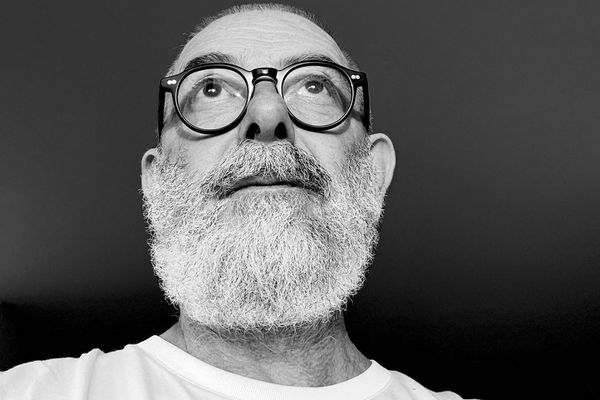
Panelist|Shih Hsin-Yuan
Shih Hsin-Yuan is an international cultural advisor and curator with over two decades of experience in programming, arts management, institutional governance, and cross-border cultural diplomacy. Awarded Chevalier des Arts et des Lettres by the French Ministry of Culture in 2024, she currently serves as an International Advisor for Wiener Festwochen (Vienna) and The Watermill Center (New York), as well as a global nominator for Sadler’s Wells’ ROSE International Dance Prize (London). Holding an M.A. in Arts Management from Lumière University Lyon 2, she specializes in bridging European and Asian performing arts networks, fostering regional strategic alliances such as the Asia & Pacific Festivals Connection (APFC) and the Sustainable Theatre Alliance for a Green Environmental Shift (STAGES), and curating major international platforms including Taiwan Week.
She previously worked at the National Theater & Concert Hall, Taiwan as Deputy Artistic Director and Director of Programming & International Development. Her earlier career includes leadership roles at the Jianguo Cultural & Arts Foundation (CEO), the ROC Centennial New Year’s Eve Celebration (Production Manager), and the French Institute in Taipei (Cultural Attaché).
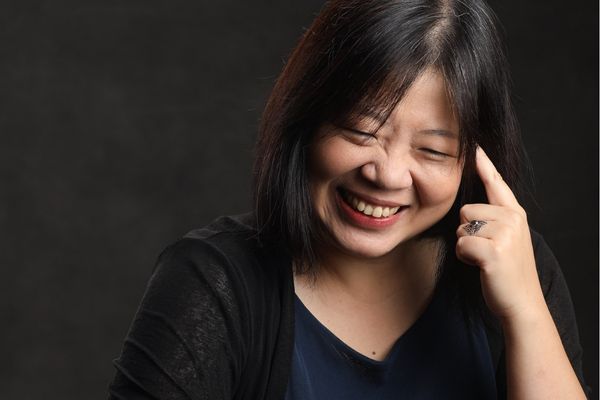
Moderator|Chen Ya-Ping
Chen, a dance scholar and critic, is Distinguished Professor and Dean of the School of Dance, Taipei National University of the Arts, Taiwan. She was the president of the Taiwan Dance Research Society from 2019 to 2022 and currently serves on its board of directors. She earned a Ph.D. in Performance Studies from New York University.
Chen has dedicated herself to the research and writing about Taiwan dance history since the late 1990s, paying special attention to issues such as colonial history, multiple modernities, subjectivity formation, intercultural influence and acculturation, leading to the publication of her Chinese monograph Enquiry into Subjectivity: Modernity, History, Taiwan Contemporary Dance (2011). In recent years, she has also focused on intercultural corporeal philosophy, transdisciplinary Zhuangzi studies, posthumanism, and new materialism, integrating these theories into dance scholarship to produce the Chinese monograph Beholding Wugou: Zhuangzi, Animism, Posthumanism (2024). Building upon these research lineages, her current research focuses on Indigenous history and contemporary Indigenous dance in Taiwan.
Chen co-edited two Chinese anthologies: Corporeality I: In Search of Asian Corporeality (2021) and Corporeality II: Archives, Bodies, Techniques (2024). Her recent writings also appear in English volumes such as Oxford Handbook of Dance Praxis (forthcoming), The Routledge Companion to Dance in Asia and the Pacific: Platforms for Change (2022), Fifty Contemporary Choreographers, 3rd Edition (2021), Corporeal Politics: Dancing East Asia (2020), as well as in Chinese anthology Six Hong Kong Contemporary Dance Choreographers (1980-2010): Dance History, Aesthetics, and Identity Issues (2019).
She is currently working on an English monograph tentatively titled “Dancing Multiple Modernities: Contemporary Dance in Taiwan”, funded by the National Science and Technology Council, to further deepen and expand her research on Taiwan dance history.
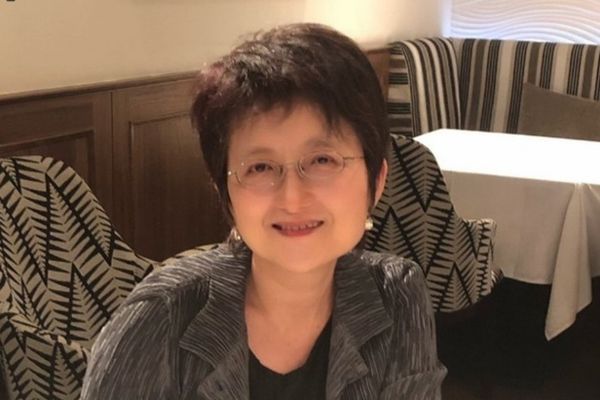
Organizer

Special Thanks