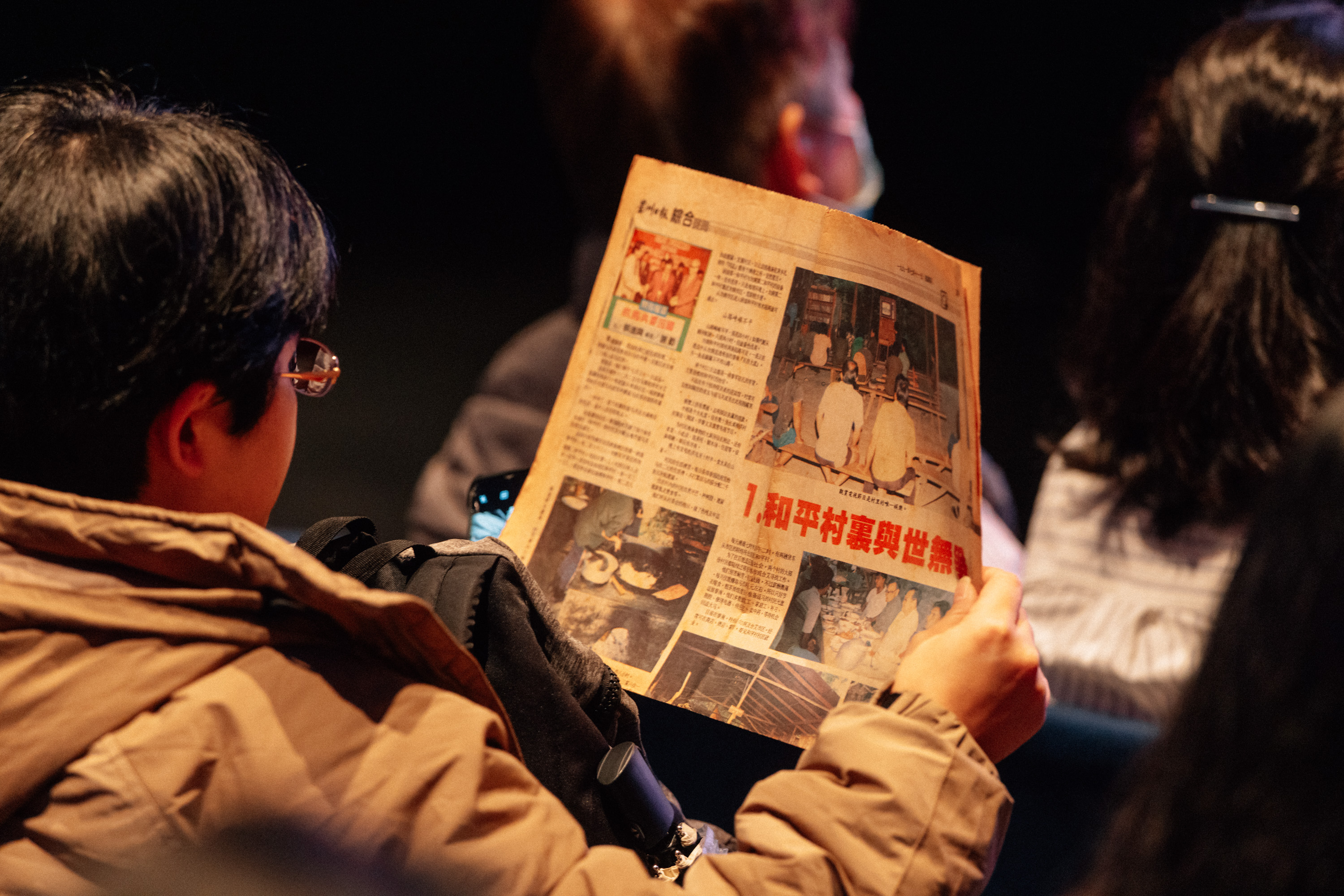
Taipei Theatre Award Winners Lecture Series|The Parallel Universe of Malaysian Chinese Theater|Lecture Notes
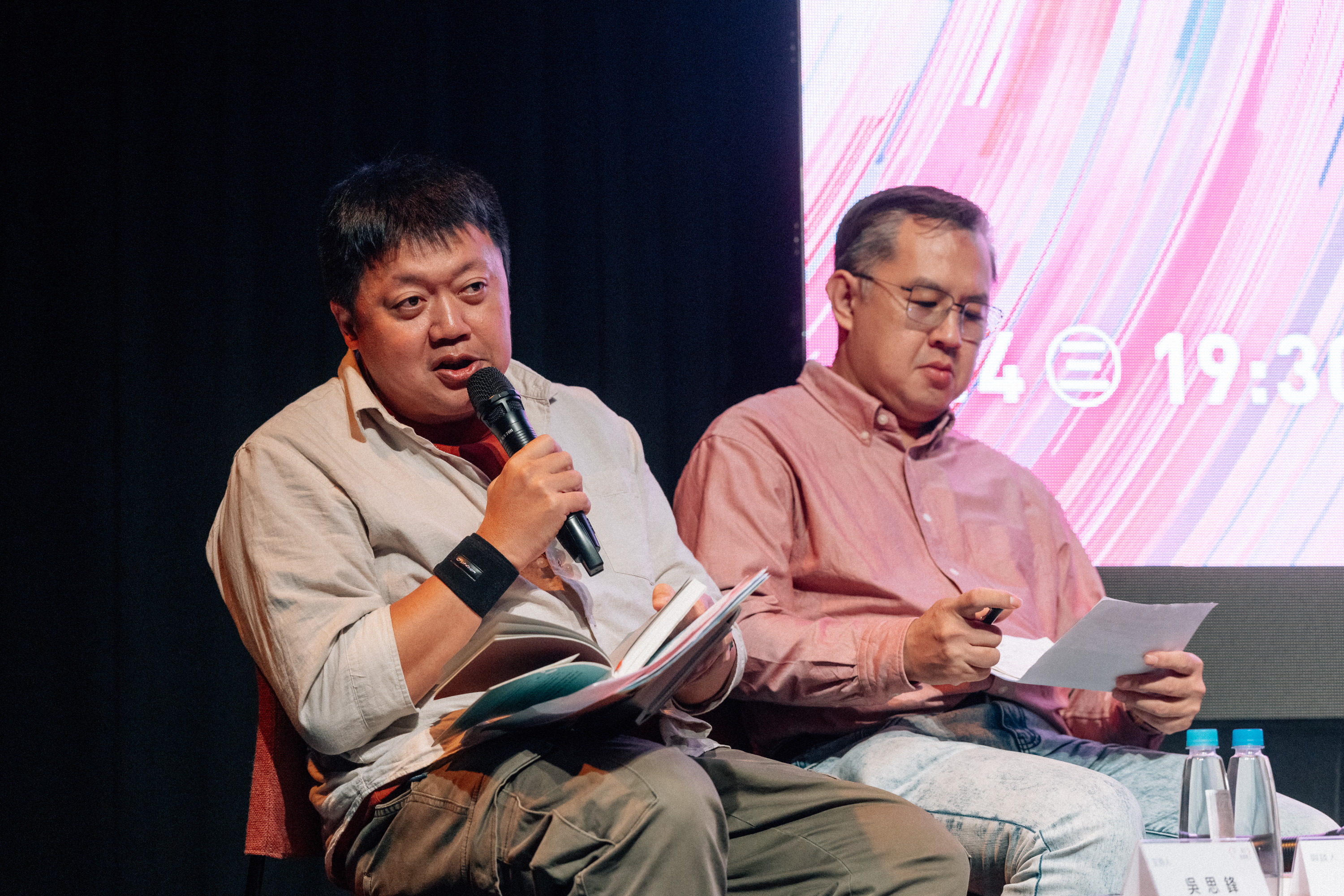
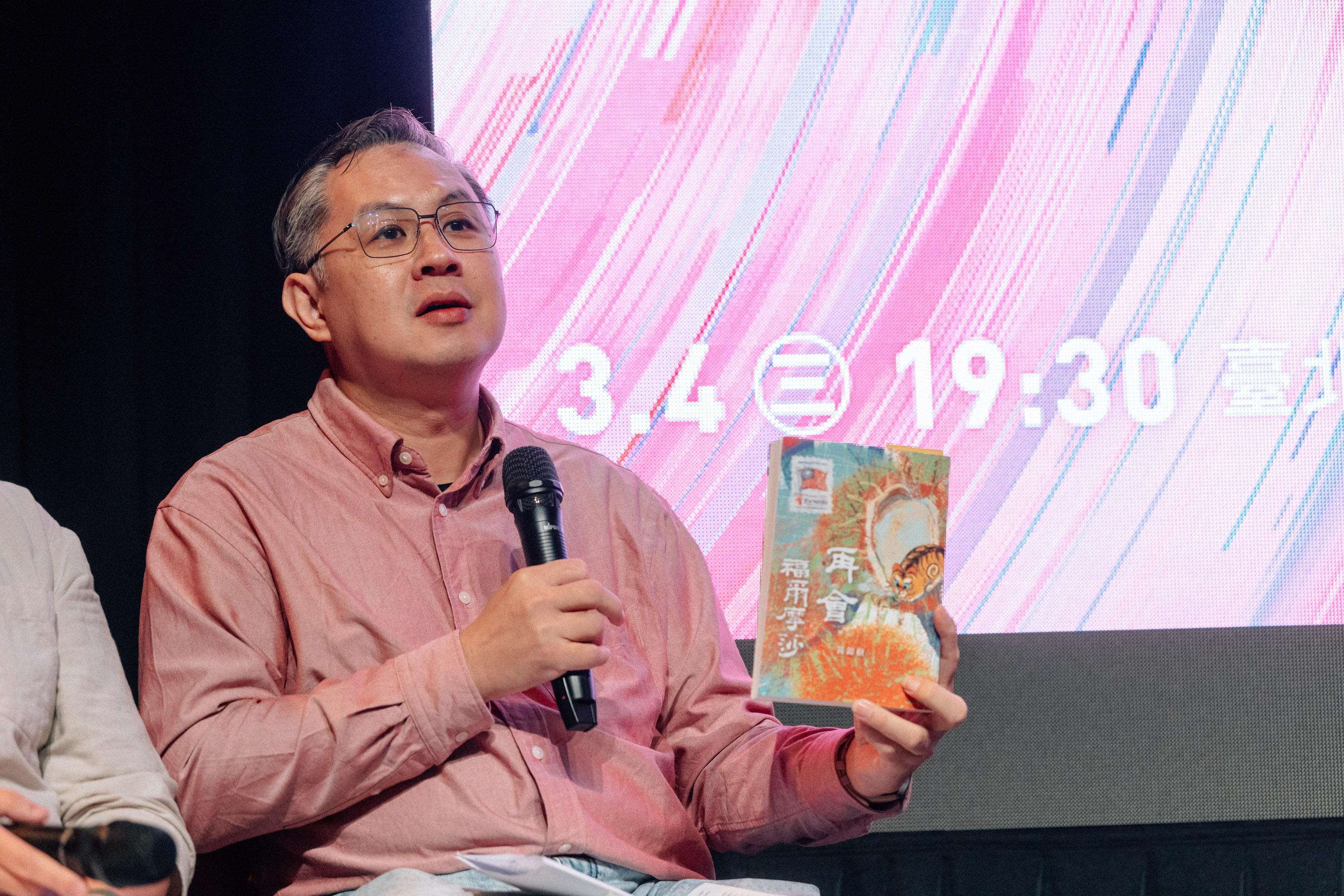
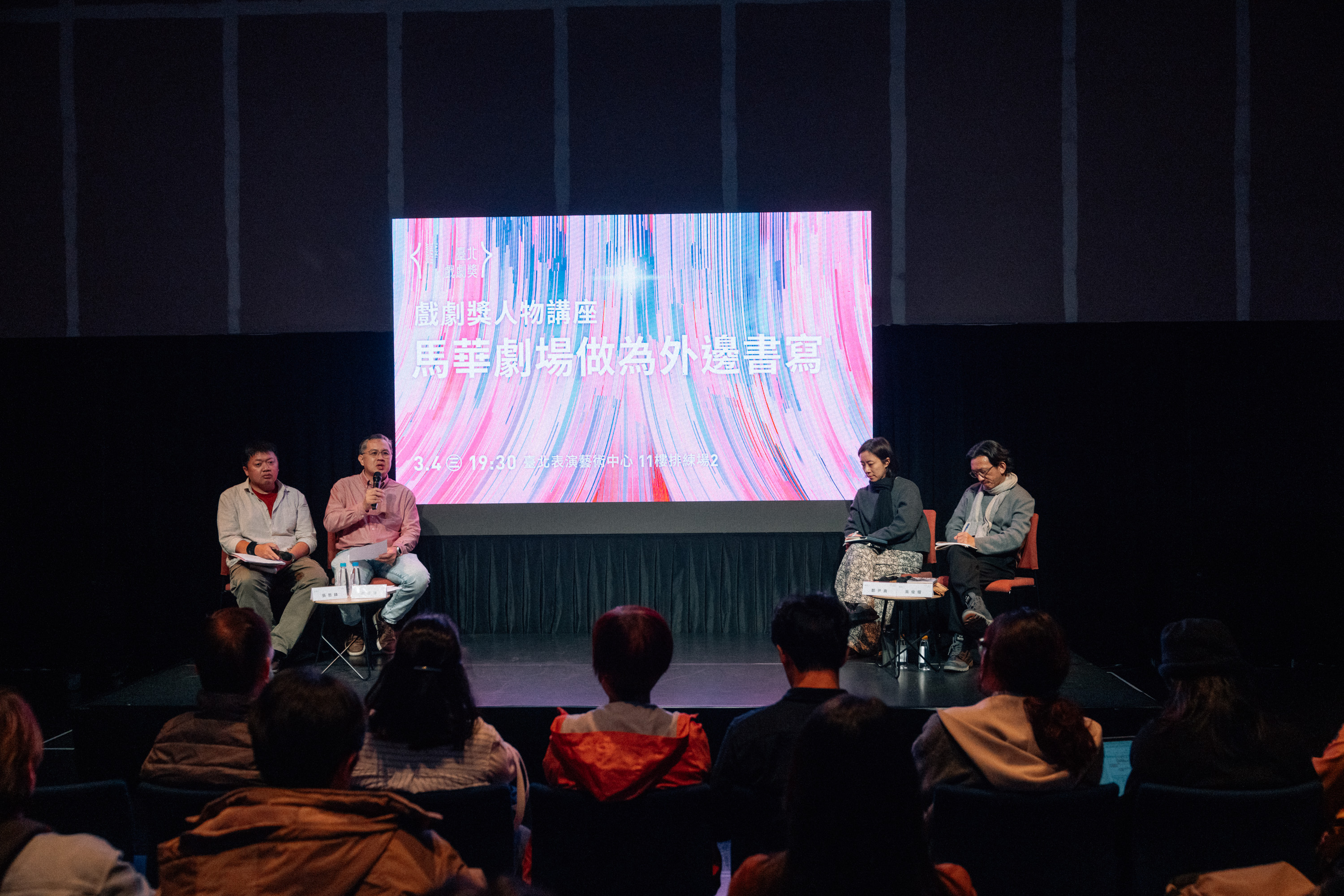
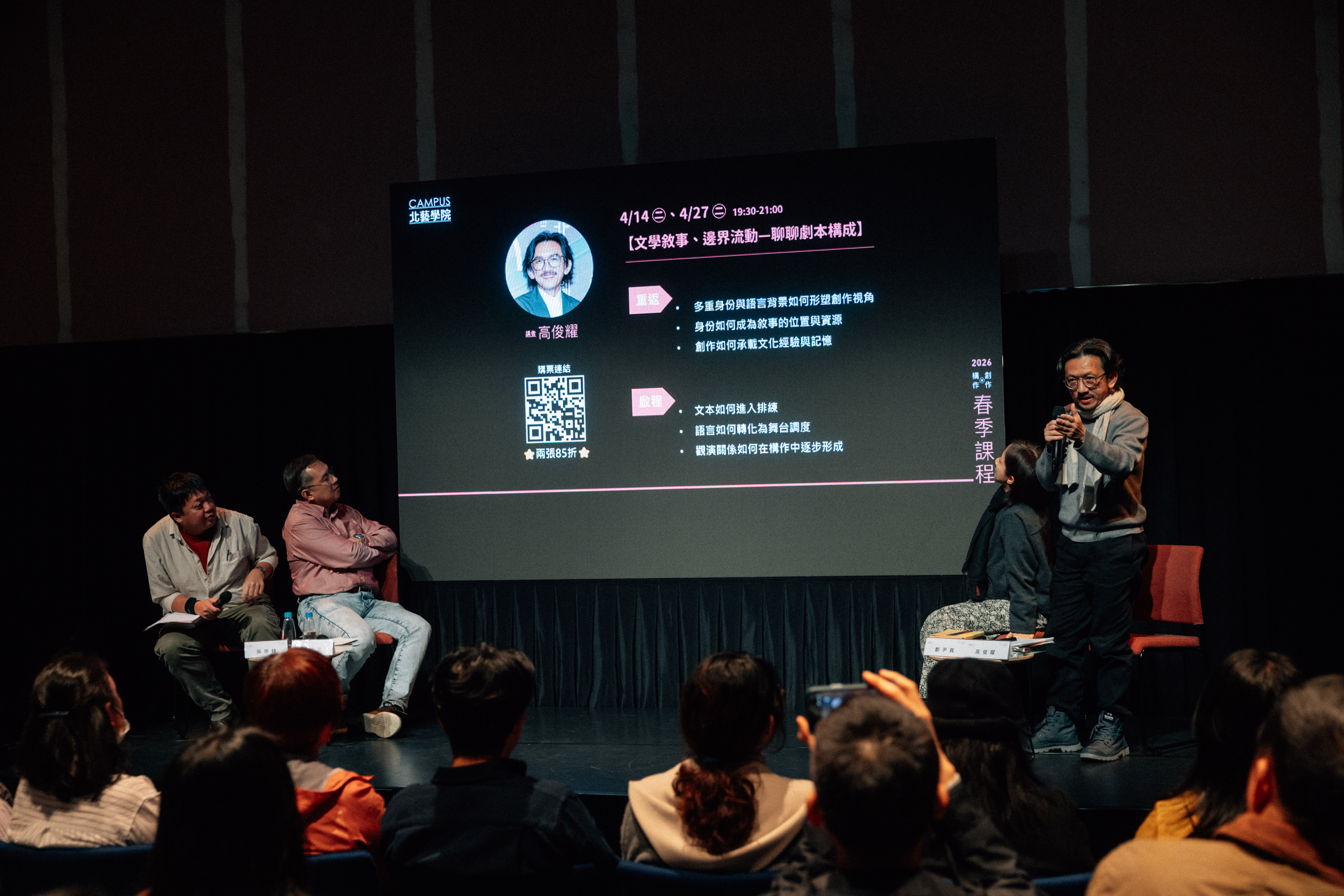
This lecture entitled “The Parallel Universe of Malaysian Chinese Theater” was part of the Taipei Theatre Award Winners Lecture Series. Koh Choon Eiow and Cheng Yin-Chen, co-artistic directors of approaching theatre and the creators and performers of Ghostopia, as well as Professor Ko Chia-Cian, a promoter of Malaysian Chinese literature in Taiwan, were invited to engage in a dialogue moderated by Wu Sih-Fong, during which they cross-referenced Malaysian Chinese literature and theater.
In the midst of “marginality”
Wu explained that the theme of this lecture was inspired by a line from an interview within a collection of short stories by Ng Kim Chew: “Malaysian Chinese literature could disappear at any moment, and I happen to be in the midst of it.” He also cited author Lee Yung Ping on the subject of “marginality” and used literary examples to explore the question: How has the marginality of writings on historical identity inspired the creation of works by approaching theatre?
“I feel a connection to the word ‘margin,’” noted Koh. He is from Sungai Petani, a small town about an hour’s drive from Penang. To him, Penang is the center and his hometown is along the margin. Applying this analogy to the theater, the stage is the center and the area where the audience sits is along the margin. From a young age, he was often in the audience’s position. Early on, he developed a desire to understand others, which led to his relatively tolerant perspective. For him, creating works in Taiwan is not about asserting his own position, but about having something to say. While developing one production after another and participating in exchanges, as well as through feedback from friends, he learned that his works differ from some Taiwanese creations. This difference seems to stem from his upbringing and cultural background. He added, “Perhaps in the beginning I was in a state of confusion, my exploration was ongoing, so I could not decisively say ‘what I am like or who I am.’ Rather, during the process, shifting positions is something that I like and am used to.”
Malaysian Chinese literature in Taiwan
Professor Ko noted that Malaysian Chinese writers who stayed in Taiwan under the overseas Chinese student policy once had to “remove certain colors and impurities” to prove themselves and respond to their external environment. As a society of immigrants, Taiwan’s “dual homeland” experience provides a dynamic marginal perspective. The reflections of writers on their own writing positions also shape new dynamics. “Is Malaysian Chinese theater a type of marginal Malaysian Chinese literature?” Professor Ko added with a chuckle that no matter where a lecture on Malaysian Chinese literature is held, it probably would not attract as many people as this one. It is precisely this energy generated by the “marginal” that makes it impossible to ignore theater or the provocations and clashes arising from theater’s position when reviewing Malaysian Chinese writings today.
While well-established publishing and awards mechanisms have brought visibility to Malaysian Chinese literature, to some extent, they have also made it a part of Taiwanese literature. As a result, “marginal writings” bring another layer of reflection. Marginal is not just a passive boundary. Its continuous provocations have helped to shape Taiwan’s theater and literary fields.
Malayan Communist writings in literature: internal and external
Ghostopia is set in a unique time and place – the period of the Malayan Communist Party (MCP). When discussing his study and understanding of this period, Koh brought up the works of two authors: Wang Gungwu and Hai Fan. As a reference, Professor Ko compiled literary writings internal and external to the MCP. Internal refers to the writings based on the personal experiences of MCP members, such as key member Jin Zhi-Mang’s Hunger and Singaporean writer Hai Fan’s Delicious Hunger. They have provided first-hand accounts from the perspectives of hunger, survival in the jungle, and organizational structure. External writings are those of non-members. Many have written fictional novels against imagined backdrops of passion, betrayal, and diaspora, using literature to come close to the MCP. However, the authenticity of these writings has come into question and, therefore, they are not readily accepted by former MCP members. Overall, from the perspectives of their creators, MCP writings reflect on and emotionally engage with a once-suppressed history.
Preparation from a rear-view perspective
When asked how as a performer she carries complex texts and histories, Cheng said that her preparation rarely directly involves relevant plays. Rather, she seeks out corresponding events within the long course of history. As she reads biographies and historical accounts, in her mind she has a rear-view perspective. “The various changes in history give people a sense of déjà vu.” To understand code words or languages that were taboo, she read Fang Yi Zhi Wan Jie Kao (Fang Yizhi’s Later Years) by Yu Ying-shih. When the Ming dynasty ended, some literati were not willing to serve a foreign ruler and resolved to continue living as adherents of that former dynasty. Fang Yizhi drowned himself at the panic beach after being escorted north. As a wanted criminal, his suicide was a taboo subject for the reigning dynasty, and his official cause of death was listed as illness. Those close to him knew the truth but could not discuss it. Cheng imagines that they did not necessarily grasp the full picture. Therefore, reading personal life histories from a slightly distant “rear’ perspective is a working method that is more comfortable and provides a clearer view for her.
Starting from the perspective of margin, Wu discussed impurities, multiplicity, chaos, and hybridity, concluding that even after having known Koh for some time, he doesn’t feel that he knows a lot about him or his works. Continuing to view him as “a question” has opened a broader space for exchange. Every individual’s trajectory is extremely complex. If we don’t readily fix ourselves in a certain position, perhaps in every situation there is the possibility for firsthand reimagining and rediscovery.