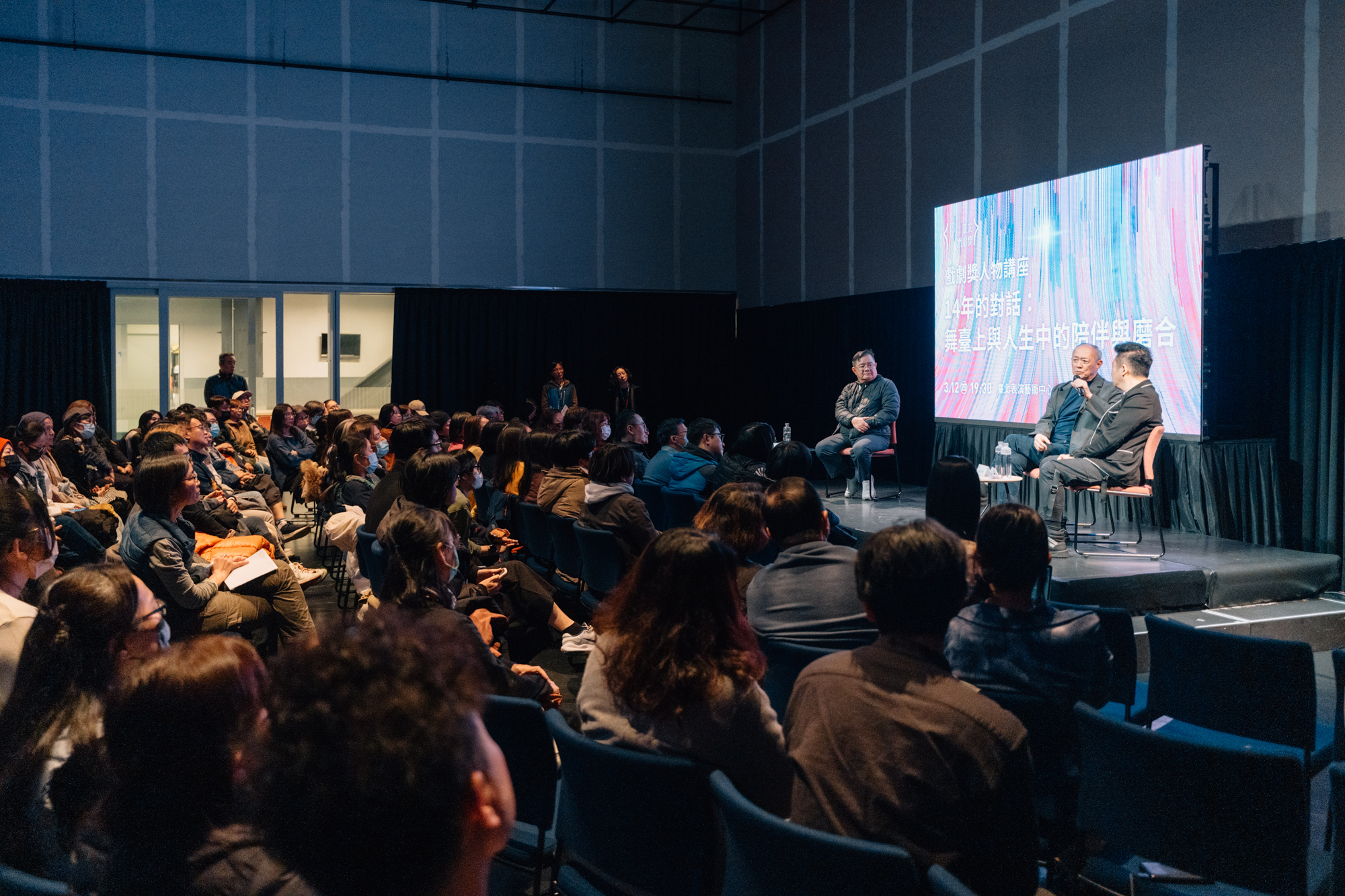
Taipei Theatre Award Winners Lecture Series|A-14-Year Dialogue: Companionship and Collaboration on Stage and in Life|Lecture Notes
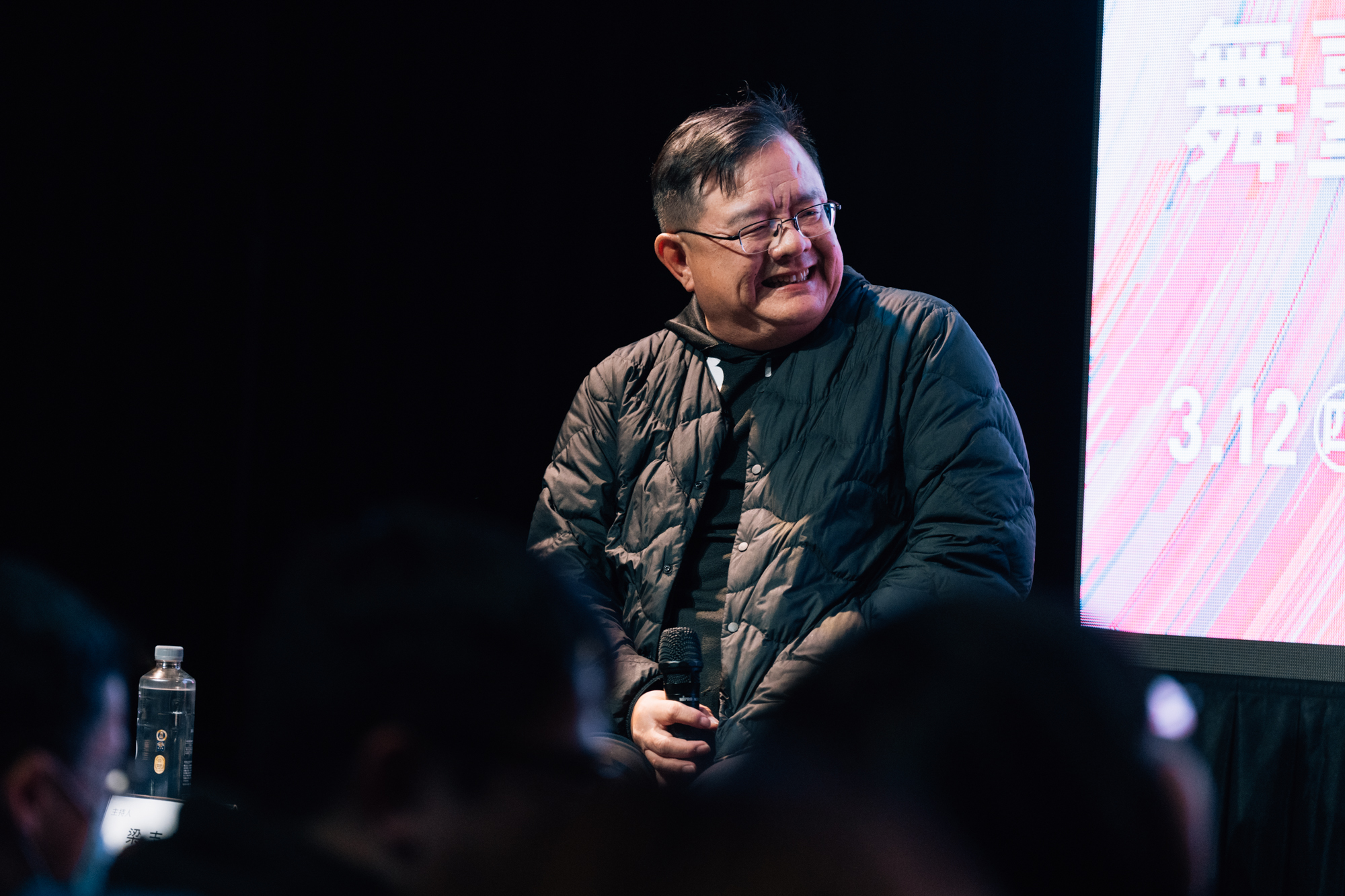
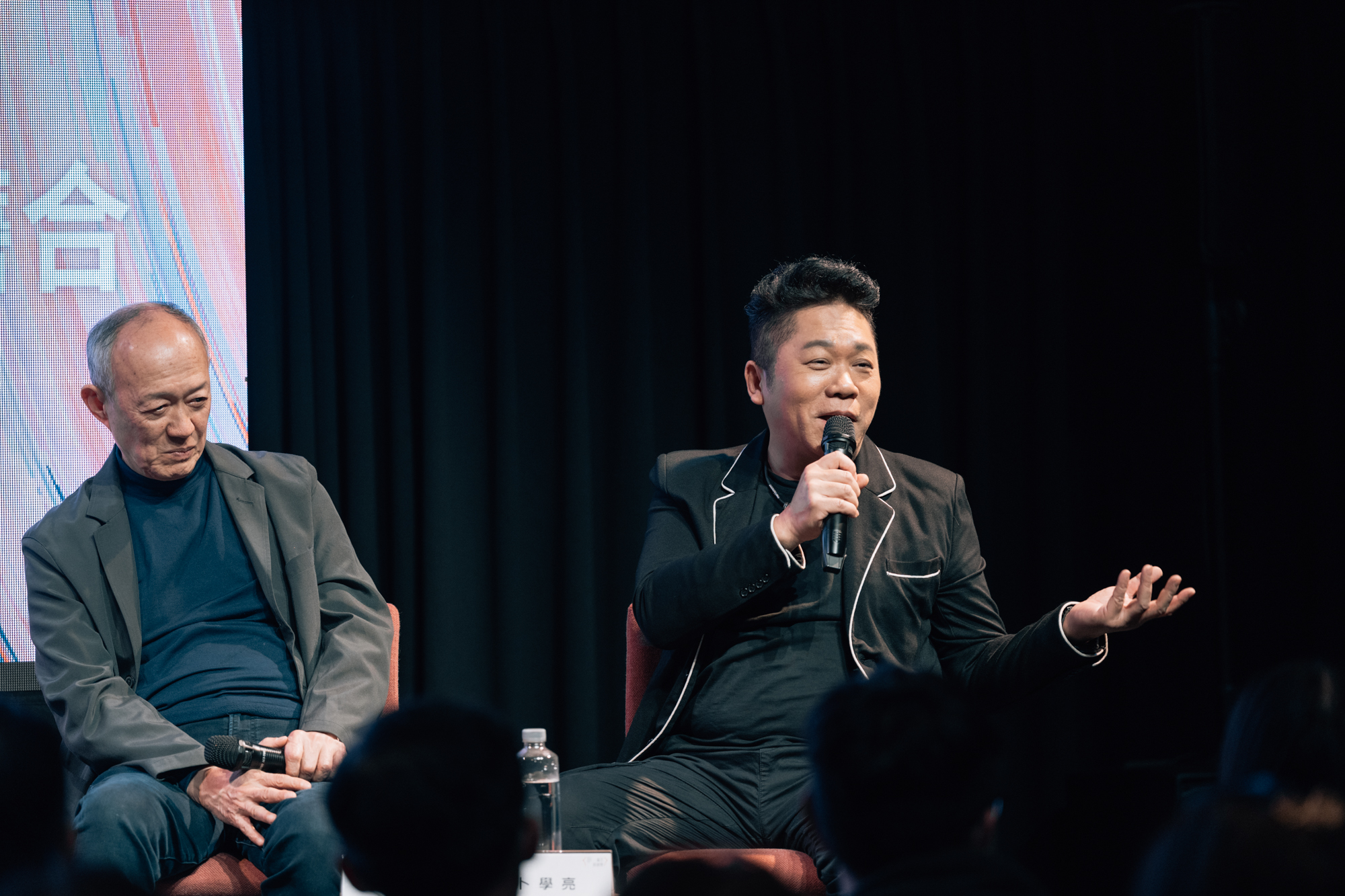
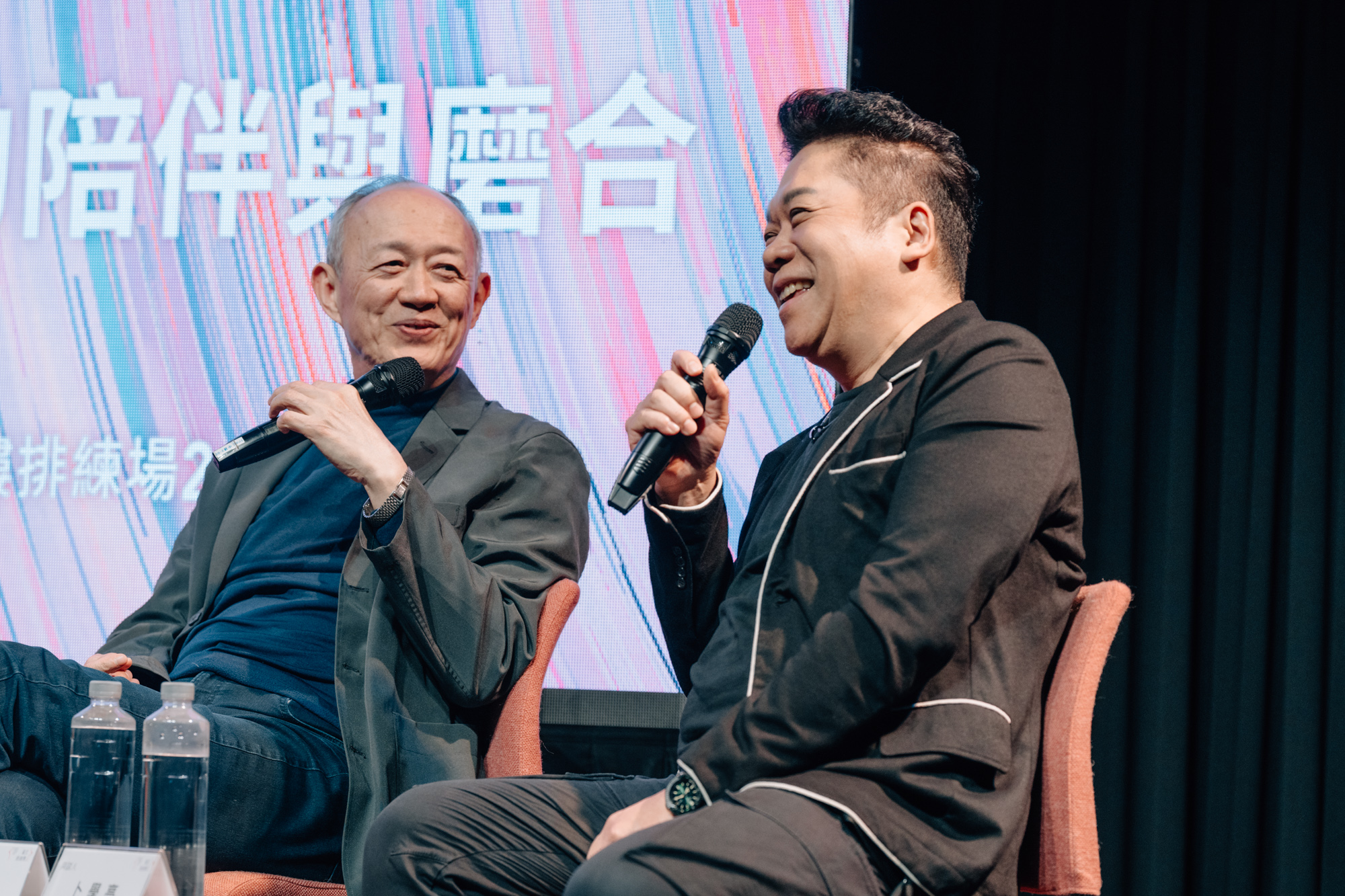
“On stage, the present continuing tense is always used.” This is how the moderator, Godot Theatre Company director Liang Chi-Ming, opened the session. It takes at least 10 years to call someone a close friend. The play Tuesdays with Morrie ran for more than 14 years. The actors in the two main roles, Chin Shih-Chieh and Pu Hsueh-Liang, talked about their journeys with this play, in these roles, and with one another over 14 years, with Chin named Best Actor in a Play at the inaugural Taipei Theatre Awards. During this session, they described how they communicated and how they befriended and became close to the characters they portrayed.
Initial encounters with the script
“Aren’t some inspirational quotes and insights about life beautiful when written down?” Initially, Chin did not think that this story needed to be adapted for the stage. But the excellent scriptwriting made him change his mind and he has even used the script in his playwriting and directing classes, during which he asks his students, “What do you see? If you cannot see the play, the play doesn’t work.” Using a map as a metaphor, he noted that there are treasures buried within the script which bring pleasant surprises.
When Pu received the invitation to join the cast and learned that he would be performing alongside Chin, he accepted without even reading the script. He said, “Many people would come to see Mr. Chin and when not focused on him, they would see me.” After reading the script, he discovered that not only were there many lines, but he also had to cry, which was not something he felt comfortable doing. He had wanted to back out. Fortunately, his agent convinced him not to, which led to the beginning of this 14-year collaboration.
How did the actors approach their lines?
Liang recalled that Chin’s first role in a Godot Theatre Company production was Antonio Salieri in Amadeus. There were lengthy monologues filled with quips, humor, gloom, and obscurities, his performances of which were captivating.
Chin emphasized that one must “first comprehend.”“Every thought is a thread. Some threads suddenly disappear but after a few words they reappear. In the mix of fiction and reality, that map of threads must be found.” An actor knows in an instant if he is speaking correctly. At that time, the audience feels closer to him. If the actor does not convey a sense of confidence when speaking, he becomes fully aware that the audience is just seeing a beautiful body.
Pu shared that in the beginning he was worried about wasting other people’s time. On the first day of rehearsals for Tuesdays with Morrie, he had memorized all his lines and put away the script. As rehearsals progressed, Chin and the director asked him to pick up the script again because they felt that although he had memorized his lines, he didn’t truly understand them. He thought back to his performance in The 39 Steps, during which he did not take seriously a reminder to “not steal the scene.” This time, he realized that fully understanding the whole script is more important than memorizing scenes, as only in this way can there be a well-balanced performance.
Over this 14-year journey how did they avoid burnout?
Before going on stage, Chin would often give Pu notes, such as avoiding premature reactions to the lines. Pu said that these notes were useful. As no two performances were the same, he was able to maintain enthusiasm and avoid burning out. Even for the final performance, which was the 339th show, Chin gave him notes. Not every senior actor spends time giving pointers and he cherishes them to this day.
For Chin, Tuesdays with Morrie was not a dramatic film. Rather, it was a documentary about life and should be remembered that way. If every line was delivered perfectly, this would be a betrayal of the work. “The slightly murky quality of the dialogue” brought their conversations to life. During rehearsals, they repeatedly pursued lifelike expressions. Over its many performances, every “flaw” was meticulously crafted. He emphasized, “Always, always respect the saying, ‘Lines are unpredictable. Another person’s lines are unpredictable, and you next line is unpredictable.’”
Reality on and off stage
After each performance, especially those that required them to travel, these two often shared a nightcap and chatted about life and that day’s performance. Pu said that Chin provided encouragement and he cherishes those one-on-one masterclasses. Chin responded that he wasn’t deliberately trying to praise or encourage him. It was just that on stage he saw “something real.” “What happened next was that for 10, 20, 30 seconds I was not acting at all. I was pulled into that ‘reality.’ I didn’t need to put forth any effort to act. It turned out that what had been rehearsed had its own track. No matter which way you went, you wouldn’t lose your way. You were just walking in that ‘reality…’ The best moment for an actor is when what they are ‘playing becomes real.’ Oh, I’m happy. Oh, what we are ‘playing has become real…’ If he entered that reality, even for a second, I had to tell him that ‘I saw it.’”
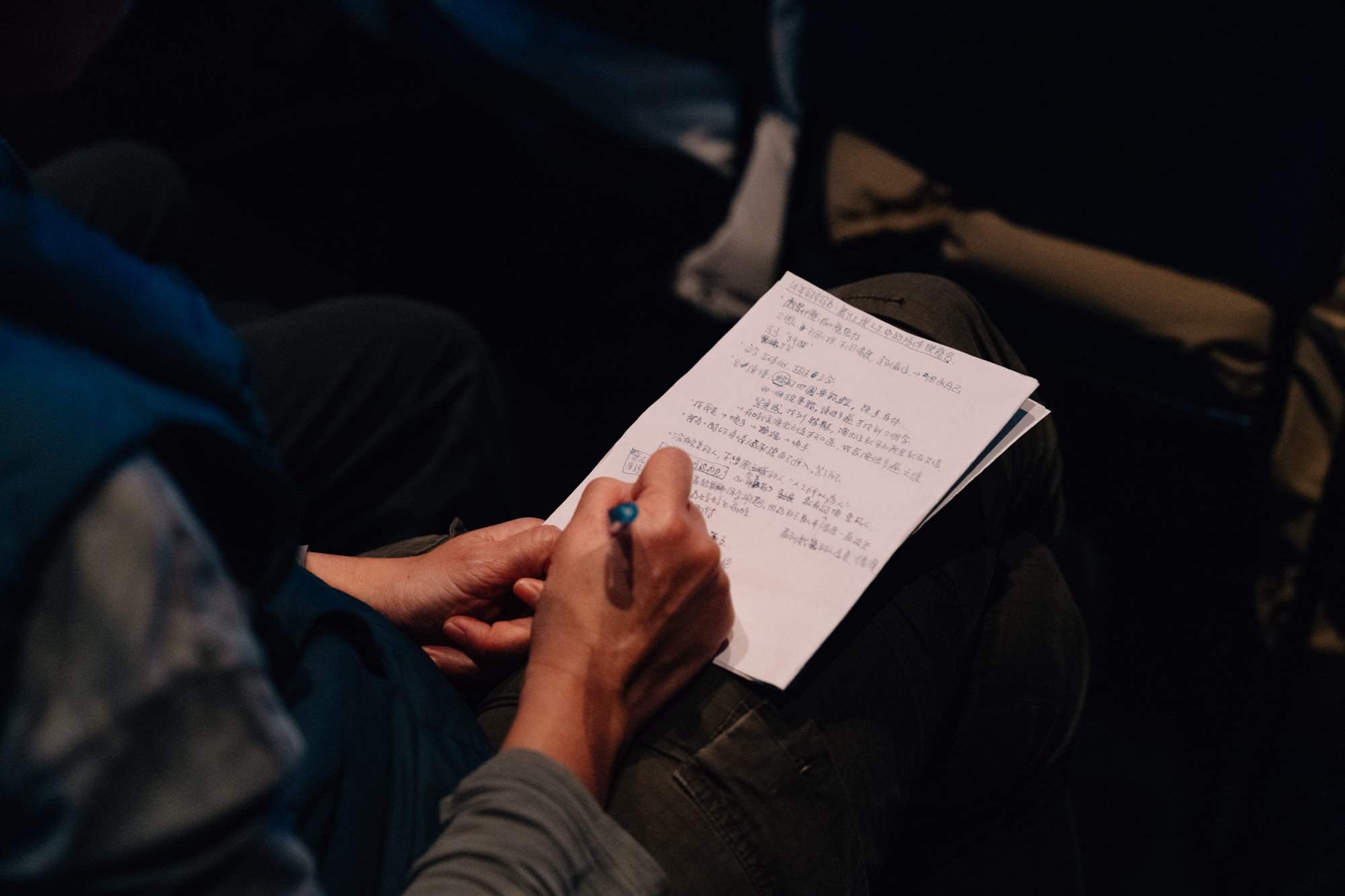
At the end of this session, audience members enthusiastically posed questions. The first was whether this play would be revived in the future. Liang gave a positive response. In his concluding remarks he said that actors are very fortunate. They experience hundreds of different lives without having to abandon their own. Those 339 seemingly similar yet diverse dialogues came to an end after 14 years. But that doesn’t mean that there has been a final curtain call.