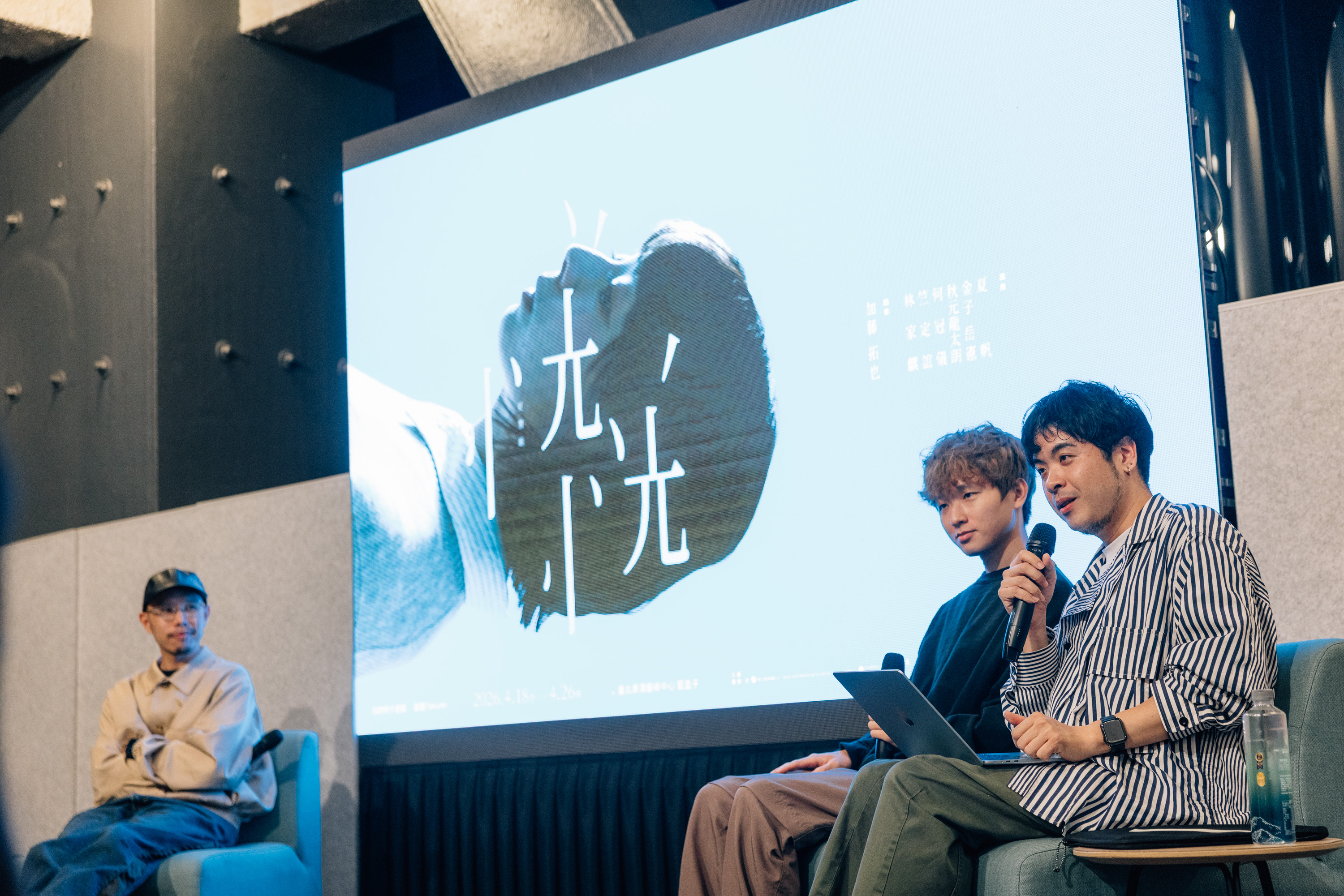
More Than Partners: Theatre Encounters Between Taiwan and Japan
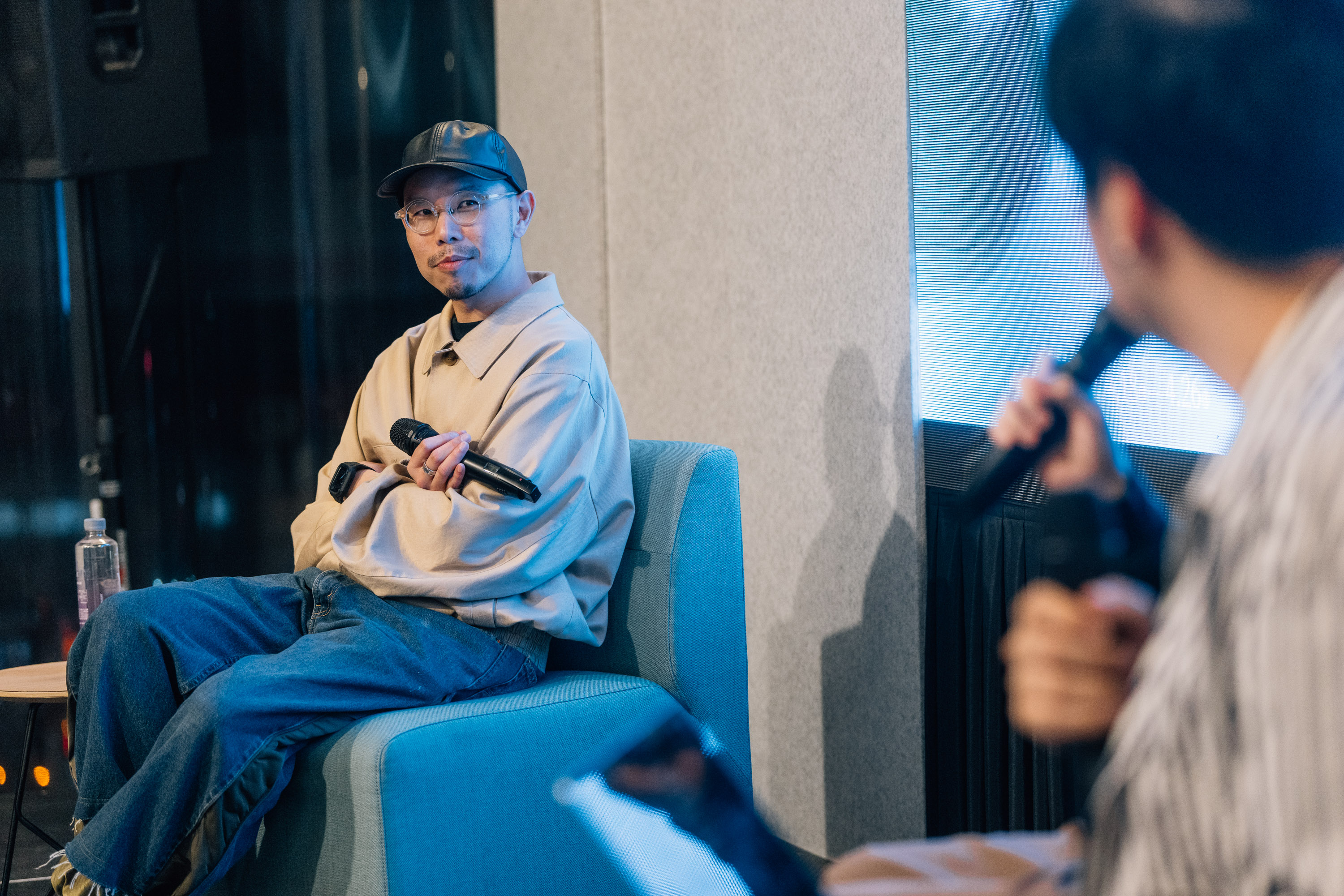
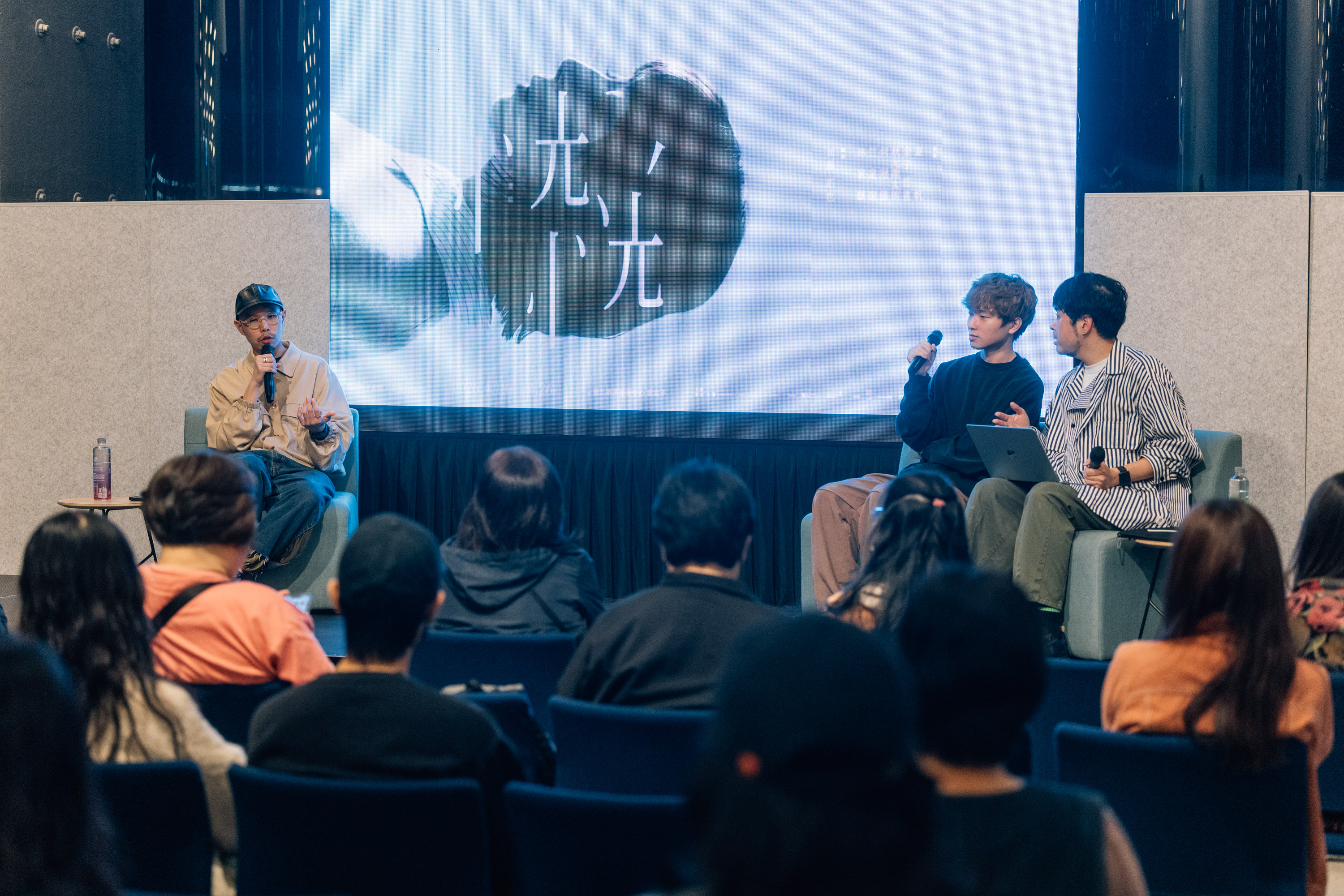
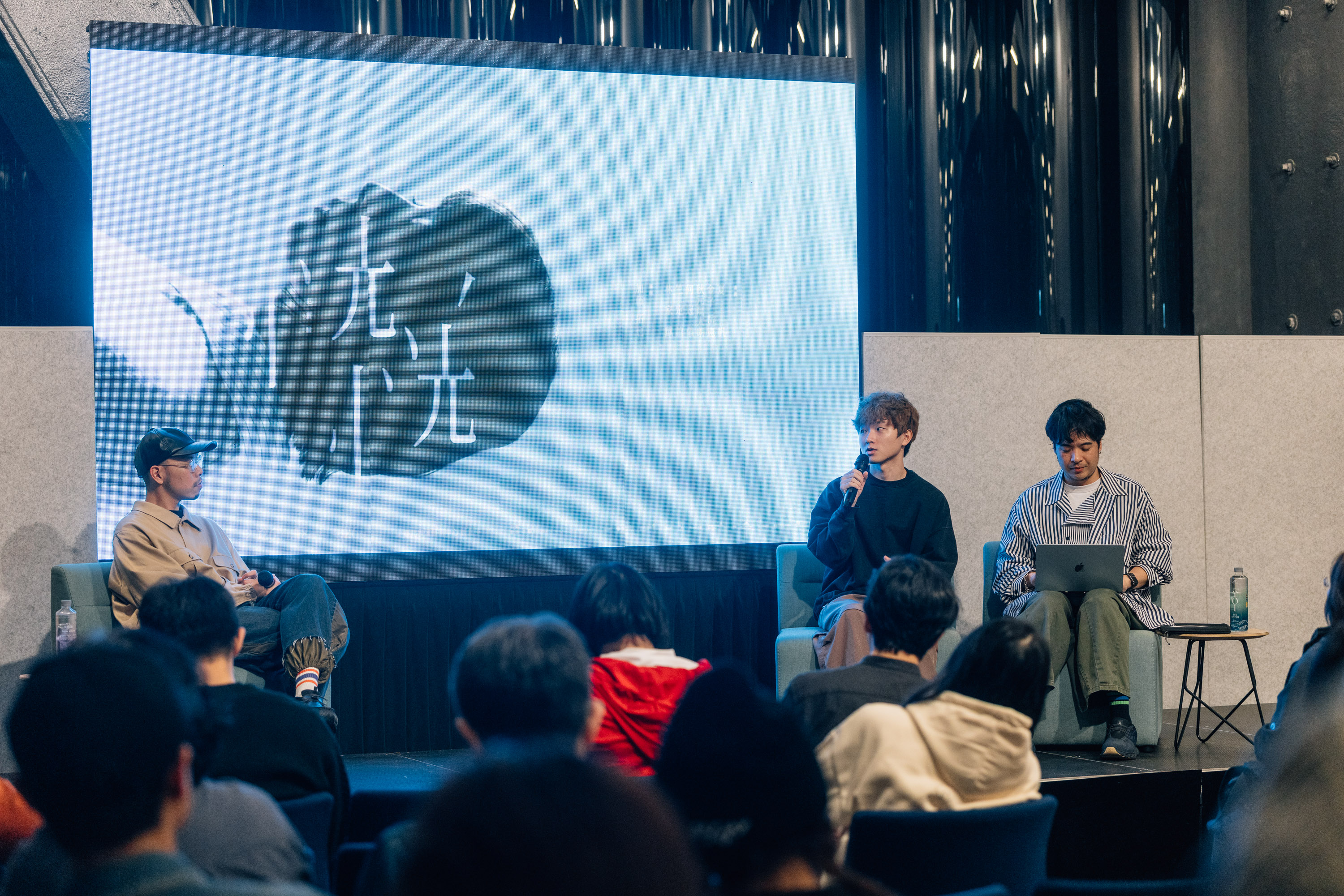
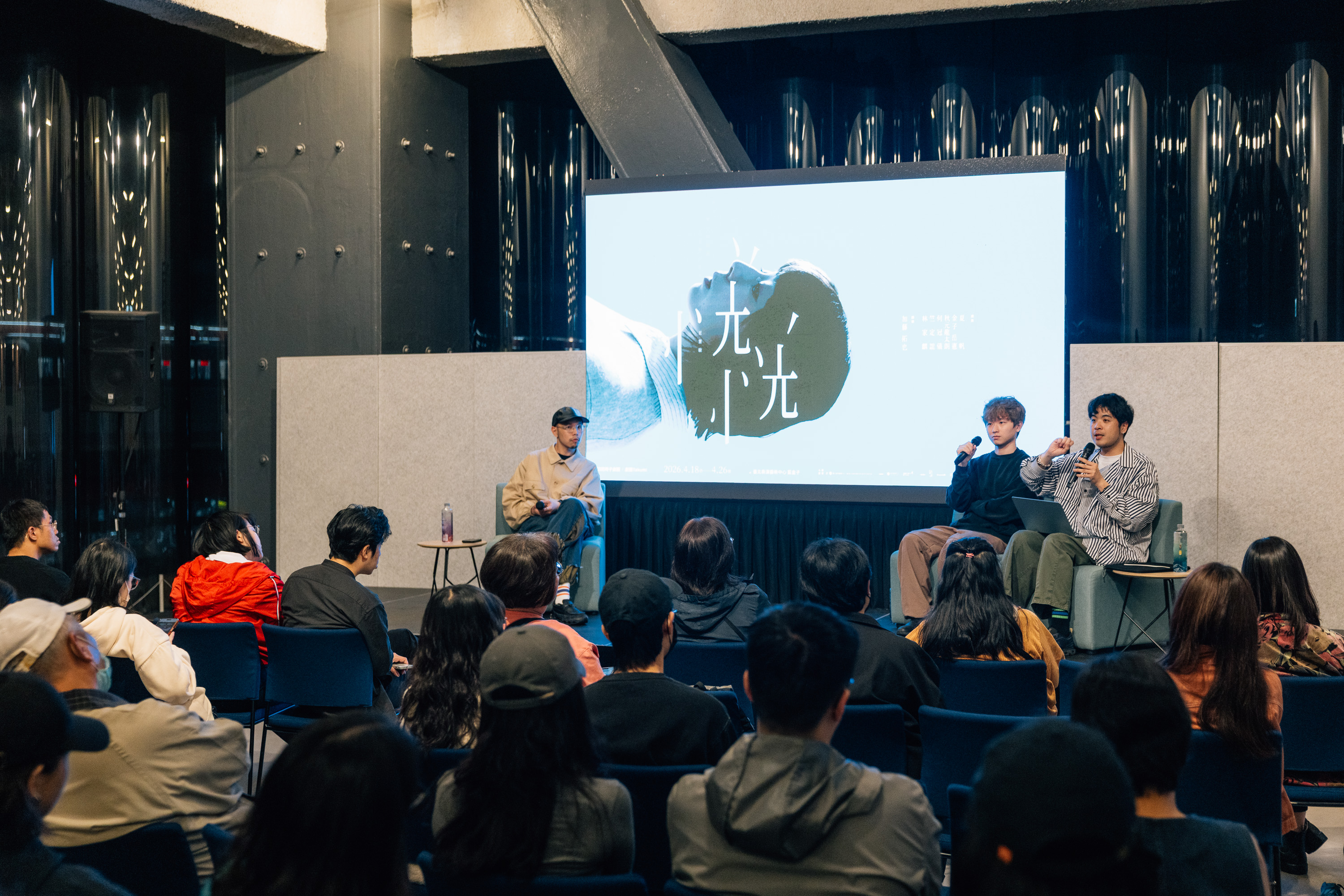
Moderator Chen Han-Ching posed questions and served as interpreter, while playwright/director Takuya Kato and 4 CHAIRS THEATRE artistic director Tora Hsu discussed the origins of and the collaborative process for their first co-production, Uneasy. These two met during the first performance of Watako’s Entanglement in Taiwan. Hsu remembers being very impressed by Kato on that occasion. Later, as Kato was considering possibilities for international collaboration, Chen made the introduction that led to the birth of this project. In terms of their first impressions of one another, Kato expressed surprise at Hsu’s level of familiarity with Japanese culture, while Hsu found Kato to be exactly as people describe him, shy and reserved.
Performance nearly devoid of performance
After visiting Tokyo and seeing more of Kato’s works, Hsu came to greatly admire Kato’s keen observation of humanity as a playwright/director. The works of 4 CHAIRS THEATRE are ground in realism and Hsu himself is quite curious about the spectrum and range of realistic performances. Kato’s aesthetic choice of “performances that are nearly devoid of performance” present an interesting challenge for performers and Taiwanese audiences accustomed to certain types of realistic performances. In recent years, Hsu has also been focusing on enabling “actors to resemble people more than characters.”
Kato noted that he values how much of the emotional transformation that takes place between roles in the same on-stage world diffuses into the audience more than how much the actors on stage want to convey to the audience. In Japan, “speaking,” “thinking,” and “doing” are considered three different things and Japanese audiences are accustomed to speculating about “what is truly being expressed.” Rather than a unified system of performance methods, there exist many schools of performance in Japan. These schools sometimes mix or become synchronized. Another reality of working in Japan is that professionally trained actors often must work alongside untrained actors.
Imagining the Third World: the geographical and political significance of Fresh Kill
Fresh Kill is her summary of New York in the 1990s. It focused on the dumping of waste by First World countries in developing countries, the prevailing street movement, environmental discrimination, and racial discrimination. When asked about her choice of Orchid Island and its irreplaceability, she replied that the inspiration for this film was a news report. A ship carrying industrial waste had sailed to the African continent searching for a place to dump it. Living in New York, she knew that Manhattan’s garbage was transported to Staten Island, where there is a landfill named Fresh Kills. While reflecting on this parallel relationship, she came across information on the establishment of a nuclear waste storage site on Orchid Island by Taiwan in 1982 and connected these unilateral waste dumping incidents.
The ideal apple
This led Hsu to ask Kato, “Do you prefer actors who have been professionally trained or those who haven’t?” Kato replied, “Actually the stage plays that I create are extensions of reality. To bring them to the stage, I slightly reduce the level of extension.” Actors need to undergo a certain amount of training so that they do not sound like they are reciting lines of dialogue. Sometimes, the thoughts of the “actors” and the “characters” are not the same. How an actor copes with these differences and emphasizes his or her inner sensitivities can lead audiences to question whether this actor thinks this way or is just wanting to portray the thoughts of the character. This also requires training. Kato likened this to growing the ideal apple. If you want to produce a sweet bright red apple, it is necessary to consider factors such as sunlight and fertilizer. You cannot just paint a green apple red and inject it with a sugar solution. For him, expressing anger simply because the script calls for it is akin to forcibly injecting an apple with a sugar solution. During a performance, minimizing this kind of “processing” requires training. This is what he calls organic acting.
Cultural differences
Hsu shared two types of observations of cultural differences during the development of this co-production. One involved specific working conditions. That is, in Taiwan, actors typically work on multiple productions simultaneously. However, in Japan, actors tend to work on only one production at a time. He noted that he intends to transition to this healthier model. The other involves the creative aspect. Kato provided incisive explanations of the plot rather than directly gave actors “pointers” for the sake of efficiency. This working language is worth learning.
Kato shared that Taiwanese actors have a strong “belief in the power of stories.” Japanese actors, on the contrary, are largely “skeptical of the power of stories.” For him, some performances require absolute belief, while others require doubt, to be compelling. For example, Lin Chia-Chi’s character is deeply convinced about something, so Kato interpreted the text based on absolute conviction. However, if interpreted by Ryutaro Akimoto, he would have “drawn in” the audience by questioning the act of being deeply convinced.
Consensus = carrot
During the Q&A session following the forum, a student director asked the first question, which happened to respond to this theme of communication: When a director fails to clearly communicate the expected result, the actors start to distrust the director. In this situation, how can the actors be convinced to let go of the pursuit of an expected result and make the first move? Kato answered that it is necessary to produce an environment in which actors want to be spontaneous. For example, if you want them to move according to your instructions, you need to make them understand the situation and their motivation for doing this. This requires communication. Hsu expounded on this by saying that not too much time should be spent on verbal discussions because language is inherently cunning. More importantly, communication is about bringing different ideas closer together, not about reaching a consensus. Even if the cast reaches a consensus, it’s impossible to face audiences that have differing opinions or that initial consensus. Consensus is like dangling a carrot in front of a horse. The horse can never eat it but doesn’t need to.
“Because the day that you eat it, you no longer need to communicate. Without the need to communicate, we no longer need to create.”