Invisible Power: African Body Culture Reshapes Contemporary Dance
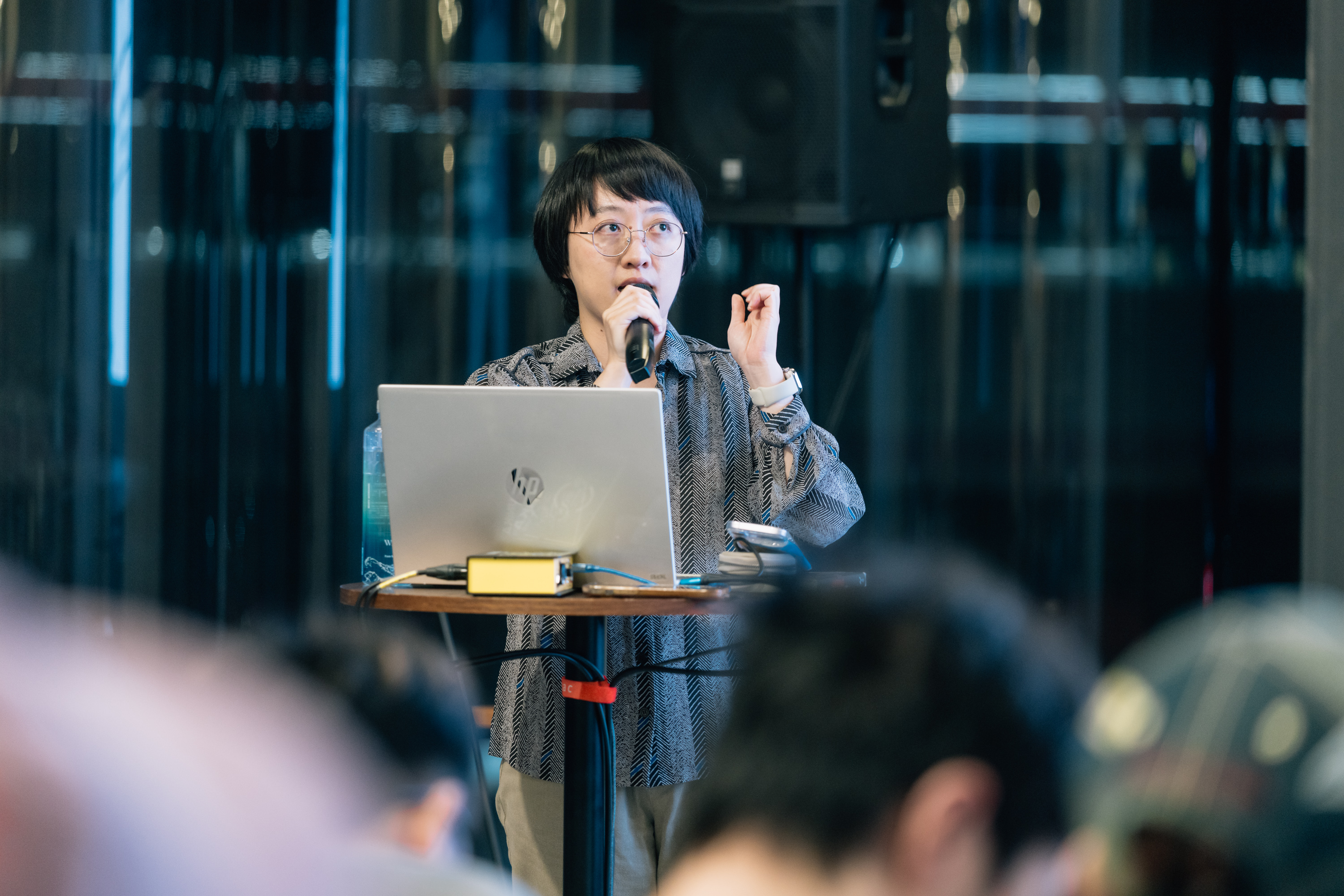
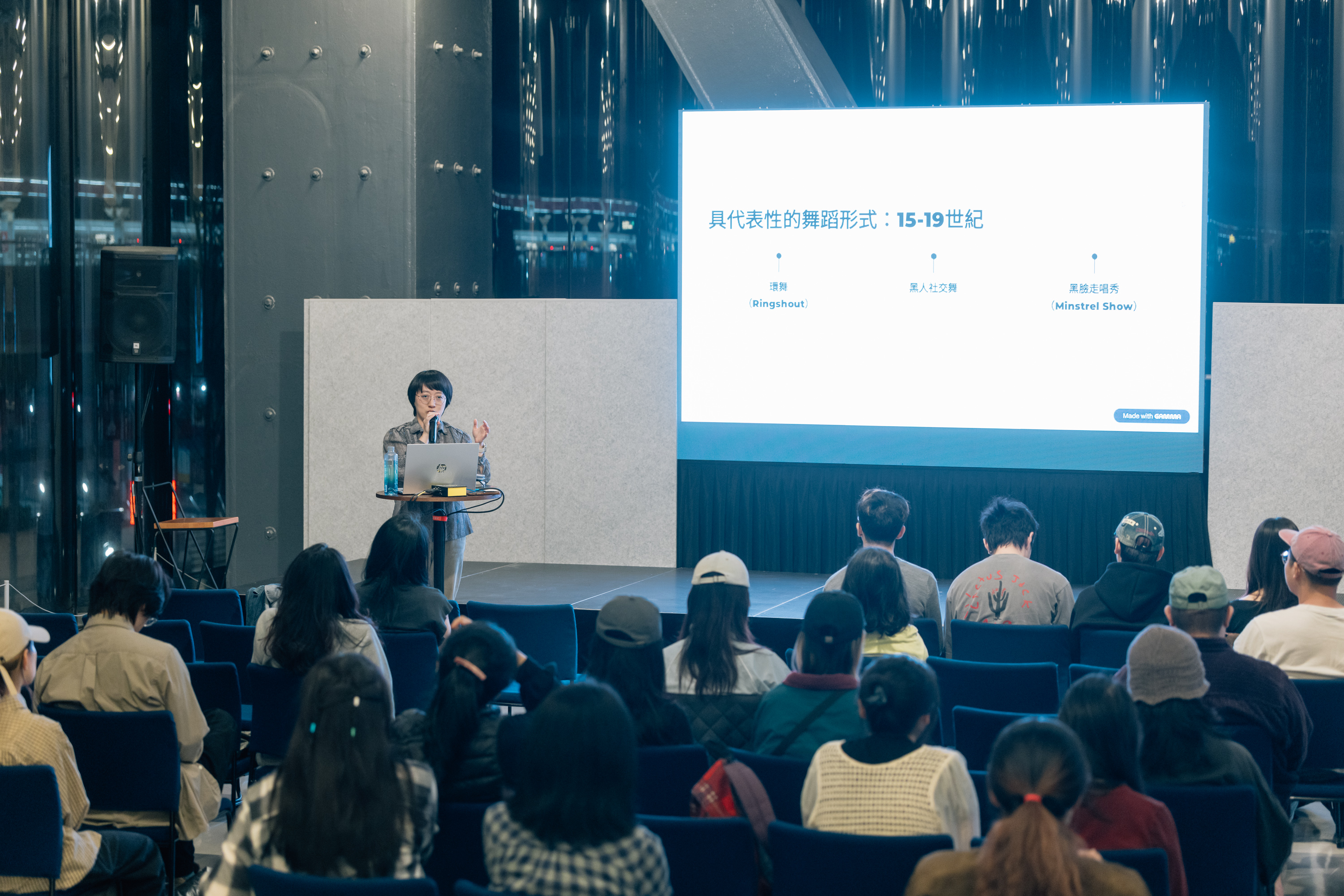
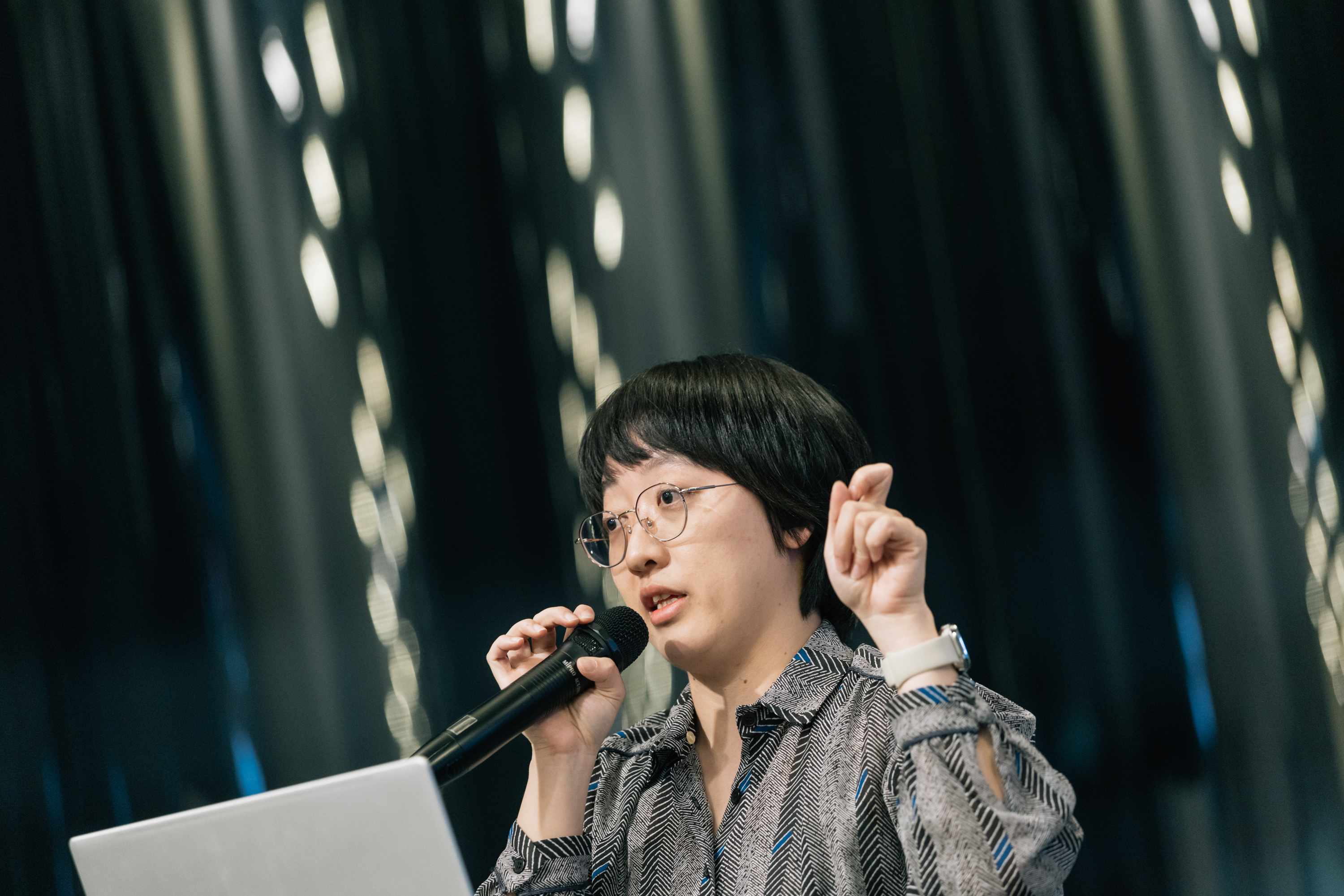
Although the influence of African body culture on contemporary dance seems imperceptible, many 21st century dance works and even K-pop have been shaped by it. This so-called “invisible” points to a far-reaching influence. Dance critic Wu Meng-Hsuan began this lecture by defining “Black” in this context. It is an experience originally associated with skin color that has transcended race to become a unique and ubiquitous aesthetic today.
Black: The underlying text of contemporary dance
Black profoundly shaped European and American modernist art and culture, even under long-term obscurity and romanticization. Black (slave) labor was one of the foundations upon which European civilization was built, especially during the rise of modernism in the 18th and 19th centuries, but with only rare positive mentions. In his writings, G.W.F. Hegel described Black music as noise and did not consider it music at all. American dancer Isadora Duncan criticized the then popular Charleston, saying that it looked like apes dancing. To a certain extent, the validation of modernist aesthetics partly depended on disparaging Black.
In the 1960s, at the height of the civil rights movement in the US, young avant-garde artists harbored a primitivist romanticized view of African art, considering Black “the path of return to the primitive, to desire, and to powerful forms of expression,” capable of breaking through the restraints of modernity. However, this romanticized view of Black also proved to be limiting as it made it seem that only Black people were capable of the most vibrant expressions. This stereotype permeated the hippie culture of the 1960s and 70s and even continues to this day, with the damage that it has caused no less significant than that of the effort to make Black invisible. Nevertheless, Black was not merely absorbed unilaterally by European and American cultures. It absorbed elements of modernism and avant-garde art as well. This is the Creolized nature of Black, like a language that blends multiple linguistic characteristics. The Black artistic practices we see today are the result of this two-way influence.
Representative dance forms
From the ring shout performed on long voyages during the Atlantic slave trade to the cake walk that imitated the movements of White plantation owners, Black people were ordered to dance. Although they were expected to provide entertainment, within these dances were hidden messages. The satire of White people connected Black people. In the 19th century, minstrel shows featured White people in Blackface who presented caricatures of Black people. It wasn’t until the beginning of the 20th century that Black people were able to portray themselves in Black musicals and to reclaim the humor that had been misappropriated by White people. In the 1920s, with the rise of national self-determination following the end of World War I, came the Harlem Renaissance and the awareness that Black people were an ethnicity and should build their own nation. However, this was sidetracked by the Great Depression and the outbreak of World War II.
In the 1960s, the civil rights movement in the US revived the Harlem Renaissance. The term Black Dance was coined during the Black Art Movement, with Alvin Ailey its representative choreographer. Well-known street dance styles such as funk style, locking, popping, disco, waacking, house, voguing, breaking, krump, flexing, hip-hop, and even urban dance and K-pop all fall under the category of African dance.
Music, rhythms and the physical characteristics of dance
It is “groove” that drives the Black body and emotions, with beats and low-frequency rhythms at its core. The “call and response” that takes place between musicians and between musicians and dancers produces groove, leading to the co-creation of flowing, complex, and continuous patterns that overlap to form rich layers. If we roughly divide the dance body into two types, Eurocentric and Afrocentric, Eurocentric (represented by ballet) emphasizes a vertical axis and a single core, as well as adopts a body-mind duality in which the mind is considered higher than the body. Africanism is characterized by multi-centered movements performed at a low center of gravity. The body’s connections with the earth and the ancestral spirits are represented by cyclical rhythms, which are also considered the embodiment of the soul.
In the eyes of dance historians, African body culture has influenced many important dancers. For example, some scholars believe that George Balanchine was affected by the Charleston, which was very popular in the US, as well as the Nicholas Brothers, resulting in ballet choreography that included pelvic movements. The looping forms created during contact improvisation, the equality of the body, and the multiple centers used by the body have been abstracted into a type of aesthetic quality. Some scholars believe this to be the result of the impact of African aesthetics.
Contemporary African works
Obscured and, at the same time, overly seen, how do contemporary African creators perceive Black? Wu used three keywords to illustrate the resilience of African body culture under multiple forms of oppression: colonialism, discrimination, and romanticization. These keywords are process, soul, and survival. Process refers to being in a group while, at the same time, walking one’s own path, retaining connections through call and response. Soul is not inherent in the context of Black politics. Rather, it is how W.E.B. Du Bois described it in The Souls of Black Folk, a skill that must be honed and learned, an ability to create and convey expressions within a tripartite relationship of belonging to history, belonging to a community, and staying true to oneself. Survival addresses how creativity resists different types of oppression and how to live beautifully in the shadow of death and under the specter of the ancestors’ demand for remembrance. This dynamic self-reconstruction has made African body culture both hidden and pervasive in the contemporary body. Contemporary audiences should see it, recognize it, and give it back its name.