Hagay Dreaming: Costumes, Music, and Physicality in a Cross-disciplinary Work
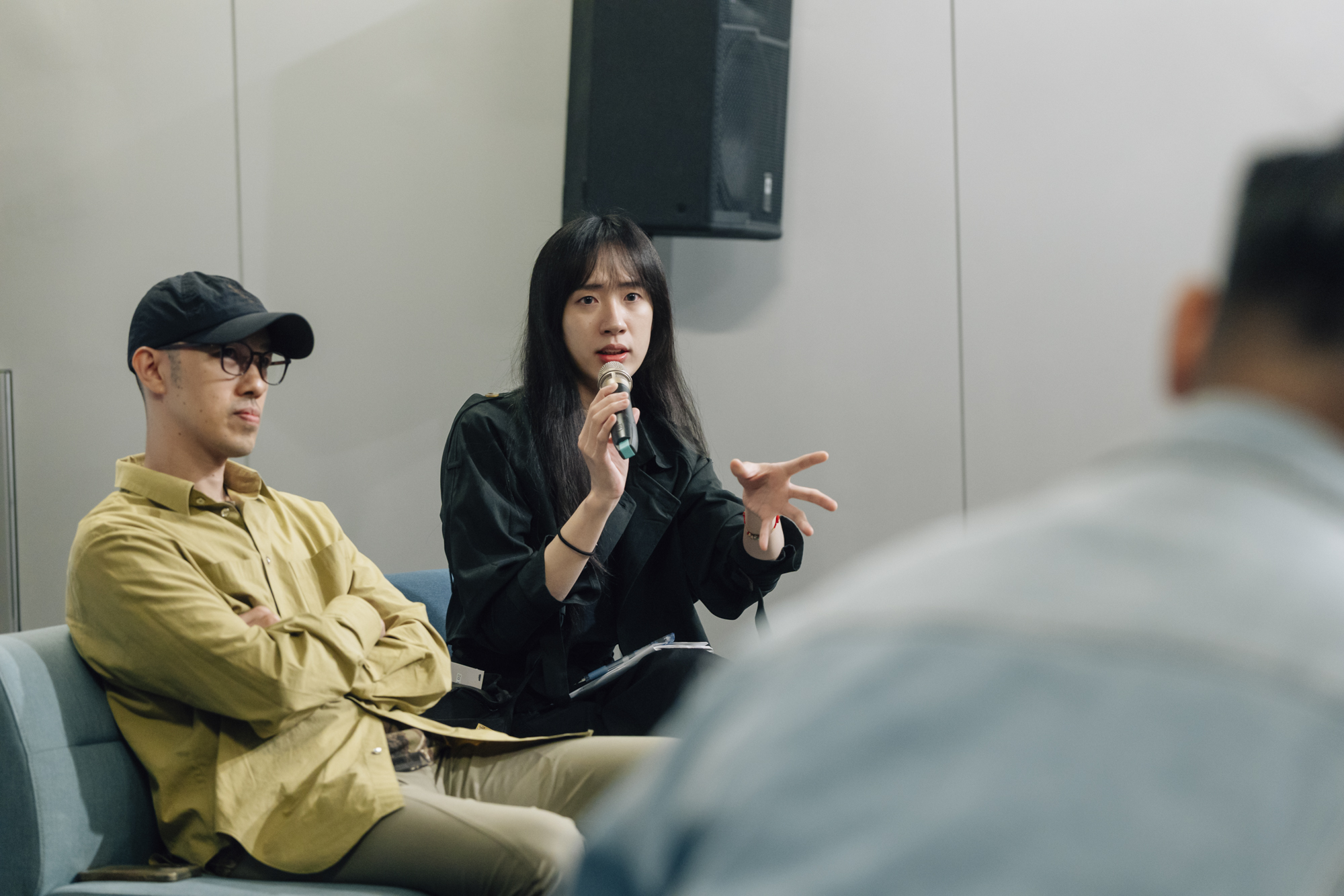
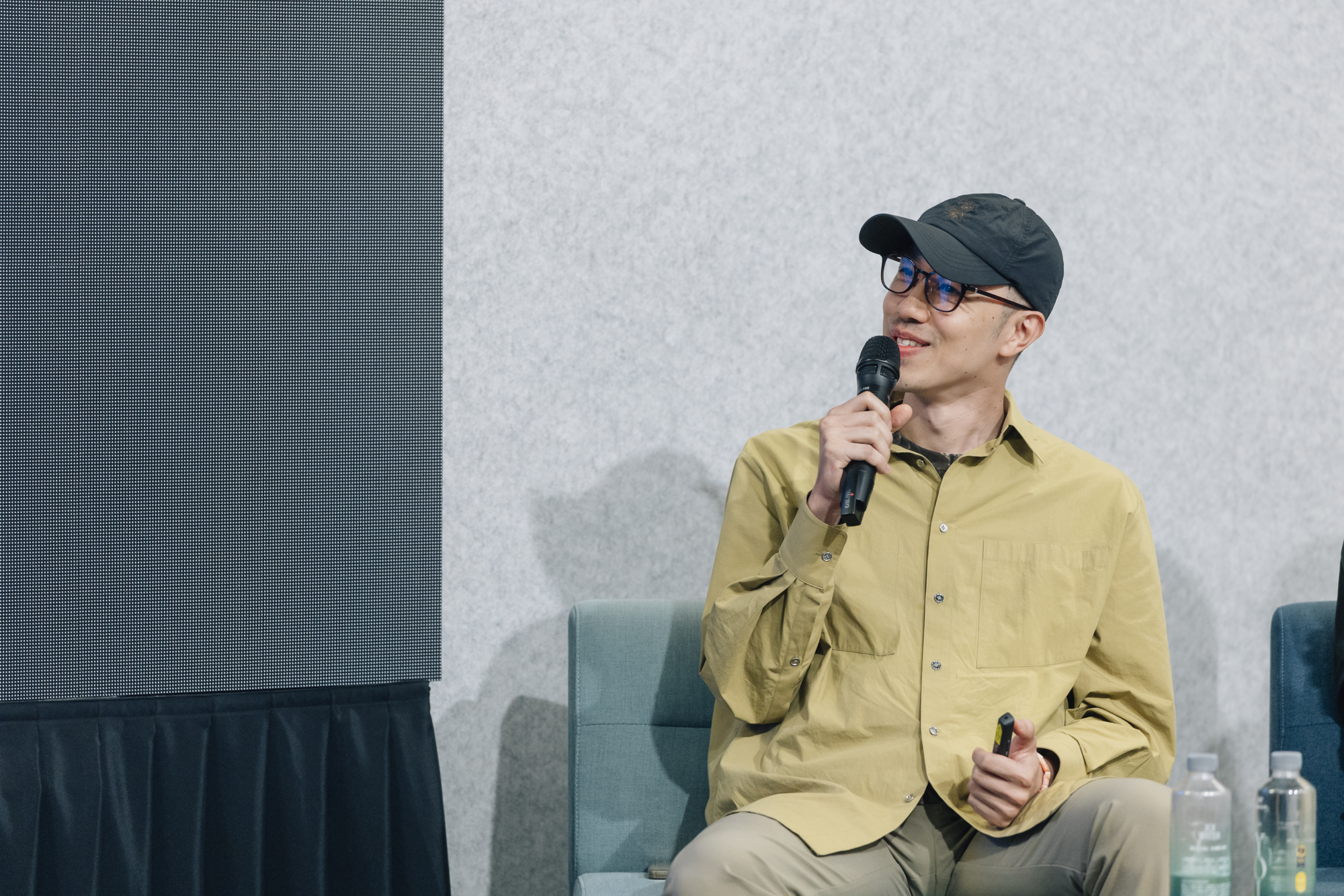
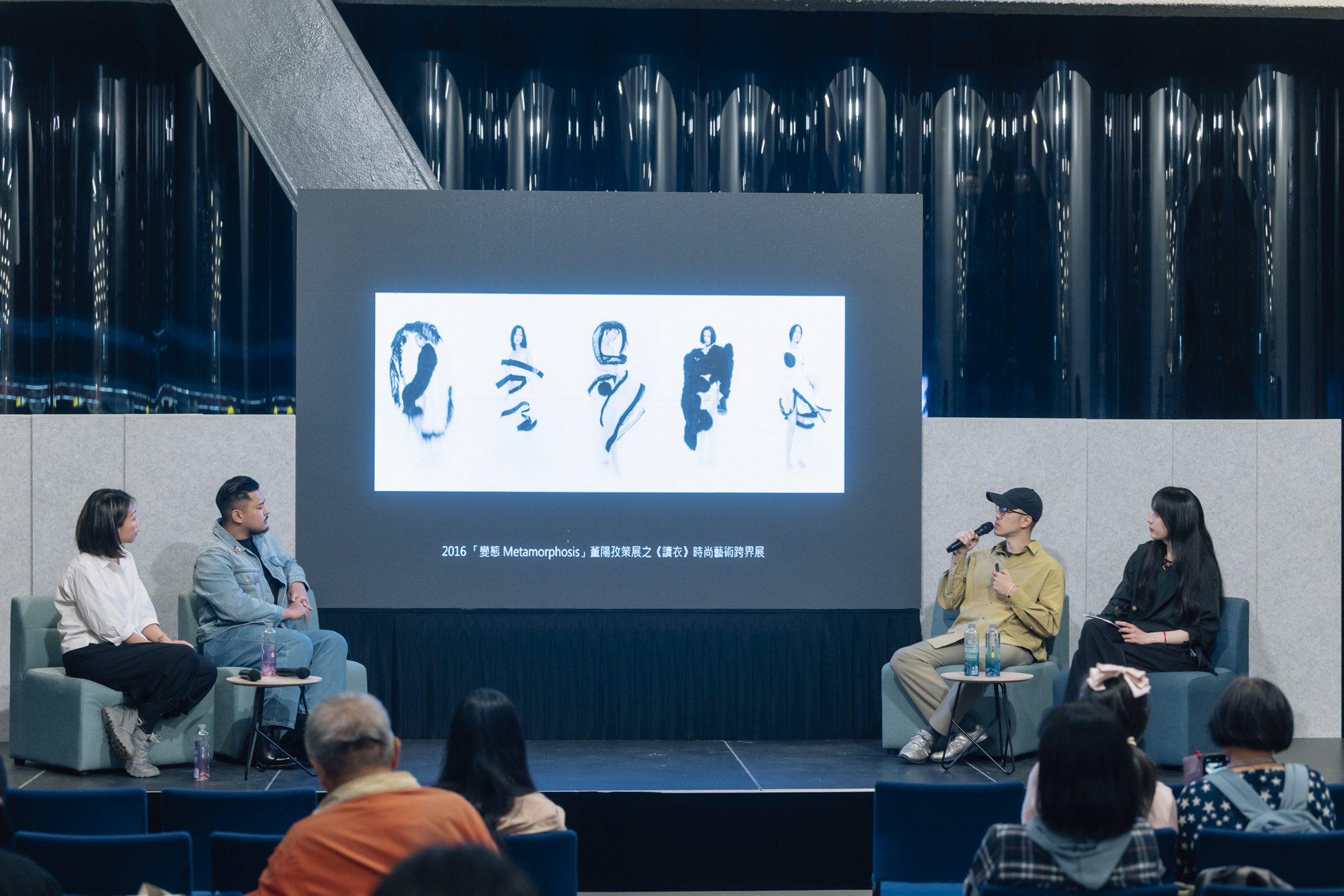
In this first forum on Hagay Dreaming, moderated by independent curator Lu Wei-Lun, choreographer Chiu Wei-Yao (Dahu), music producer Sayun Chang, and costume designer Chen Shao-Yen explored how key figures behind this production, other than the playwright and director, constructed Hagay and collaborated during the creative process.
In 2013, Hagay first appeared in an artwork, a concept derived from a legend told by the elders of his family to artist Dondon Hounwn when he was a child. A hunter went into the mountains where he encountered a group of non-humans, beings who appeared to have male bodies but were neither male nor female. They fluttered through the forest, happy together, and referring to themselves as Hagay. Lu pointed out that compared to the distinct roles in Indigenous performing arts history, such as males hunting and females weaving, the subject and situation of Hagay were left relatively blank, such that they are more like “symbols.” Given this open definition, these three creators each shared their understanding and imagination of Hagay.
Unashamedly, “I am here”
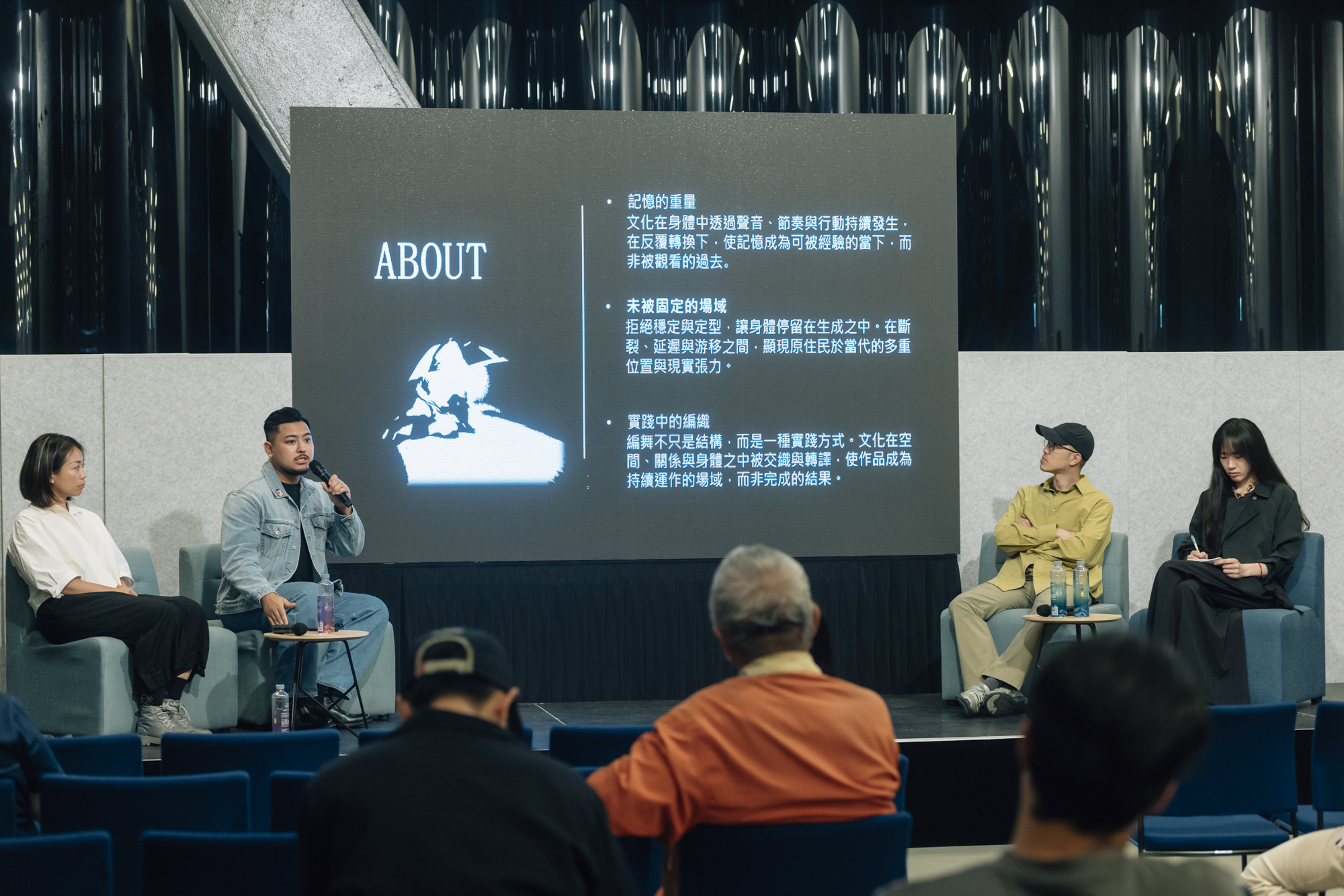
Dahu is a member of the Indigenous Bunun tribe and a professionally trained dancer and choreographer. In recent years, he has used three key phrases to organize his creative works. These served as anchor points for this production’s choreography. The first is “the weight of memory,” which enables the culture that is present in the body to continuously “happen” through sound, rhythm, and movement, making “memory” able to be experienced in the present. The second is “unfixed domain,” which rejects stability and stereotypes such that the body remains in a state of generation, embodying the positions and tensions experienced by contemporary Indigenous peoples. The third is “weaving of practices.” This refers to choreography as practice. Culture is interwoven and translated within spaces, relationships, and bodies, such that works become continuously operating domains.
For him, the Indigenous body possesses a certain type of purity. However, a body that has undergone numerous types of training and experiences is in a state of fusion. Finding that purity, stripped of performative gratification, is what he wanted from the performers. The moment the Hagay spirits appear on stage is possibly when the overall tone of the work is set. Therefore, in considering how to present Hagay, he first worked with the performers to find “poses that make you feel most comfortable, most beautiful, and enable you to like yourself the most.” This was not about showing off but about being able to stand unashamedly in front of people and tell them, “I am here.” This sense of certainty about their own identity was for Dahu the closest that they could come to the state of Hagay.
Imagination followed by calibration
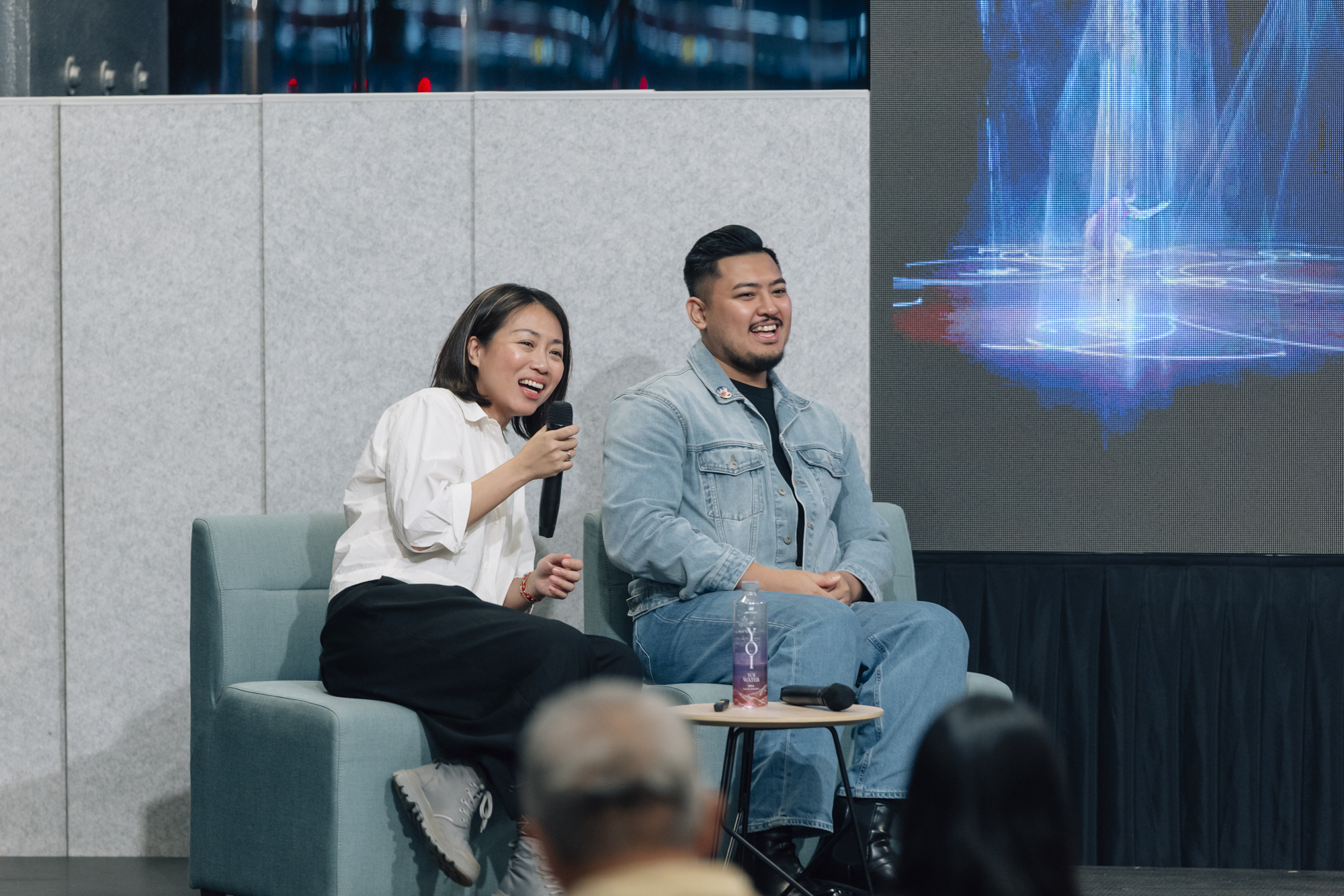
Chang, a percussion artist who is of both Hakka and Indigenous Truku descent, received classical music training from a young age. It wasn’t until she had neared the end of her college career that she became conscious of the weight of her identity. She hoped to study world music abroad, including the music traditions of Africa, Latin America, and the Middle East, to explore the potential sparks they could ignite with Taiwanese Indigenous music. After having lived abroad for nearly 10 years, she decided to return to Taiwan and readjust to its cultural environment. She asked herself, “What can I do? What are my goals while on this land?” These questions led her to delve deeper into the study of Indigenous music and to become exposed to Hakka music. Since 2020, she has focused even more on Indigenous music, creating adaptations of traditional Truku songs, collaborations with other artists, and works related to Indigenous legends. She has also used traditional songs in sound installations.
During the creative process, the extremely close relationship between music and dance was likened to the dilemma of which came first, the chicken or the egg? They developed a method in which Dahu first worked with the music and dancers he was familiar with and Chang began creating music based on the script. Once the choreography video was ready, she watched it on mute first. Then, she watched it a second time with the musical score she had created. In the same way, Dahu listened to Chang’s composition to test its compatibility with his choreography, the two going back and forth, making adjustments. While imagining the musical score, Chang also communicated with the director who gave her this suggestion, “a little bit playful, sexy, and flirty.” She used this to collect musical references and gradually calibrate one another’s imagination of sounds.
Skin in between the tangible and the intangible
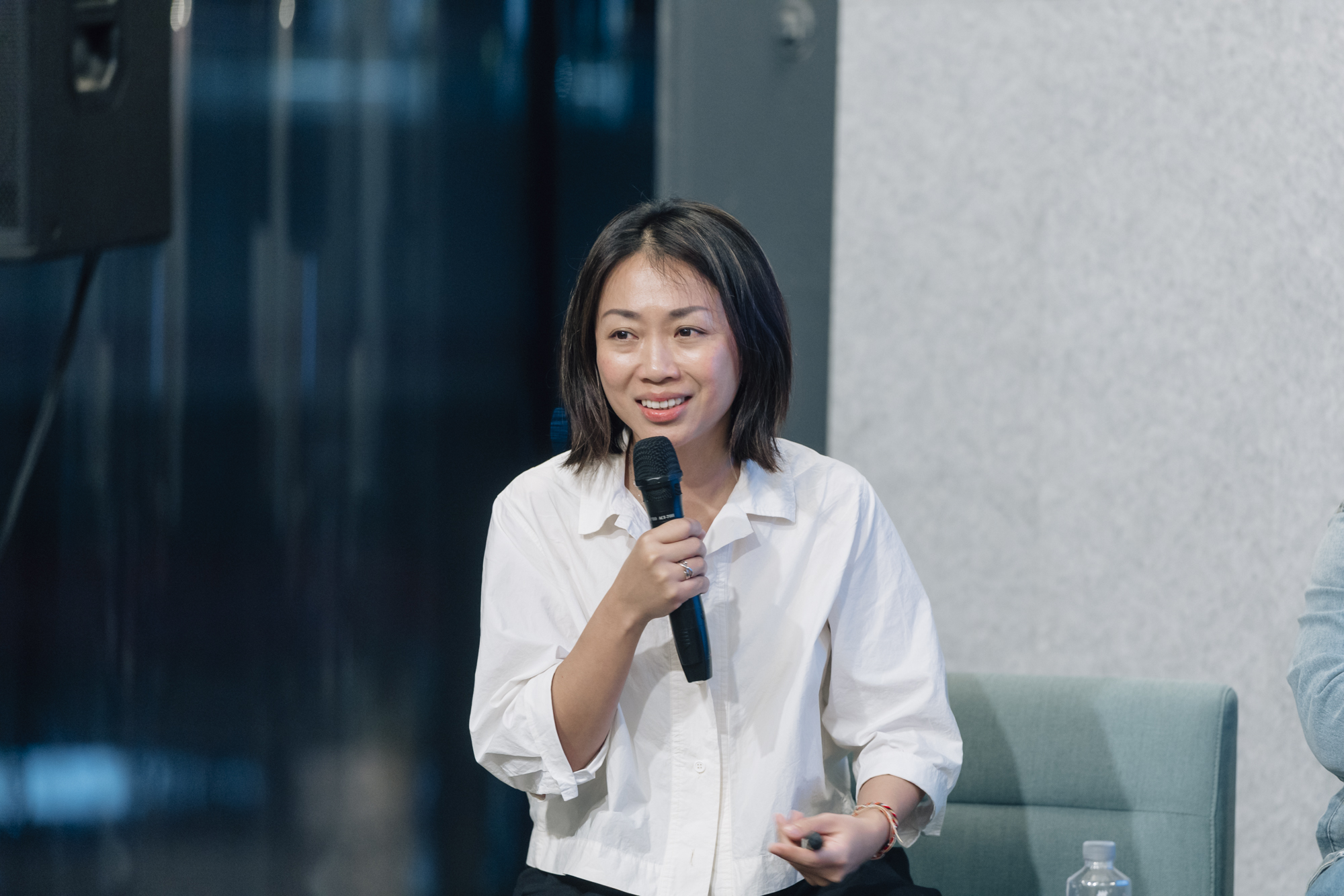
As he introduced himself, Chen joked that he is ethnic Chinese, which made him a minority that day. With a background in textiles and fashion, he excels at using different types of materials to create the structural aspects of clothing. He began his career in the fashion industry but recently ventured into costume design for the performing arts, collaborating with groups such as Cloud Gate Dance Theatre. When Lu asked him about the greatest difference this change has brought about, Chen mentioned that his aunt founded a dance studio and his sister is a dancer. Therefore, from a young age, he had many opportunities to see performances. It was this influence that prompted him to study costume design.
The initial design concept for the costumes was based on the weaving traditions of the Truku tribe. Due to the limitations of weaving cloth on a manual loom, traditional fabrics were mostly rectangular or square, resulting in clothing, such as “square shirts,” that was not completely tailored. Chen went a step further to develop this concept, transforming the excess fabric naturally produced when worn into the structure of the costumes. To present a type of “futuristic custom,” in addition to white, a common background color of Truku clothing, he chose metallic colors to create a futuristic feel. In 2025, with the goal of a more radical departure from the deconstruction of traditional Indigenous clothing, he preserved the white background color, while incorporating more materials and techniques. These included digital printing, embroidery, lace, and futuristic fabrics. For him, Hagay represents an existence between the tangible and intangible. Therefore, the selection of materials was crucial. Ultimately, he chose a shiny, elastic, and semi-transparent fabric to make the clothing an extension of the skin, as if it was a part of the body.
From 2020 to 2026, Hagay continued to evolve with one version after another, never settling into a fixed form. As a symbol, it is constantly replenished and expanded with each interpretation and new contexts are developed through reconstructions by different creators. Perhaps because of this, the concept of Hagay will never be complete, nor will Hagay become just a stage character, but rather a continuously generated existence.