The Intertwining of Legend and Technology: Hagay Dreaming
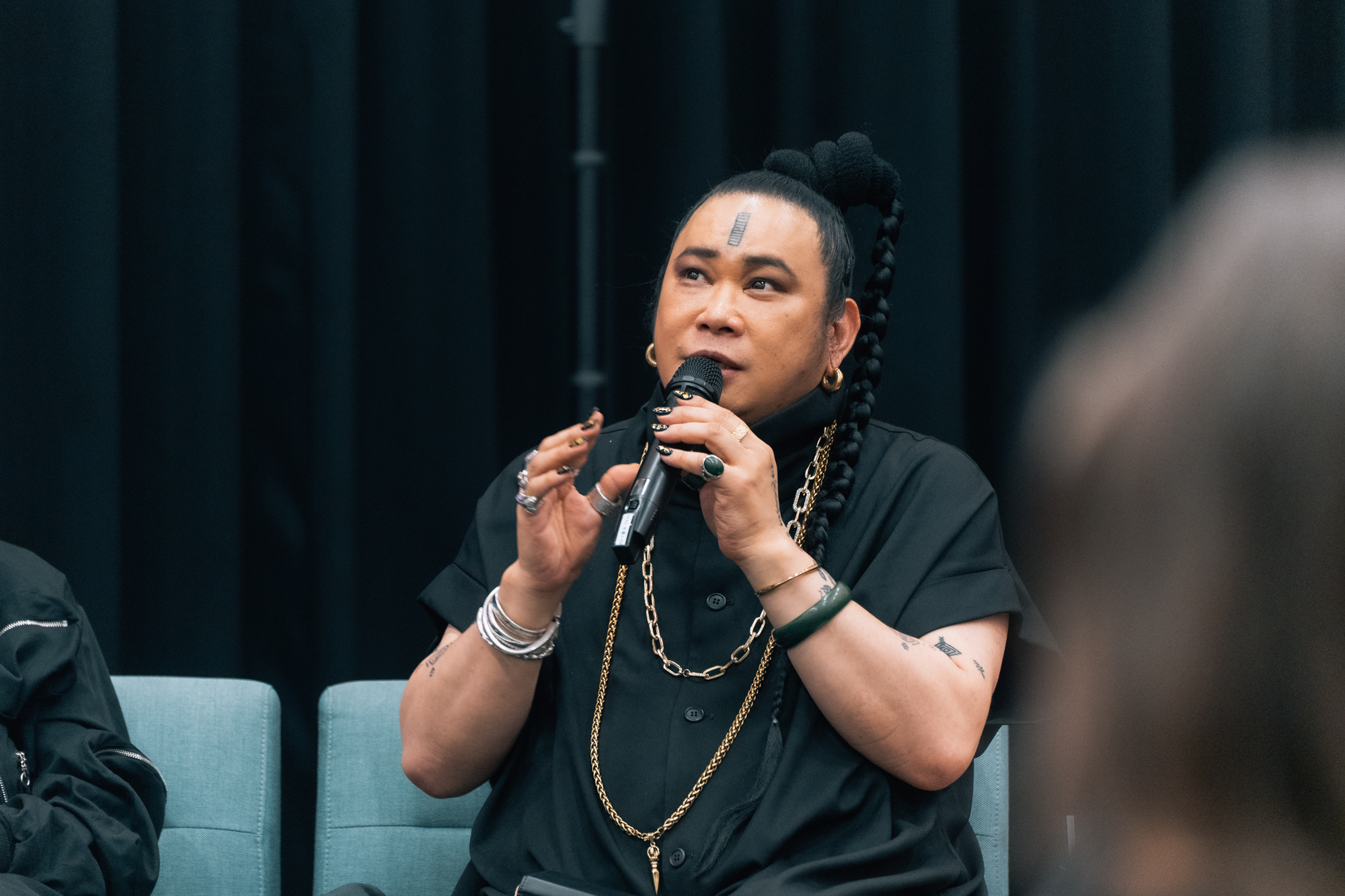
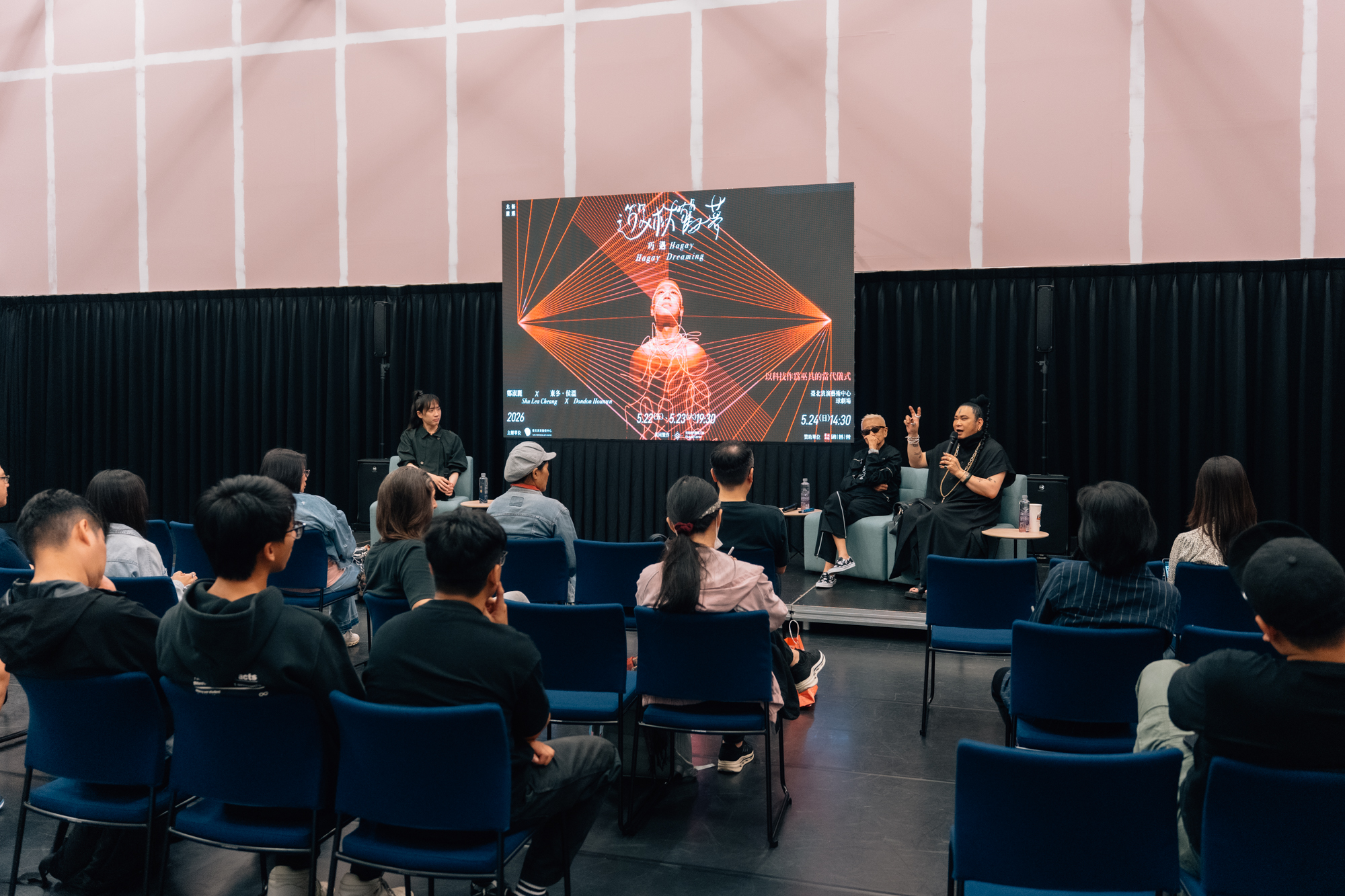
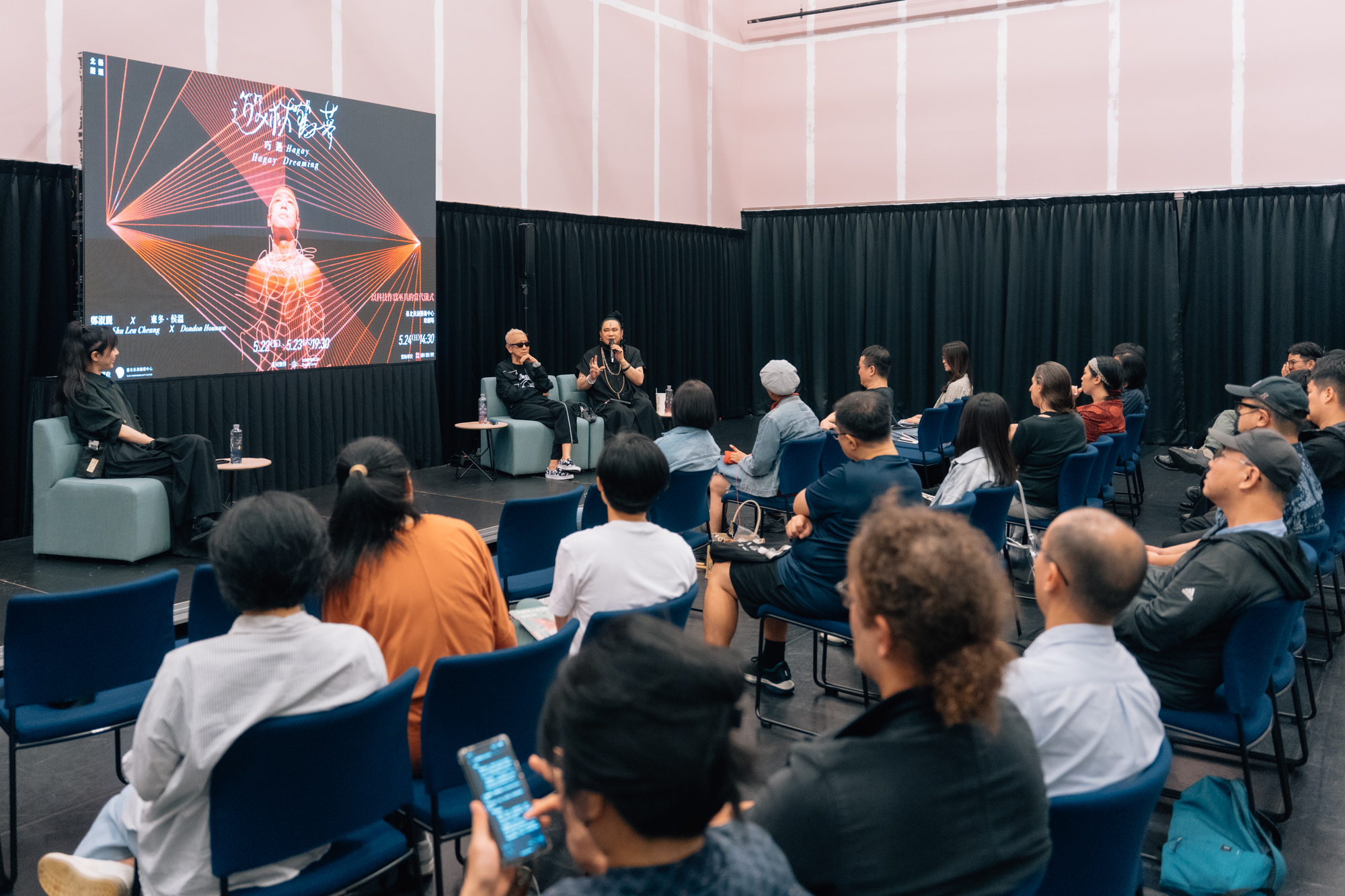
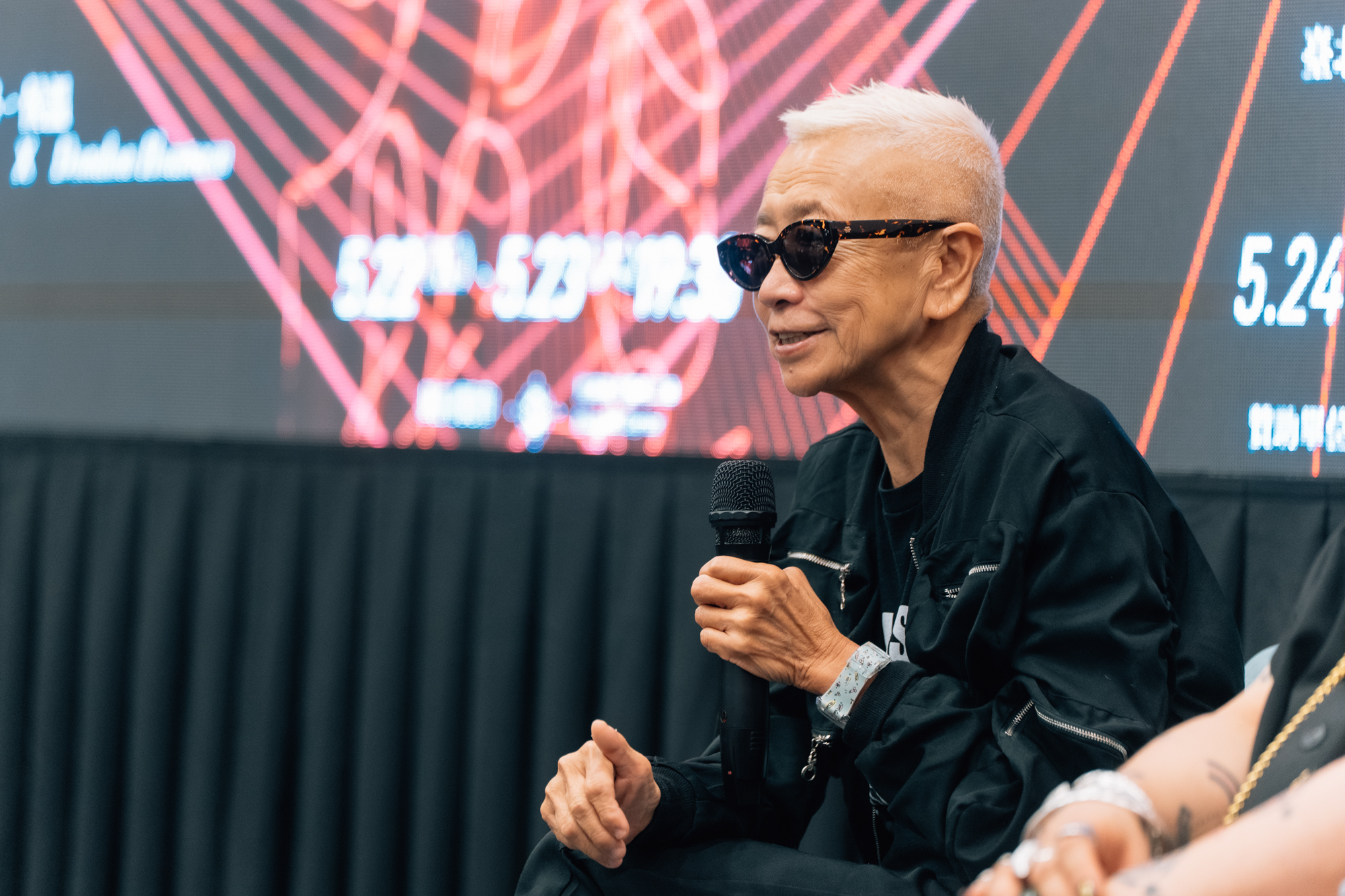
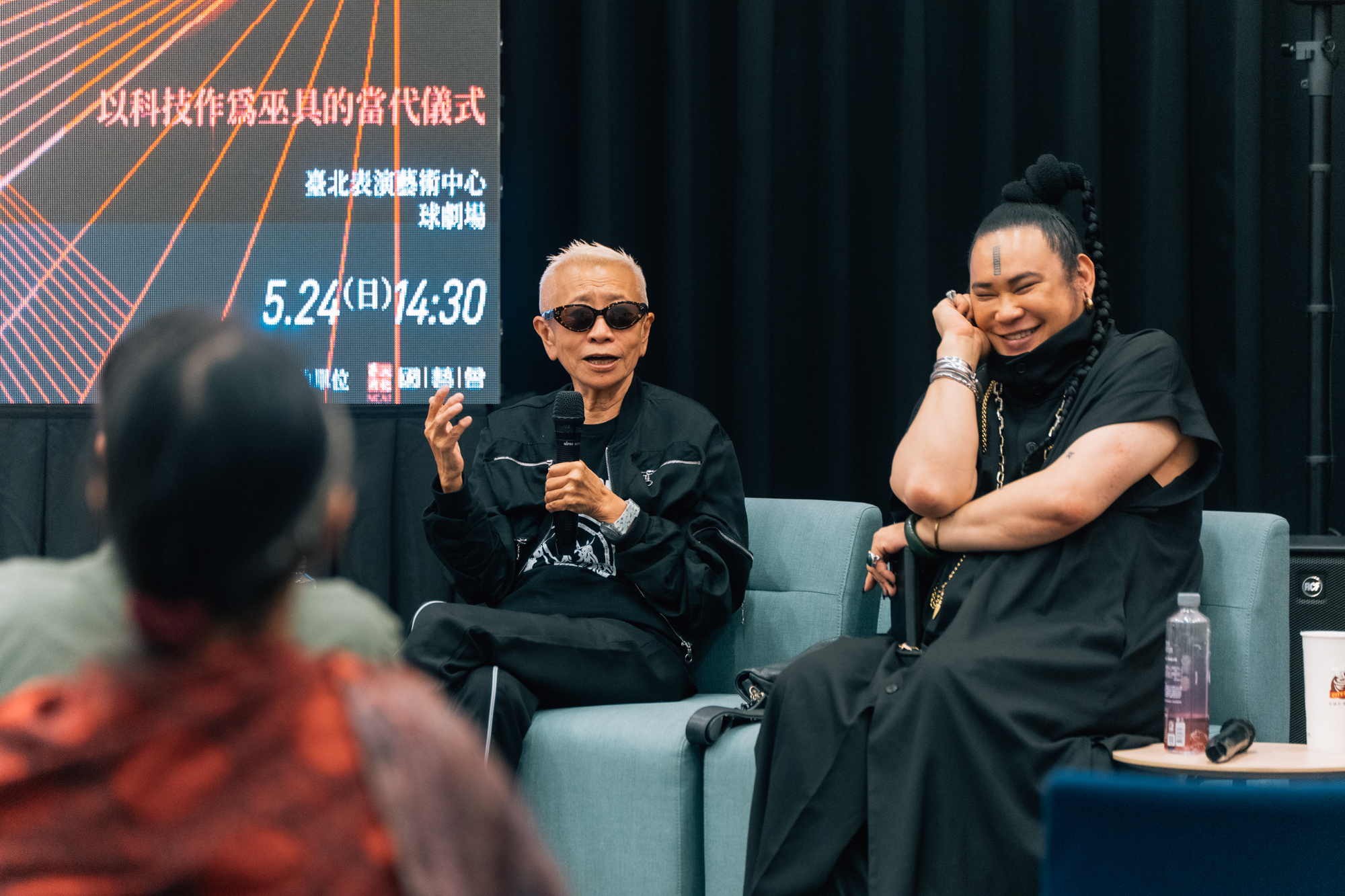
This was the final forum on the upcoming performance of Hagay Dreaming. Moderated by independent curator Lu Wei-Lun, the key figures in the creation of this work, Dondon Hounwn and Shu Lea Cheang, were invited to share their thoughts on the five-year creative process and their vision for the future of this work.
Hagay are?
Dondon first heard the term Hagay at a hot spring. When he was a child, he went to the Zhiben Hot Springs with a group of women from his community. When he tried to move away from them so that he could change clothes out of view, they became worried that he would get lost. He was told to stay put, because he was a Hagay. Confused by this term, he learned more about it from his uncle after he returned home. His uncle told him that a hunter went into the mountains where he encountered a group of non-human beings fluttering through the forest, who appeared to have male bodies, but were neither male nor female. He called this memory a “fabrication,” because to make it more complete, the content or plot points could be changed. Nevertheless, this was his first encounter with Hagay.
In Dondon’s community, naming is traditionally based on personal characteristics. The name Hagay was originally associated with steep, rocky, high mountain terrain. However, at a banquet, a man named Hagay performed a cross-dressing act on stage. This name took on this new association and became derogatory. Since then, those named Hagay often feel self-conscious.
Some people have described the Indigenous Truku culture as “men are men and women are women,” to claim that Dondon’s work distorts tradition. However, from the moment he decided to develop this production until its premiere in Hualien, he asked the members of his tribe, “Do you know what Hagay are?” The response was always “Yes.” He then came to understand, “People don’t want to know what they don’t want to know.” This enabled him to present this work in his community without hesitation.
To postcolonialism and back again
Cheang said that she could not recall a time in the five years they worked together that they argued and noted that she learned much about Indigenous communities and culture. Another aspect of this work that interested her was the opportunity to revisit postcolonialism. Indigenous communities have been deeply affected by different political powers and natural disasters with “reconstruction” a frequently heard keyword. Globally, each Indigenous culture has its own worldview. With colonialism came binary gender concepts and oppression. Oppression bred discrimination. Therefore, this work is a return to the original state in which there is no discrimination.
Dondon noted that his ears were pierced with the help of his grandfather and according to tradition. However, his father’s generation began to understand the Bible and to be able to read. It was also that generation that experienced the era of martial law during which they were forbidden from speaking their native language. His father was very angry about his ear piercings. The generation of people 10 years younger than him started to engage in discussions on relevant issues. In recent years, same-sex weddings have been held in his community based on traditional rites. Those of his father’s generation, who embraced a new civilization and new values, do not dare to attend these wedding ceremonies.
“GAYA is not static,” he said, “After a century of colonization, there will eventually be a return to its very origins.” People often ask him if being an Indigenous person means that he must talk about tradition. He emphasizes that, at least for him, “My traditions are my future.” After the premiere of this work in Hualien County’s Donmong Community, he felt that he had successfully left his mark, because he had made it clear, “This is how I exist. This is what I am doing.”
Technology: Serving Indigenous knowledge systems
In discussions of this work in the outside world, it is often seen as a “collaboration between technology and Indigenous peoples.” However, technology is intended to “serve” the transmission of Indigenous knowledge systems, rather than to “interpret” Indigenous culture in a patronizing manner. Dondon said that the appearance and use of technologies in this work came naturally. Only when there was a need was a corresponding technology introduced.
For Cheang, another key aspect of this collaboration was the opportunity to create another language through the exchange of technology and Indigenous culture. They chose to “speak” this language in the theater. Standing on stage, and starting from Indigenous knowledge systems, they faced the audience with dignity and the expectation of respect.
Near the end of the forum, an audience member asked Dondon: It seems that you have regained the right to interpret Hagay. Then, what do you want to say or do for them? Dondon responded, “I really haven’t thought about that.” In comparison to gender-level discussions, he cares more about how the public understands GAYA. Hagay is only a partial expression of GAYA beliefs. What concerns him is how to express and live out GAYA. Cheang responded that her creations have also gone beyond debates on gender politics to enter a transgenic era in which there is transcendence of species. In her closing remarks, Lu noted that symbols such as “gender” and “environment” are constructs of recent linguistic concepts that did not exist in the Indigenous world in pre-colonial or pre-modern times. But they all operate within GAYA. The key is how to engage in GAYA other than through linguistic and classification frameworks.
Due to the limitations of language, the term “queer” often comes up when explaining the concept of Hagay in English. Dondon reminded the audience, “Hagay is not equivalent to queer because Hagay has associated beliefs and rituals.” Regarding the future of this work, these two creators have an ambitious thought, to treat Hagay as a new ethnic group within the existing LGBTQ+ community, using the H in Hagay to form an “LGBTQ+H” community in Taiwan. Perhaps, at this year’s Taiwan LGBT+ Pride parade to be held in October, there will be the chance to encounter Hagay among the sea of flags and people.