Opening hours
:::
2026/07/13
[TPAC Academy 2026] Creative Leadership Course: Paving the Way for the Arts from Within Institutions
For this creative leadership course, Hong Kong-based Yu Kwok-Lit, who has held important positions in arts and culture venues, the public sector, and higher education, was invited to engage in dialogues with three leaders in different cultural fields in Taiwan. Over three consecutive evenings, this course focused on public venues, arts education, and regional revitalization, exploring how leaders in the arts and culture can address real-world needs within institutions, while making good use of institutions to explore broader possibilities for the arts and art practitioners.
At the helm of public venues – navigating between vision and reality
Beyond their own artistic goals, public venues need to navigate cultural policy. While shouldering the expectations of publicness, they must also consider the realities of the outside world to ensure that they do not lose direction. For this three-day course, Yu Kuo-Hua, Dean of Research and Development and Associate Professor in the Graduate Institute of Arts Administration and Management at Taipei National University of the Arts (TNUA), served as moderator. On the first day, Liu Yi-Ruu, who had just stepped down as General & Artistic Director of the National Theater & Concert Hall (NTCH), was invited to share her experience managing a large-scale public arts and culture venue.
%20TPAC%20Photo%20by%20%E5%BC%B5%E9%9C%87%E6%B4%B2%20(77).jpg)
Artistic strategies for performing arts venues
Yu Kwok-Lit explained that a public venue is neither a research and development center nor a school. Its core function is public performance, specifically “bringing the best performances to the largest possible audience.” Audience numbers are easy to determine but what constitutes a good performance? He believes that the standard for “what is good” can be used to communicate with the public, rather than ending conversations with subjective opinions. For venue managers, resource allocation is crucial. Resources include time, space, money, and manpower. Among a theater’s missions of public performances, creation, exchanges, and audience participation and learning, public performances require the most resources because they are the foundation of a theater.
Venues also need to invest in their own creative endeavors. Otherwise, they are merely docks, train stations, or airports, places where people come and go. Exploring “what is good” involves incubating works and supporting experimentation by artists. In addition, investing in audience participation and learning serves to maintain sufficient audience numbers while enabling good programs to find an audience. Letting the audience tell a theater “what is good” is the logic behind commercial theaters. Publicly operated theaters need to do more. Engaging with venues around the world that produce good works and artists, through invitations to perform or visits, can help to define a venue’s direction.
When the conversation turned to regrets regarding venue planning, Yu Kwok-Lit stated his hope for a dedicated exhibition space within venues. Exhibitions can attract more visitors during the day and produce interactive relationships with current works. They can also potentially lead to the development of merchandise and other unrealized ideas. Over the past 20 years, many interesting things have been happening in fine arts and other museums: workshops, film screenings, and parties. In addition, white cubes have been transformed into neutral yet flexible spaces. Museums are considered places for preserving culture. In contrast, performing arts venues are seen as places for events or even entertainment. This is evidenced by the lack of archives in the performing arts world. In his opinion, the relationship between the performing arts world and audiences and audiences’ expectations of the performing arts are somewhat conservative.
Role transformation and the public mission of theaters
Liu Yi-Ruu explained that half of NTCH’s financial resources come from fundraising and the other half from government subsidies. As such, it has a clear public obligation. The first performance after NTCH’s opening was a Chinese opera entitled Goujian Fuguo (King Goujian Returns to His Homeland), which points to the layers of objectives and significance it shoulders. Today, NTCH has positioned itself as a “national hall” and “a theater for all.” The latter is being realized through initiatives such as creating a “relaxed and comfortable atmosphere.”
If the development of a theater can be divided into three stages, the first is survival. This corresponds to the period in NTCH’s history from its founding in 1987 to 2003. After finding a viable model, it entered the second stage: maintenance. Liu Yi-Ruu defined the start of NTCH’s second stage as the confirmation of its non-departmental public body status in 2004. Producing the best and most artistically valuable programs was NTCH’s objective during this period. It was also during this time that the “metal cages” in front of the ticket booths were removed. The third stage is about becoming an “indispensable” entity that can quickly reflect society and even intervene in society through art. During this stage, NTCH is determined to become a theater focused on sustainability and inclusion.
Producing meaning for all
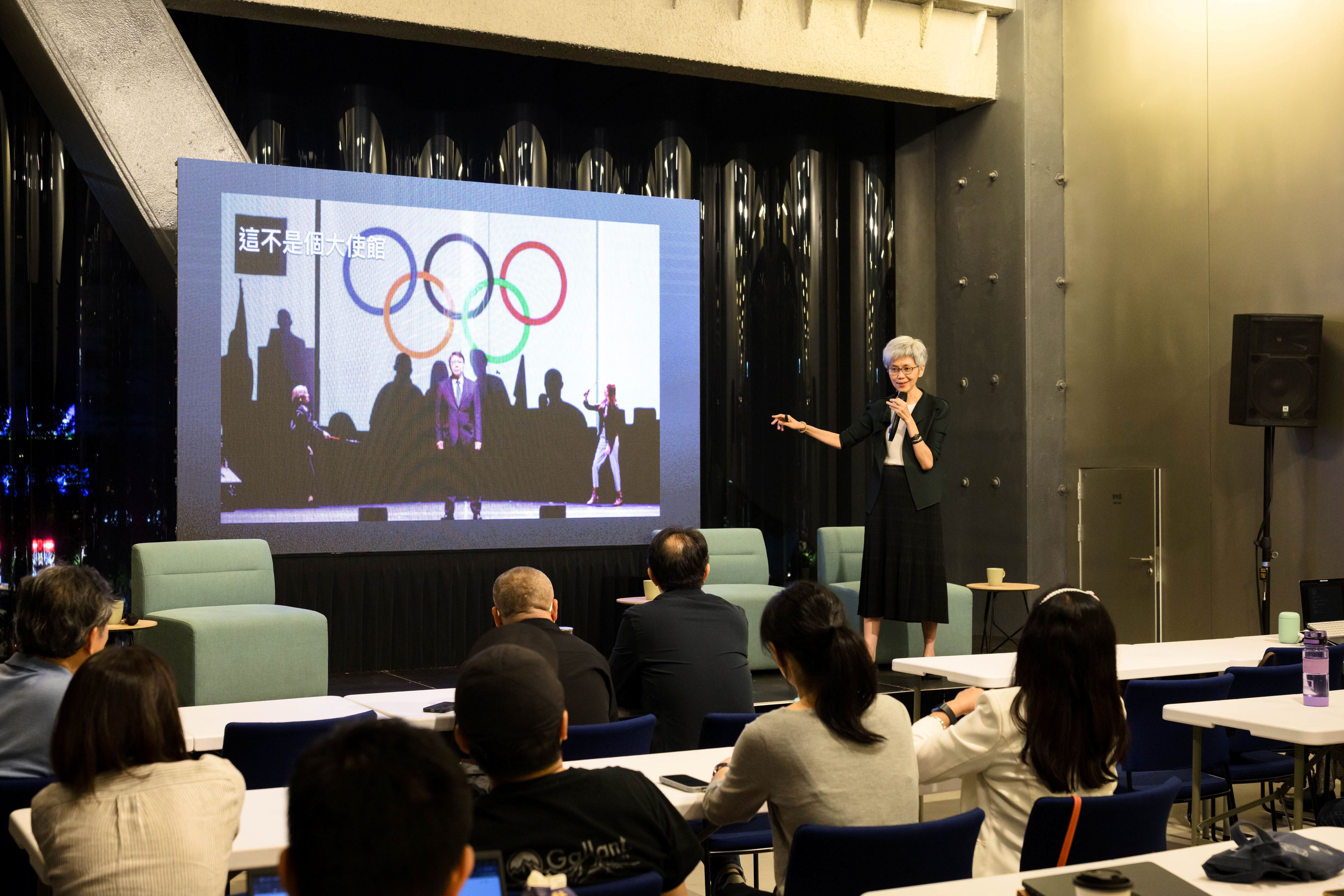
Shortly after starting work at NTCH, she observed that audiences were mostly made up of the same groups of people. Then, what is NTCH’s meaning to those who don’t come to its performances, other than having their tax dollars go toward its upkeep? Her answer was that NTCH had to be more than a place that provides or hosts good programs. She cited several examples, such as the works of drag queen Taylor Mac, This Is Not an Embassy, Antigone in the Amazon, and A Play for the Living in a Time of Extinction, to illustrate that while there are many great programs, NTCH should present works that are thought provoking. As operating costs have increased, the program budget is only one-fifth of NTCH’s total budget, necessitating the search for additional resources to invest in inclusive practices, including audio description service, diverse and friendly seating, relaxed and comfortable setting, and real-time transcription service to expand the possibilities for participation by more groups.
Program and audience planning and strategies
In addition to promoting the arts, priority is given to balancing market demand. Throughout the year, NTCH organizes the Taiwan International Festival of Arts (TIFA), NTCH Ideas Lab, NTCH Summer Jazz, ARTQUAKE in Autumn, NTCH Selects, and special co-presented programs with varied returns and appeal. For example, ARTQUAKE in Autumn was originally based on the principle of a drama festival one year and a dance festival the next. However, categorizing art forms was found to be inappropriate. An internal curatorial team was formed to reflect current world trends. For instance, in recent years, the focus has been on the concept of “South,” including the geographical and psychological aspects of South.
What can we do to ensure that “life without the theater would feel strange?” For Liu Yi-Ruu, if friends suggest to one another, “Let’s meet at NTCH,” all the effort is worth it. “Attracting people who have never had any connection to the theater is what a theater in a city should do.” Yu Kwok-Lit also noted that in different eras publicness has manifested in different ways. In the past, it was about creating accessible facilities. Now, it is about diverse and inclusive practices. Other urban spaces have not yet focused on sustainability and inclusion. It is mostly cultural spaces that have been at this forefront.
Cradles of talent: paving the way to a career
In 2027, the Arts Education Act will have been in effect for 30 years. Arts education is not just about skills training and institutions of higher learning are not vocational training centers. How can leaders of educational institutions achieve a balance between maintaining a professional environment for developing arts literacy and responding to turbulent changes in the marketplace, as well as design paths to talent cultivation? For the second day of this course, Liu Hsi-Chuan, President of TNUA, was invited to share his experience.
%20TPAC%20Photo%20by%20%E5%BC%B5%E9%9C%87%E6%B4%B2%20(59).jpg)
The arts palace bubble vs market realities
Taking TNUA as an example, one-fifth of its courses are in the liberal arts, while the rest are focused on professional skills training. What are the needs of the industry that schools are not equipping students to handle? First, Liu Hsi-Chuan mentioned the job burnout among those in performing arts administration and management, the symptoms of which are emotional exhaustion, cynical attitude, and low efficiency1. Second is the exploitation of workers, such as the argument that “arts work is inherently unsuited to inclusion in the Labor Standards Act.” He believes that before talent development can be discussed, these external issues must be addressed.
As Taiwan has undergone rapid modernization, so has its arts development, which conflicts with the nature of arts development. This also reflects the issues that educational institutions need to address. In the 1980s, when TNUA was established, the pains and adversaries were specific and artistic creation was a form of “pioneering physical labor.” Today, with the existence of various venues and arts and culture subsidies, creators are facing “spiritual suffocation due to institutional saturation.” Arts universities, in addition to being professional training grounds, sometimes serve as places for students to heal through art – psychiatric center-like entities.
Cultivating talent
Yu Kwok-Lit’s college major was not related to culture or the arts. Rather, he learned about these through hands-on experience. In his opinion, a leader is not necessarily the person in an organization with the most power, but the one with influence. Only an influential and talented person can be a leader. The arts field welcomes talented people from all backgrounds, just like the definition of the arts, which is constantly being torn down and rebuilt. The arts are not only useful in arts-related fields. He recently heard that an MBA (Master of Business Administration) is no longer the most popular degree in business. An MFA (Master of Fine Arts) is more coveted, demonstrating the growing importance placed on the uses and functions of aesthetics in life. The arts can be a tool for self-exploration and developing critical thinking and discipline, an economic vehicle, and a means of therapy. How can all these aspects be included in a four-year arts university education? In between broad exposure and focus on a specific major, he believes the ideal approach is to offer many elective courses, so that students can explore their areas of interest. Today, obtaining knowledge and information is very easy. Therefore, opportunities should be created for students to gain experience. As the division of labor in society becomes more specialized, the more necessary it is to be able to complete a process from start to finish. He said, “Studying at a university may be the first opportunity we have in our lives for deeper learning and thinking. It may also be the last.”
When the moderator asked how schools can meet industry demands, Liu Hsi-Chuan responded that, compared to Taiwan, capital considerations are incorporated more quickly into the educational environment in Hong Kong. In Taiwan, arts universities must be hybrid entities, possessing sophisticated capitalist skills while dedicating at least half of their attention to artistic development. Otherwise, they lose their reason for existing. Yu Kwok-Lit mentioned that when Art Basel came to Hong Kong, some students created works that prematurely pandered to the market, which he and his colleagues felt was very unhealthy. Liu Hsi-Chuan believes that we are currently in an era of “split personalities.” On the one hand, there is resistance to being contaminated by capitalism. On the other hand, there is enjoyment of such contamination. Those with enough energy can achieve a balance between the two. But educators cherish talent and worry that students who enter the market too early may lose their potential.
%20TPAC%20Photo%20by%20%E5%BC%B5%E9%9C%87%E6%B4%B2%20(61).jpg)
The urban and cultural power of cross-disciplinary leadership
On the third day of the course, Lee Ying-Ping, Chair and CEO of Lovely Taiwan Foundation, was invited to share examples and limitations of local revitalization efforts, as well as how culture can become a driving force for cross-disciplinary integration, with consideration given to Yu Kwok-Lit’s experience in Hong Kong.
%20TPAC%20Photo%20by%20%E5%BC%B5%E9%9C%87%E6%B4%B2%20(120).jpg)
Disappearance and reconstruction of Hong Kong’s rural communities
Three quarters of Hong Kong’s area is green space. Originally, people mostly lived along its northern edge with farming their main livelihood. After undergoing urbanization, its economic center shifted southward, with the harbor along the southern edge becoming the new city center. In the 1950s and 1960s, there was mass migration from rural villages to the city center. Those that left villages retained land and property rights there. Since 2017, the government has promoted rural revitalization to conserve ecological and cultural resources, as well as revitalize rural villages. Taking Lai Chi Wo as an example, the government supported the restoration of local cultural festivals and provided subsidies to arts and culture groups to create and perform on site. Working with environmental protection groups and NGOs, farmland was also restored. Although few people have returned, and the cost of organizing large-scale festivals is high, such events build connections to this area among people originally unfamiliar with it. In addition, through “urban-rural integration” programs people have been encouraged to apply for licenses in rural areas, such as for guesthouse operations, to ensure continued revitalization. Yu Kwok-Lit explained that past discussions on urban culture have focused more on the arts and creation, while memories, traditions, and the geographical environment have often been neglected. The most important cultural policies are not always proposed by cultural departments. Environmental protection policies can also have a profound impact on cultural identity.
Making the arts ubiquitous
Lee Ying-Ping grew up in a non-urban environment without art venues. This led her to dedicate herself to finding ways to promote cultural accessibility through arts education. During the time she worked in the Taipei City Government’s Department of Cultural Affairs, she spearheaded policies and programs for street performers and supplemental arts education. She also promoted the art spaces network, Digital Art Center, Taipei and Digital Art Festival Taipei to provide opportunities for the arts to exist in the lives of every city resident. After joining the Lovely Taiwan Foundation, her work became more diverse and complex. However, its essence remains the same, promoting the arts and social progress. Tiehua Music Village, Chishang Autumn Harvest Rice Arts Festival, Creative Reuse Center, and Spring Tide Market in Chaozhou are all examples of the foundation’s use of the arts to address issues in various parts of Taiwan. She emphasized that, “When culture and the arts are at the forefront, things begin to change and do not regress. When an industry is at the forefront, as soon as that industry declines and business opportunities disappear, everyone scatters.” Only when culture fosters a sense of belonging can everyone move forward. Even if there are setbacks, people won’t stop. They will continue moving forward.
Urbanite expression of compassion?
Yu Kuo-Hua raised the question: “Is bringing art to different areas, merely ‘an expression of compassion’ by urbanites or cultural policymakers? Or is there a genuine need?” Lee Ying-Ping pointed out that the government invests resources into fireworks shows, which are short-lived but effective in raising visibility. The government should think about how such activities can create long-term momentum. Yu Kwok-Lit said that in Hong Kong, rural areas are basically uninhabited and “parachuting” urban art activities into such areas would not be effective. Even if unrelated to the arts, he would prefer to see cultural activities rooted in local history.
In his remarks at the end of this three-day course, moderator Yu Kuo-Hua said that culture in cities and rural areas can be likened to blood vessels. As cities develop and rural areas decline, culture that represents capital and modern resources flows from cities into rural areas like through an artery and culture flows back to cities from rural areas like through a vein to nourish urban cultural revitalization. The original meaning of art is “planting,” not the narrow definition that exists today. The essence of art is to cultivate crops well “so that everyone can live a good life.”
