Opening hours
:::
2026/11/11
Beyond Loneliness — Grafting, Becoming, and Unfolding
About the Project
Beyond Loneliness is a spatial composition brought to life through the collaboration of four teams: Studio 94, biofication, SenseSite Studio, and BYHAND. It also carries a meaningful subtitle: Whale Tribe.
The following are the creative intentions behind the works of the four teams.
Studio 94 / Sarina Yeh, Adraina Sung, Fu-Jua Chang, Wei-Min Wu, Nina Liu, Yi-Chan Li
First and foremost, Studio 94 served as the overall coordinator throughout the creative process.
In 2026, the world finds itself immersed in the sweeping age of AI. Whether met with wonder or apprehension, AI has rapidly entered our daily lives. Many have turned to it for comfort, even seeking relief from the loneliness and helplessness that visit us from time to time. Yet the reality remains: no matter how much AI may offer, the absence of deep human connection and the lack of a sense of belonging continue to spread through every corner of society.
Beyond Loneliness — Grafting, Becoming, and Unfolding seeks to explore this condition through an imaginative spatial environment created by three young creative teams. It begins with space, which gives rise to scenes; scenes awaken physical senses; these sensations gradually open the hearts of visitors. Through activities and experiences, participants are then invited to connect with one another. The question we hope to raise through this work is: How can we heal our emotional loneliness and rediscover meaningful human connections in society in an age such as this?
In response to the fragmentation of human connections in society, we have taken gathering and drawing together as the guiding principles of our creation. Through a series of happenings that continually unfold within the space — from pop-up concerts and shared reading gatherings to communal meals — as well as gatherings that bring together people from different communities and walks of life, we hope to create opportunities for people to encounter one another, interact, exchange thoughts, and, in time, become part of one another's shared memories.
Beyond Loneliness — Grafting, Becoming, and Unfolding Seeks to create a gentle space for connection, offering a tangible alternative to the virtual connections that fill our online social worlds. Throughout this spontaneous and improvisational journey, all four teams have approached their work with the spirit of making a gift. We believe that the tenderness and sense of embrace conveyed through the materials, craftsmanship, and atmosphere of this space will ultimately offer its visitors a place of gathering — one that soothes the heart and awakens, or perhaps restores, our capacity to feel and imagine.
When Beyond Loneliness was finally completed, a sudden inspiration led us to give it the subtitle Whale Tribe, and to twenty-one whale plushies of various sizes, playfully scattered throughout the space. In doing so, we pay tribute to a beautiful ancient legend passed down among the Indigenous peoples of Taiwan's east coast. We give thanks to the whales, these divine beings of the sea, who, long, long ago, guided those who had lost their way back home. As we drew inspiration from the spatial characteristics of Taiwan's Indigenous stone-slab houses and stilt houses, perhaps these whales, too, were the guardian spirits watching over us throughout the creative process.
Special Thanks
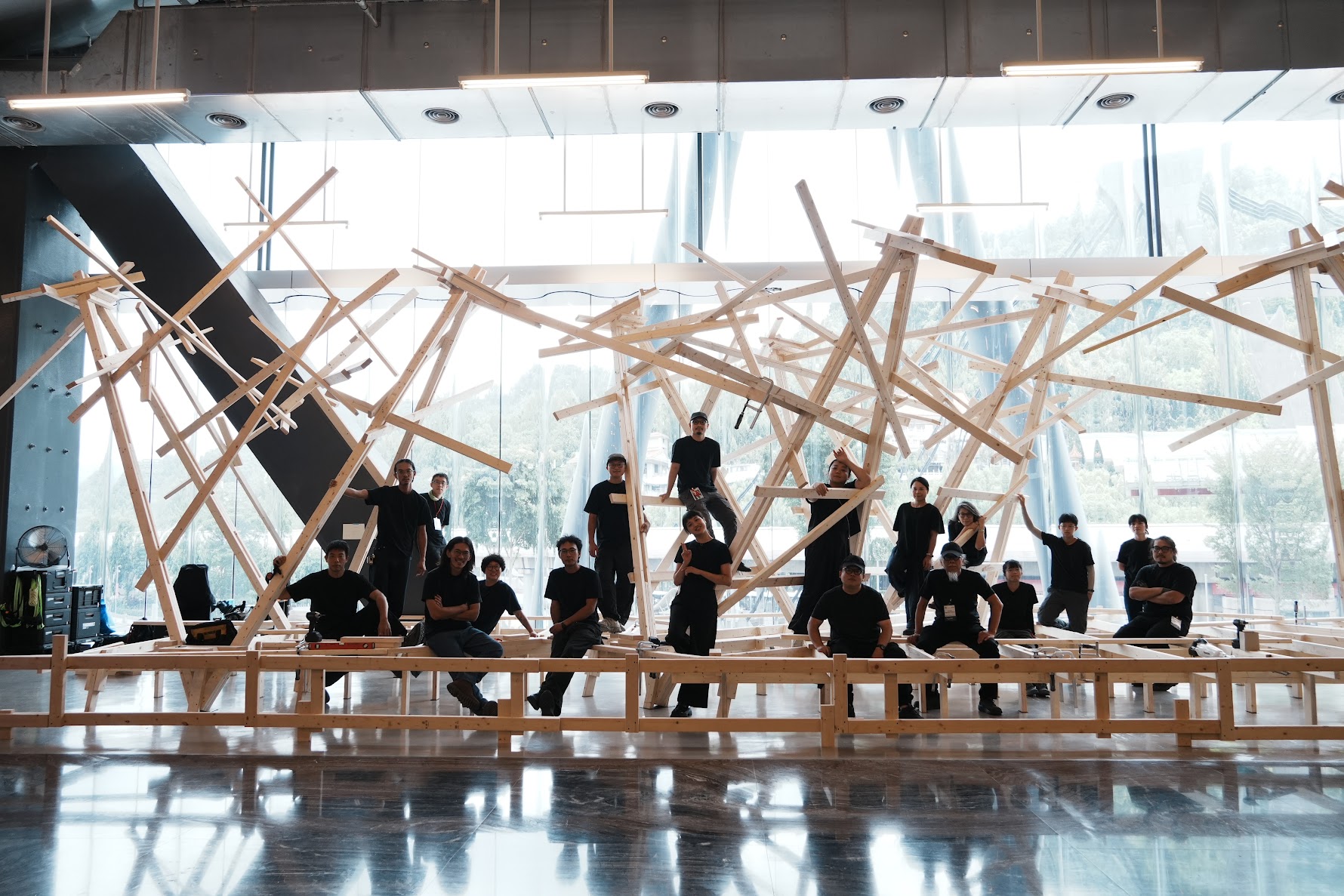
Beyond the core creative teams, we extend our heartfelt thanks to the dedicated volunteers whose invaluable efforts helped bring this project to life.
Bo-Han Chang, Chong-Kai Ruan, Han-Sheng Tseng, Zi-Jun Huang, Jo-Han Huang, Sze-Man Lau
biofication | Ping-Hung Kuo, Wen-Lan Yu
For Beyond Loneliness, biofication has created two works within the space: A Place to Gather and The House.
● A Place to Gather / Ping-Hung Kuo and Wen-Lan Yu
This is a place to rest. Through an improvisational process, we used our bodies to create relationships between the pieces of wood. Everything began with imagination, perception, and observation. Through an ongoing process of becoming and grafting, we patiently and reverently invited the spirit of the place to reveal itself.
As we worked, we sought to sing, like the whale, a gentle song of spirit and life. We hoped that, as each member reached out to create, unexpected encounters might unfold. At the same time, we wished to preserve within ourselves a quiet and settled heart throughout the process. It turns out we are not islands after all. Each of us is connected through an unseen network of roots. We are not separate beings!
So, dear visitors, find yourself a comfortable corner. Close your eyes, sink into the sea within, and surrender to the ripples stirred by your own sensations. Let yourself drift and sway, joyfully carried by their currents. Or find a place from which you can look out beyond A Place to Gather , and quietly observe the many relationships flowing through this space. At times, such scenes can be almost intoxicating in their beauty.
And so, it turns out, we are each other's dwelling places.
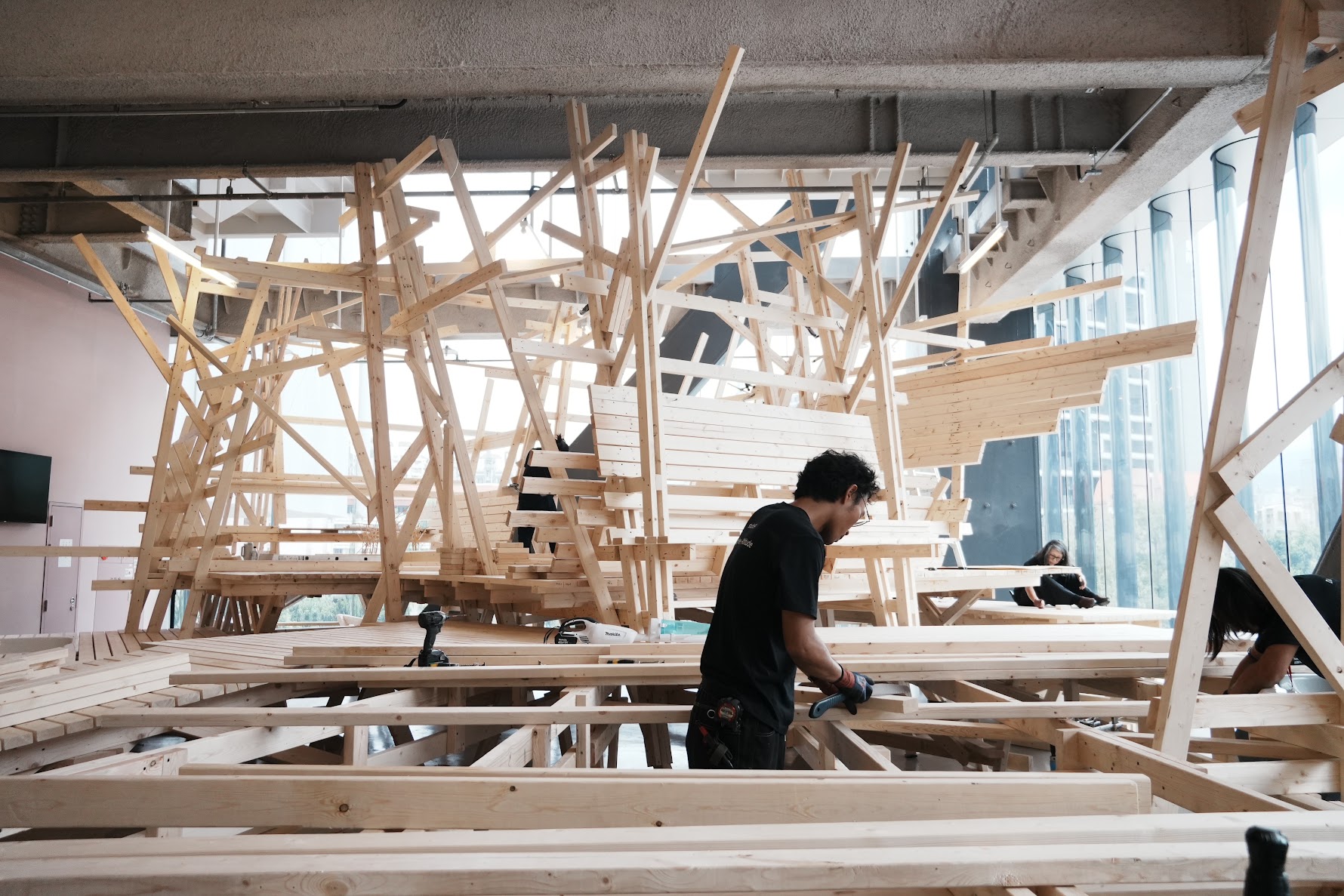
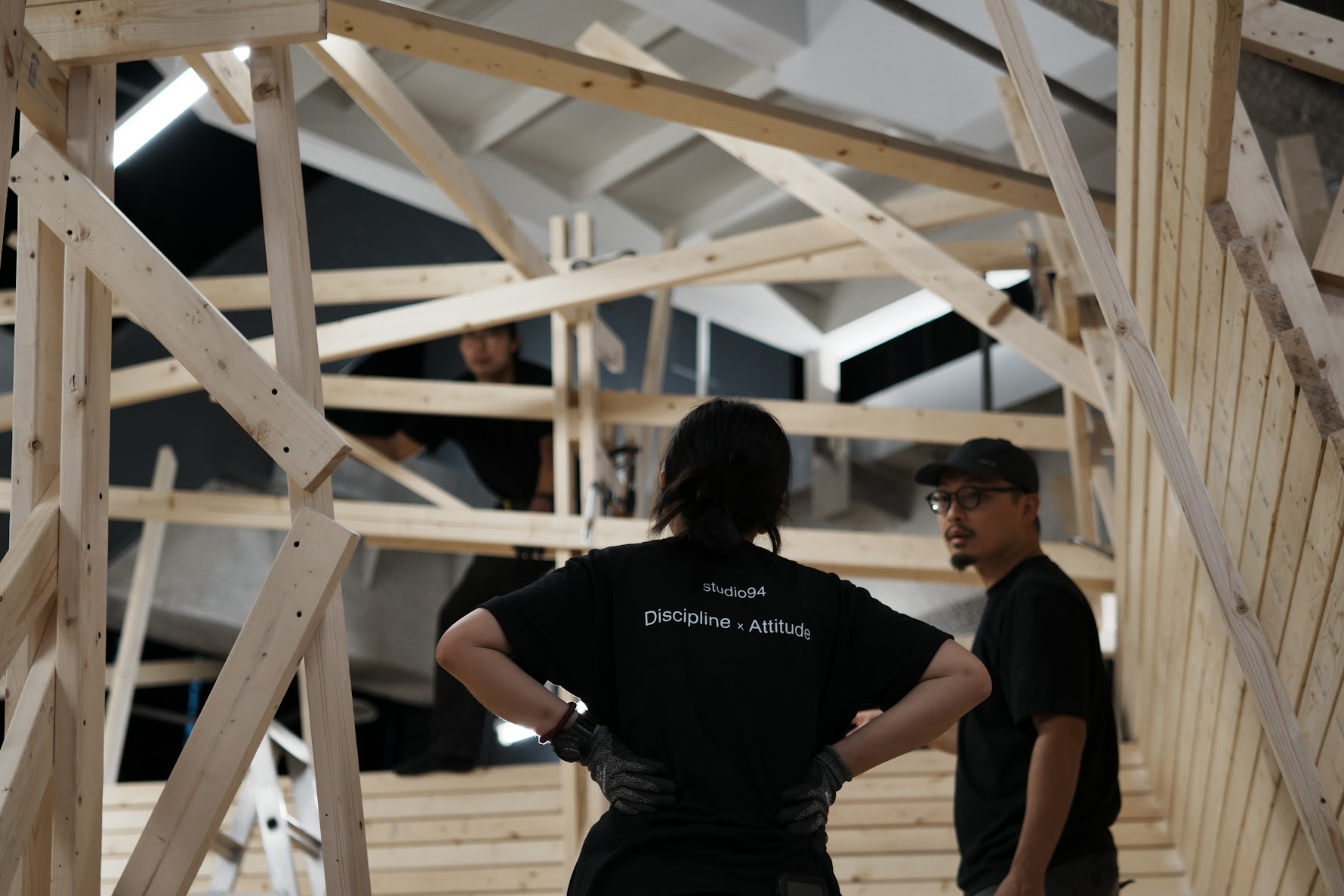
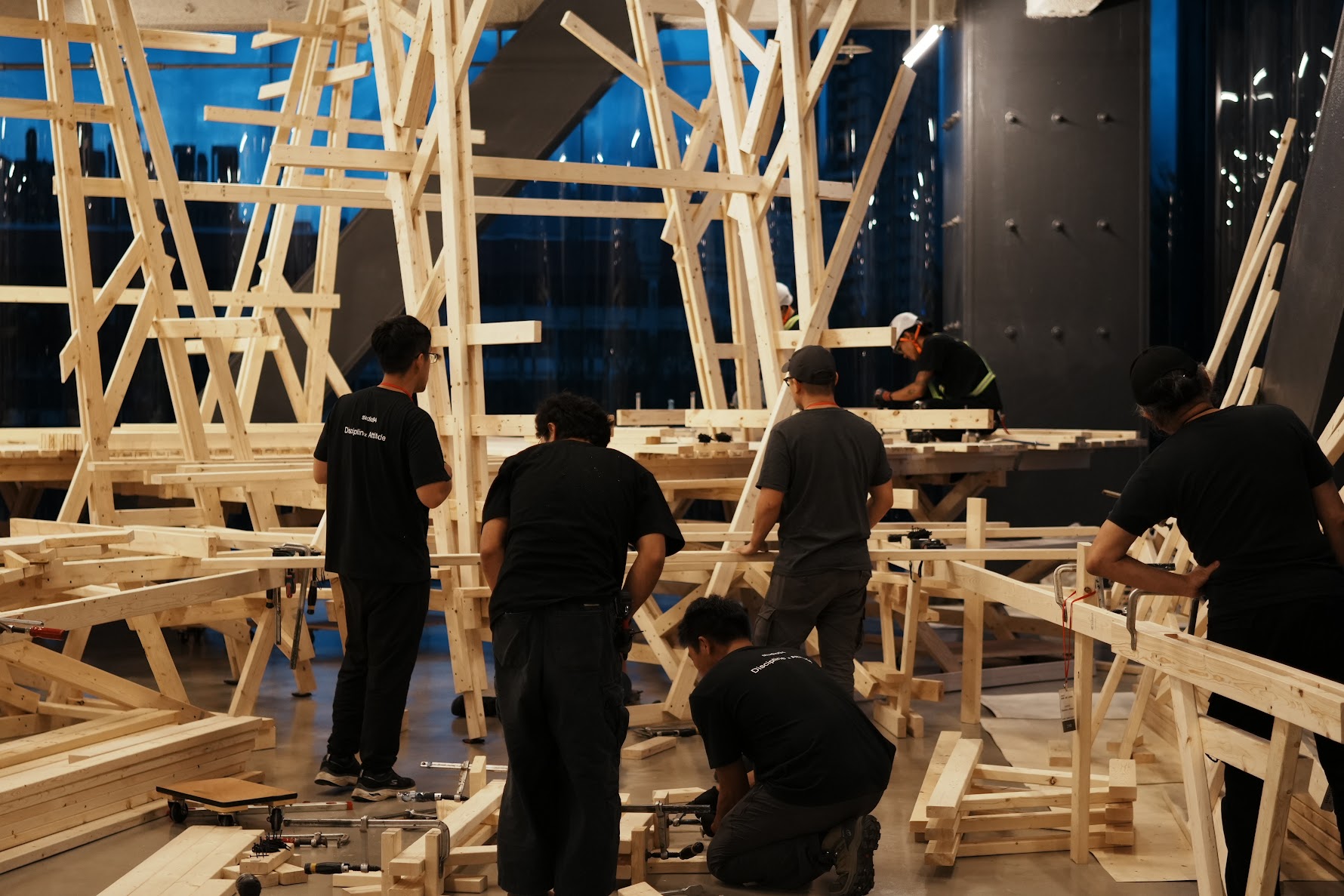
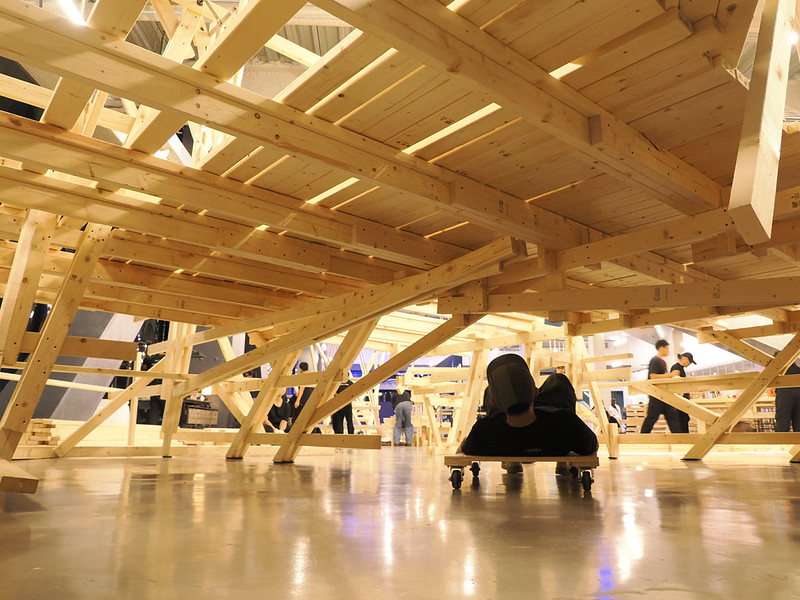
● The Shelter / Ping-Hung Kuo and Wen-Lan Yu
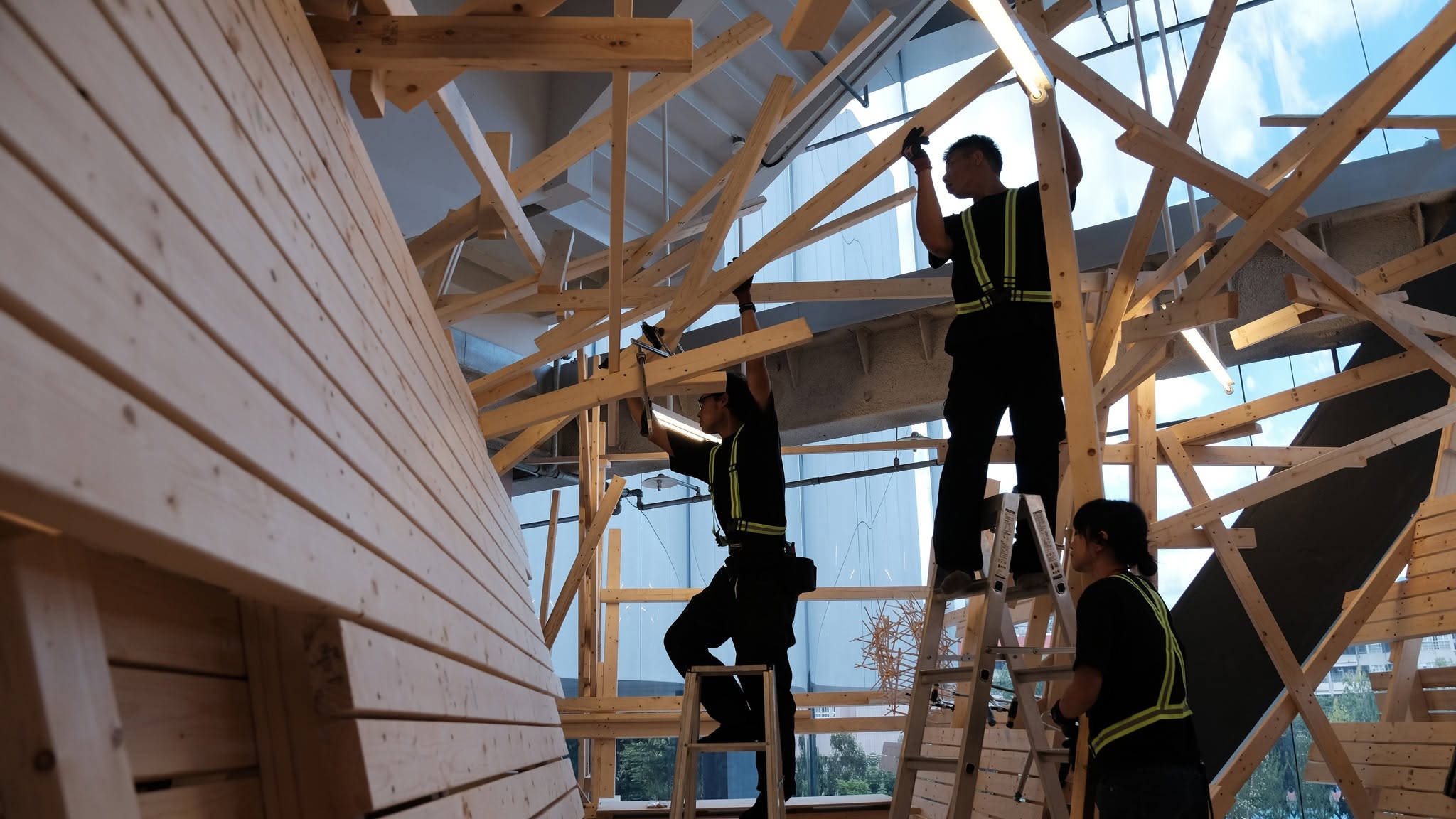
The sacred inner self rests quietly within the depths of the house. Upon entering, one seems first to descend into a veil of darkness, then to immerse oneself in echoes that evoke the birth of all things, before finally arriving at an immense and boundless silence. If we are fortunate, this brief pause within the house may allow us to shed our burdens, lighten our hearts, and let the spirit unfold ever more freely.
Why not come and take a glimpse into the silence within ourselves? During this brief stay, each visitor is gently sheltered by the space. Afterwards, through a small opening beneath the structure, one may slip into a secret hideaway reminiscent of an underwater world, allowing the senses of the body and the imagination of the mind to carry us on a journey through this hidden realm. Perhaps this is what it means to return to the innocence of a child.
From beginning to end, the two spaces we have created share one purpose: to reconnect people with one another. May we all slowly awaken from the illusion that we are separate.
SenseSite Studio | Yu-Hsiang Lin, Pei-Hsin Lin, Tzu-Hsueh Liu + Chi-Chiang Wu
● The Making of Forest / Yu-Hsiang Lin
For Beyond Loneliness, SenseSite Studio has created a work entitled The Making of Forest.
A forest has never been the existence of a single life. Rather, it is an enchanting web of relationships formed through the encounters, interweaving, and coexistence of different living beings.
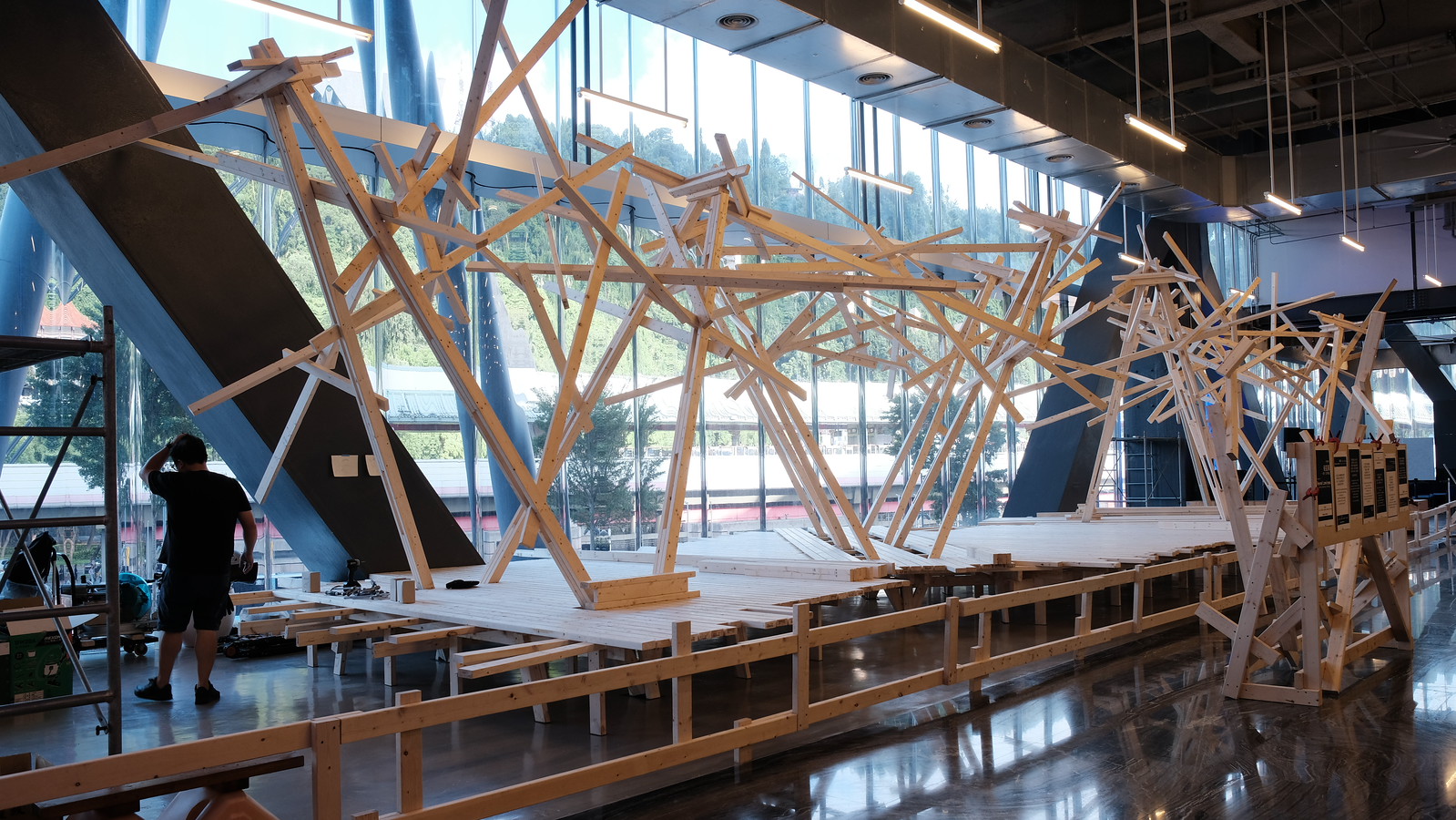
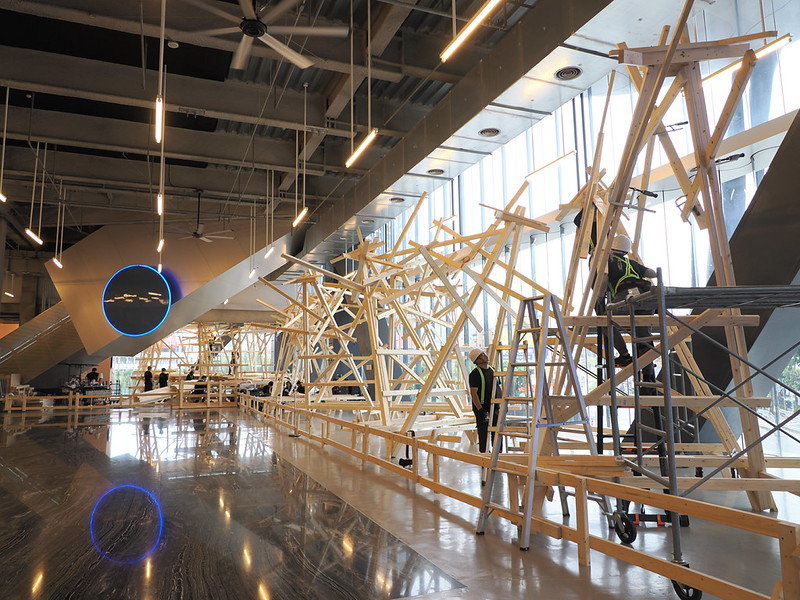
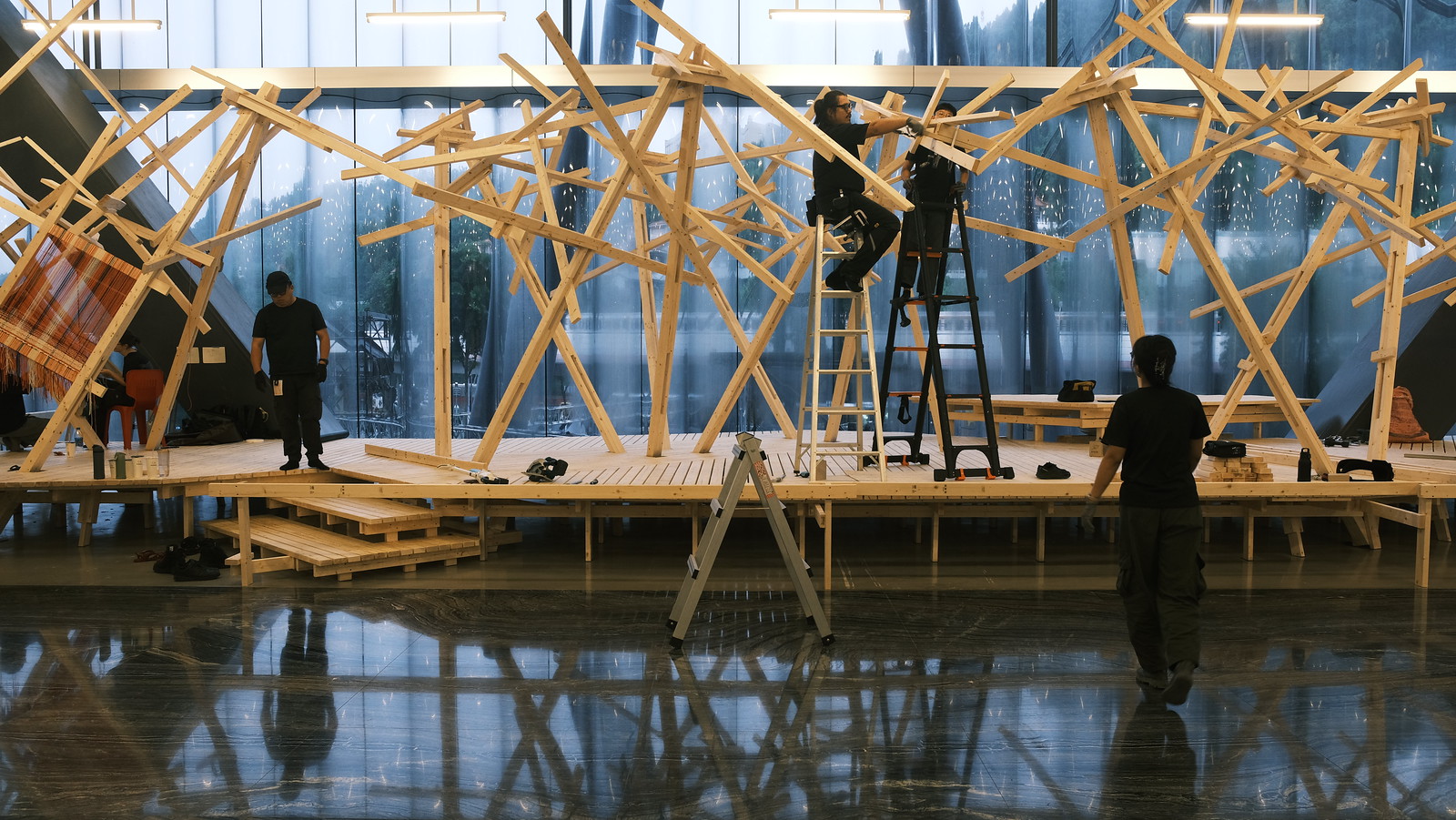
Inspired by the forests of Taiwan, we have created five groups of V-shaped wooden structural units to express three states of coexistence: standing independently, growing alongside one another, and standing in opposition. Together, they reflect the ever-changing relationships we develop with ourselves and with others as we grow. To go beyond loneliness does not mean to eliminate solitude. It means allowing different individuals to remain true to their own differences while finding ways to connect with others through encounters, companionship, and mutual response.
The Making of Forest does not seek to replicate a natural forest. Instead, through construction, it intervenes in the existing architecture and awakens new perceptual relationships between people and place. The wooden structures, each growing from its own point of origin, extend, branch out, and graft onto one another, forming an interwoven whole while retaining their individual identities. Meanwhile, the curved glass and black marble in the second-floor lobby of the Taipei Performing Arts Center bring distant mountain landscapes, city scenes, and human activities together through light and reflection, allowing the forest to extend beyond the boundaries of its physical space.
As daylight shifts from day to night, the relationships between inside and outside, reality and reflection, are constantly transformed. Along the paths and across the wooden platforms, people move through the space, pause, read, weave, play music, and dance. Through these activities, we hope to continually open up new possibilities for the use of this place and for the relationships that emerge within this shared environment. One may stay alone or find companionship with others; one may simply observe or become part of what is happening.
Different bodies and events continually unsettle the existing order of the space, allowing The Making of Forest to become more than a fixed structure shaped by materials and craftsmanship. It is a living public space, constantly taking shape through perception, human activity, and time.
Ultimately, it is our construction that establishes the starting point from which this forest begins to grow. Yet what allows it to continue unfolding and extending beyond itself are the countless relationships quietly coming into being between people here.
BYHAND | Cheng-Han Hsieh, Chun-Tang Li
BYHAND has created three works for Beyond Loneliness:
- The Transforming Cart — Echoes / Hsieh Cheng-han
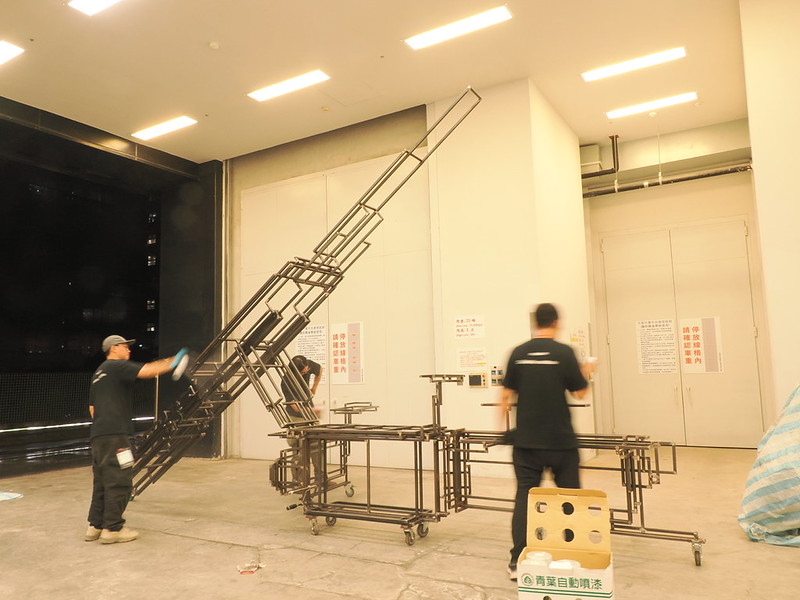
By interweaving and layering vertical and horizontal geometric lines, I try to create forms that are unknown and yet to be determined within an orderly structure. In other words, when I begin to work, I never know what the final form will become. This cart is, in essence, a mobile and ever-changing mechanical fortress. It has a magnificent, solid heart, waiting to be stirred by events and brought to life. Ultimately, all I hope for is to bring this space a little closer to people, to make it a little more... human.
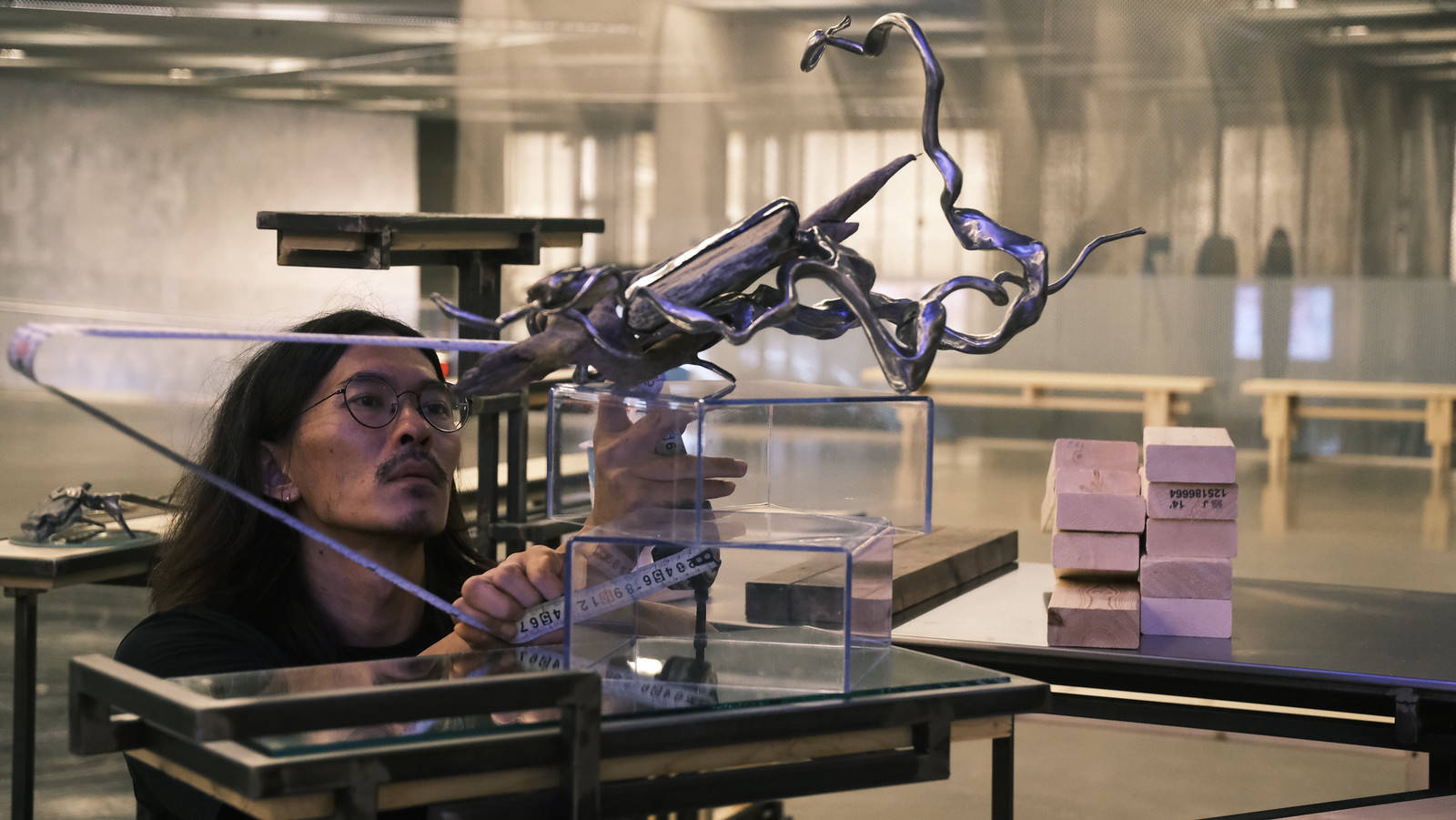
- Sculpture — A Landscape of Love / Hsieh Cheng-han
Amid the crowds passing by, what is on your mind? Have you ever found yourself feeling lost in the midst of a crowd, carrying emotions with nowhere to rest? This work holds a landscape within me — a reflection of the world as I see it. Metal nestles closely against the stones I hold dear, giving rise to lines and forms that surprise even me. Through my gestures and interventions, I seek to bring the man-made and the natural into relationship, creating a space between them that is both private and intimate.
What I wish to ask is this: Amid the weight and solidity of architectural structures, and the swift currents of public spaces, do we still have the courage, the strength, and the capacity to pause, to describe, and to truly see the subtle details and warmth of the world around us? This is one of the things I find myself wondering about as I live in this age.
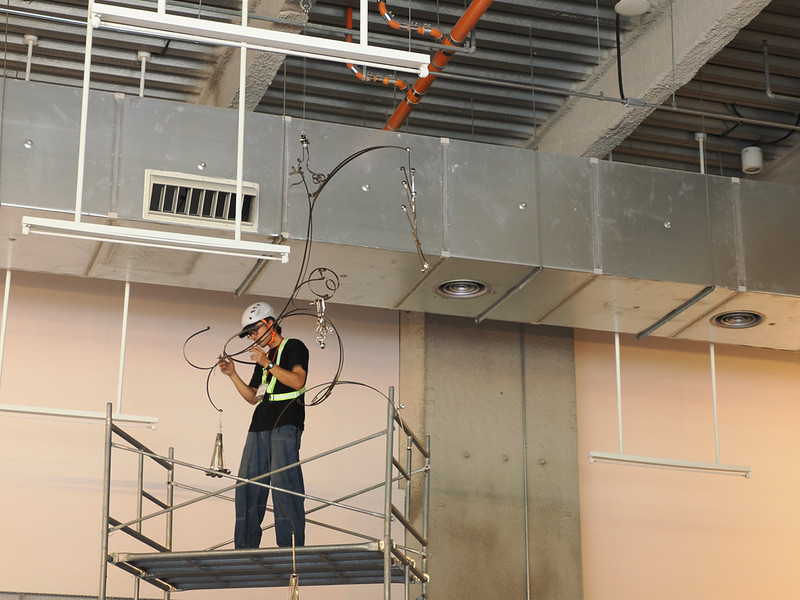
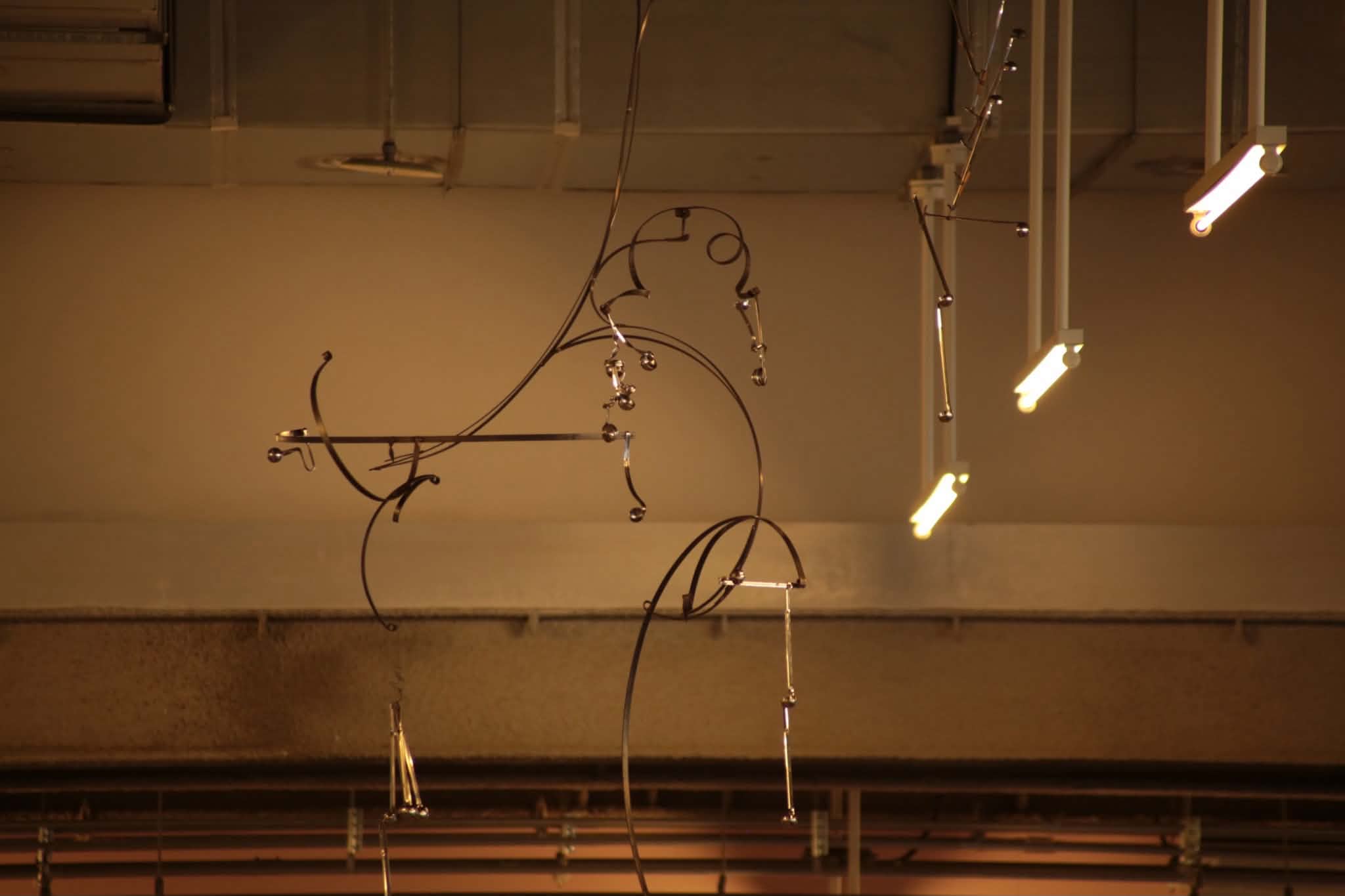
● Suspended Sculpture — Encounter / Li Chun-tang
This work began with the idea of balance and counterweights. It went through a phase of rational, rather uninspiring forms, before I dismantled them and rearranged the elements at random. Eventually, it emerged in the form we see today.
I remember that, in one of my early sketches, I had tried to create a figure of “a dancing person.” Later, while playing with the materials, I twisted and reshaped a piece of curved metal with my bare hands, and something entirely unexpected took form. Through twisting, gripping, and pulling, I essentially followed the lines of the metal, allowing myself to improvise along the way. I came to love each resulting form precisely because none of them could ever be replicated.
Beyond metal, I also turned my attention to an everyday found object: the spoon. By altering its shape, I changed its function. No longer a spoon, it became a counterweight in my work. The twisted spoons gave the sculpture a new expression. Although I initially bent them without any particular intention, they eventually revealed unexpected forms of beauty — playful, intriguing, and touched with a surreal quality.
I hope Encounter will be a work that interacts with both its viewers and its surroundings, even though it occupies such a quiet and seemingly inconspicuous place within the larger space. When visitors discover it, I hope their eyes will be gently drawn along the lines of its structure, moving from the main framework to the smaller objects. Everything may appear to follow a certain logic, yet somehow leave them wondering where to begin looking.
After all, an encounter should hold a little romance, or perhaps a touch of humor!